Combining climate measures key to slashing emissions: study / Photo: © AFP

 8.3 mn refugees at risk due to 'severe' funding cuts: UN

 Stocks drop and oil rises as Hormuz hopes fade

 OpenAI cancels release of newest model due to safety concerns

 AI bosses head to White House as safety pressure builds

 Batista sacked as Costa Rica coach after six months

 Flooding, power cuts and evacuations as Hurricane Polo slams Mexico

 Dodgers eye three-peat, Red Sox face Yankees as MLB playoffs begin

 Certification of Boeing 737 MAX delayed by software bug

 Celine Dion wows Paris Fashion Week with surprise gig

 AMD buys firm founded by AI 'godmother' Fei-Fei Li
 Italy rebound in Turkey as France win late in Belgium

 Pope says concerns about AI 'should be taken seriously'

 Hurricanes to hoist title banner as NHL season begins

 Justice Alito steps aside from major US climate case

 Willis happy with England exile after retains Top 14 player award

 Spain housing protests keep heat on government as PM seeks new law

 Wissa spoils Zimbabwe homecoming as DR Congo win AFCON qualifier

 UK police release on bail five men held over airbase incident

 Ex-All Black Plummer 'sure' New Zealand will find Super Rugby solution

 Shein sees 1% revenue growth in first half of 2026

 Netherlands regrets Israel retaliation in settlements row

 Moscow seizes Russian assets of German food retailer Metro

 Bulgarian spirits inflamed by new rakia rules

 Documentary turns camera on architect Peter Zumthor

 UK police say releasing on bail five men held over airbase incident
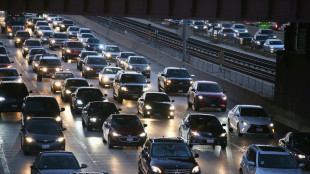
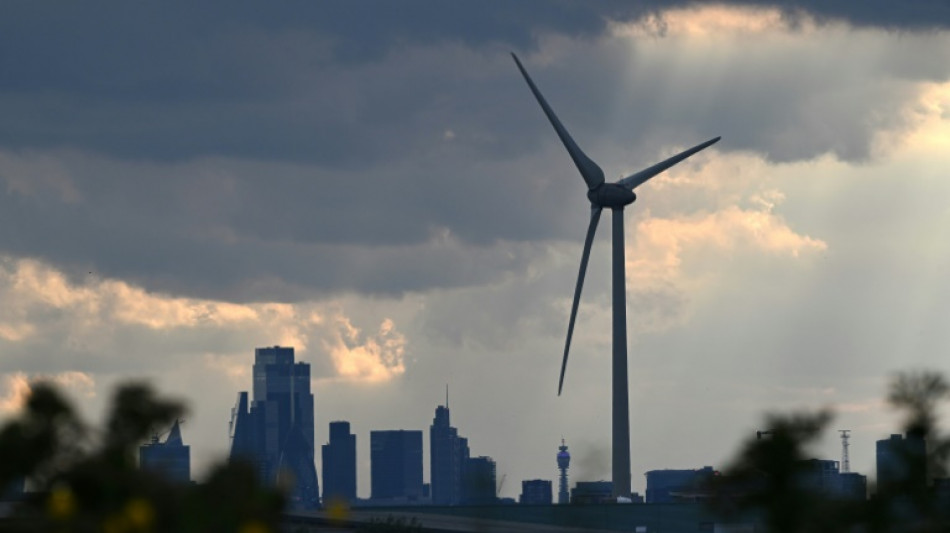
A major new study published Thursday on the effectiveness of climate measures such as taxes or subsidies in reducing greenhouse gases has found stand-alone measures fail to make a big difference.
Published in the journal Science, the study examined 25 years of public policies in 41 countries across six continents.
It concluded that out of the 1,500 policies analysed in sectors including energy, transport and construction, "only 63 cases of successful climate policies, each leading to average emission reductions of 19 percent, were identified."
"The researchers show that bans on coal-fired power plants or combustion engine cars do not result in major emissions reductions when implemented alone," said the Potsdam Institute for Climate Impact Research (PIK) that led the study with Mercator Research Institute on Global Commons and Climate Change (MCC).
"Successful cases only arise in tandem with tax or price incentives in well-designed policy mixes, as shown in the UK for coal-fired power generation or in Norway for cars," the researchers said.
The study used a new OECD database and an innovative approach that combined machine learning methods with established statistical analyses.
It "identified 63 successful policy interventions with total emission reductions between 0.6 billion and 1.8 billion tonnes CO2".
By comparison, humanity emitted 57.4 billion tonnes of CO2 equivalent in 2022, according to United Nations estimates.
Among the successes identified was Britain's introduction in 2013 of a minimum carbon price, subsidies for renewable energy, and a coal phase-out plan.
The researchers hope their work will influence the climate roadmaps countries are updating and must submit to the UN by February 2025.
The aim of these roadmaps is to keep alive the Paris Agreement's flagship goal of limiting warming to 1.5 degrees Celsius from pre-industrial levels.
- 'Right mix is crucial' -
An interactive website, "Climate Policy Explorer", provides an overview of the results, analysis and methods, and is accessible to the public.
"Our findings demonstrate that more policies do not necessarily equate to better outcomes. Instead, the right mix of measures is crucial," explained the study's lead author Nicolas Koch of PIK and MCC.
"For example, subsidies or regulations alone are insufficient; only in combination with price-based instruments, such as carbon and energy taxes, can they deliver substantial emission reductions."
"But by focusing only on 69 statistically identifiable large trend breaks, they miss the impact of thousands of smaller efforts globally, and the cumulative and often self-reinforcing impact of many smaller measures", said Michael Grubb at University College London.
He also acknowledged "the most sophisticated study to date".
"Their conclusion that big impacts require combinations of policies makes absolute sense," he added.
"The study only looks for policies making sudden reductions, whereas most climate policies work on the efficiency of new things or the long-term trajectory of emissions, taking many years to build up greener infrastructure or ways of living," said Robin Lamboll at Imperial College London.
O.Lorenz--BTB