Burn land or plant trees? Bolivian farmers weigh their options / Photo: © AFP

 Trump admin finalizes reversal of US fuel economy standards

 US says no China arms sale plans after envoy cites Trump offer

 Dozens kidnapped in two weekend attacks in northern Nigeria

 Next stop the world: Pathirage wins Asian Games javelin gold

 Aster Launches Perpetual Grid Trading 2.0 with Up to 140,000 $ASTER Liquidity Mining Campaign

 Seoul says North Korean mines 'highly suspected' as cause of DMZ blast

 Russia pummels Kyiv in latest deadly daytime attack

 Wartime Ukraine works to keep its railways on track

 Boy among 3 dead in migrant Channel crossing accident: French authorities

 SGFX Creates a Standout Brand Experience at Forex Expo Dubai 2026

 Pope urges Europe to help combat 'deceit and lies' in international ties

 Injured Buttler to miss England ODI series in Pakistan
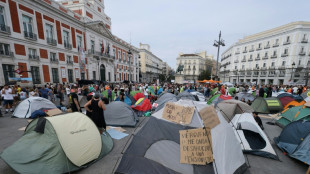 Madrid housing protesters vow to maintain pressure on government

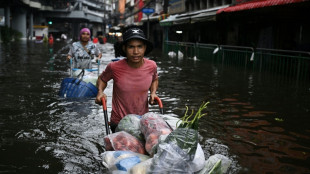 In kayaks or waist-deep in floodwater, shoppers return to Bangkok markets

 UK police probes Iran link to air base bomb scare: media

 Eala blasts into Asian Games quarters in just 55 minutes

 Taiwan gender-row boxer Lin Yu-ting guarantees Asian Games medal
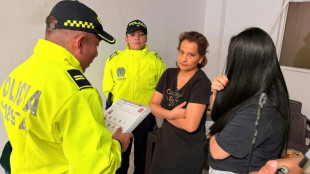
 Comedian on trial for allegedly insulting Erdogan in standup show

 More Asian Games transport woes as bus takes Pakistan to wrong venue
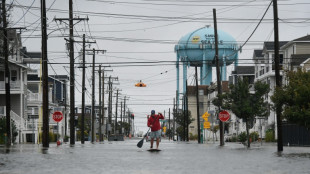
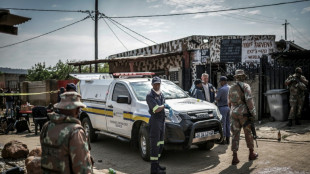 Death toll in South Africa bar shooting rises to 18
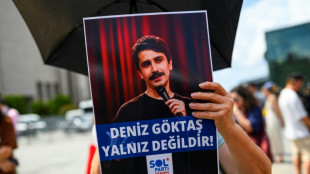
 Aide to Venezuelan opposition leader returns from exile

 Messi and Alcaraz love it, now padel takes step closer to Olympics

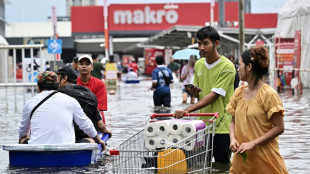 Tolls mount in Thailand, Myanmar floods
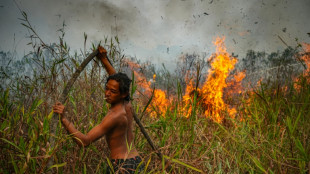
 Why India's opposition wants top poll official out

 PU Prime Strengthens UAE Momentum with Strong Showing at Forex Expo Dubai 2026

Less than a year after the worst wildfires in Bolivia's history, farmers face a choice: continue starting blazes to clear land for agriculture, or plant trees to mitigate worsening droughts.
Around 10.7 million hectares (26.4 million acres) of dry tropical forest -- an area about the size of Portugal -- went up in smoke in Bolivia's eastern lowlands last year, according to the non-profit Bolivian Institute for Forest Research (IBIF).
While the fires received less attention than those across the border in Brazil, they killed at least four people, according to Bolivian authorities, and churned up record carbon pollution, the European Union's climate monitor said.
Attempts to carry out controlled burns were widely blamed for the infernos, which spread quickly in a region parched by a prolonged drought that scientists attribute to climate change.
Julia Ortiz, a sesame grower, knows all too well the hazards of the "chaqueos" (slash-and-burn agriculture) practiced by farmers big and small in Bolivia, particularly in the tropical grasslands of Chiquitania region.
Five years ago, she and her family spent an entire night trying to bring a fire they had themselves set under control.
"It can happen to anybody. Most of us live off farming and we must do burns," the 46-year-old Indigenous farmer said as she harvested her plants and stacked them in the sun to dry.
Last year's fires were of a much greater magnitude.
Carmen Pena, a 59-year-old resident of Santa Ana de Velasco, a village with dirt roads surrounded by forest and prairies, lost her banana and yuca crops.
"I don't know how we will survive because our food is running out," said Pena, who like most of Santa Ana's residents depends entirely on farming for an income.
- No machinery -
As green shoots start to sprout from fire-scarred earth, new fires are being lit in other areas as some farmers in Santa Ana continue to clear vegetation to grow crops.
Charred tree trunks on Ortiz's land point to a recent fire, even as the community embarks on a major tree-planting program.
According to an IBIF report, 63.6 percent of the land damaged by last year's fires was in forested areas, which it said pointed to "strong pressure to expand the boundaries of farmland."
David Cruz, a climate change specialist at the Universidad Mayor de San Andres in Bolivia's capital La Paz, accuses the state of abetting deforestation by pardoning people found responsible for starting fires, giving farmers extensions on deadlines to comply with environmental regulations and allowing them to burn large tracts of land.
Ortiz argues that fires are the only way farmers have of clearing land, in the absence of machinery to bury felled trees.
"If we had tractors, we would not need to do burns," she said.
But neither she nor her 1,700 fellow villagers can afford to rent a tractor, much less buy one, and those belonging to the municipality are all undergoing repairs.
"That's why we work as we do, running the risk that the fire would rage out of control. But it's the only choice we have," she argued.
- Tree-planting 'bombs' -
Faced with ongoing water shortages, which is causing crops to wither in the fields, a group of local women -- most of the men have left the village to find work -- have joined forces to try to replant trees using a method pioneered in Nepal.
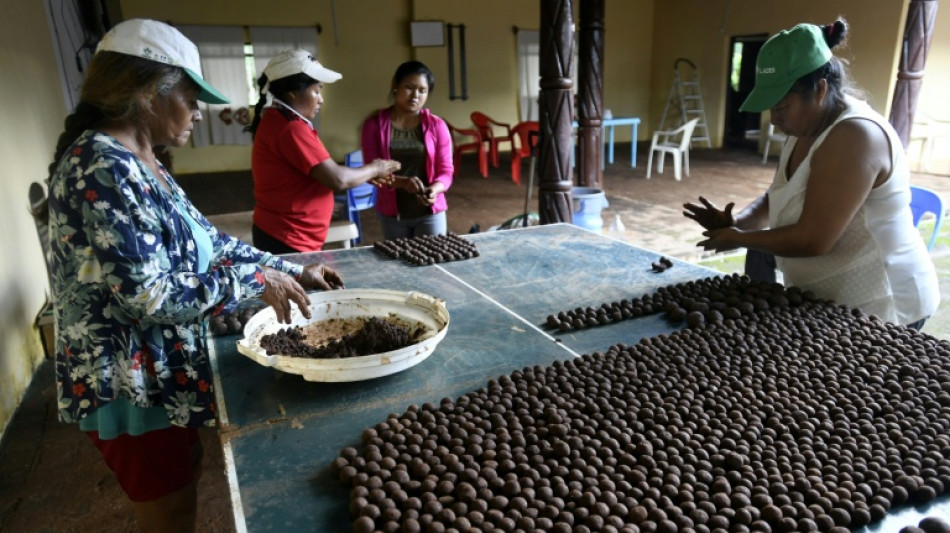
Using their hands they knead "bombitas" (little spheres) of earth, which they fill with the seeds of indigenous trees.
Drones are then used to drop them over 500 hectares of deforested land, with funding from the Swiss NGO Swisscontact and Bolivia's own Flades foundation.
Some 250,000 "bombitas' will be airdropped starting in March.
Similar reforestation techniques have also been used in Peru and Brazil.
"Without forests, we'll have no water," Joaquin Sorioco, a farmer and forestry technician in Santa Ana said, expressing hope that the planting "will help (the soil) retain more humidity."
The Flades foundation hopes that last year's fires served as a wake-up call on the ravages of land-clearing practices.
"We went through very difficult times," the foundation's director Mario Rivera said. "But in a way it helped create awareness."
F.Müller--BTB