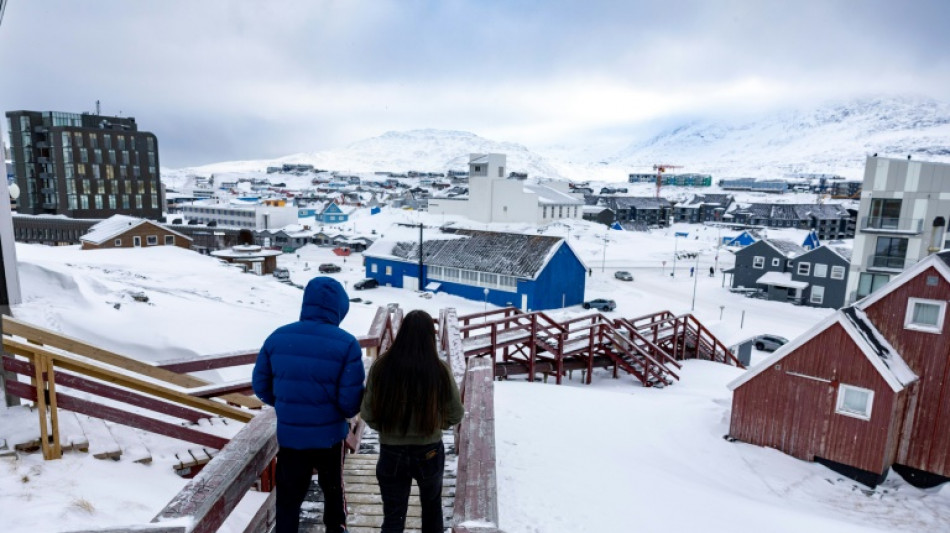
Greenland's mining bonanza still a distant promise / Photo: © AFP

 SpaceX puts Starship megarocket in orbit for first time
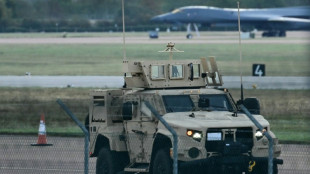 Iran denies link to suspected bomb plot at UK airbase used by US
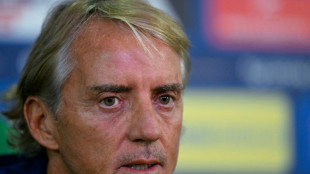 Ex-boss Mancini says City charges 'not my concern'
 Berlin Marathon winner Assefa finished race with torn Achilles

 Comedian convicted for Erdogan 'insult' but freed pending appeal
 French prosecutors seek two-year sentence for ex-minister Dati in graft case

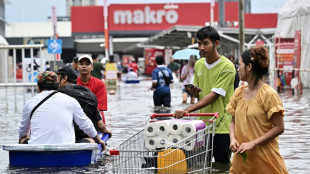
 Eala makes fast start as weather and transport woes hit Asian Games
 Hurricane Polo approaches Mexico, threatens severe damage

 Energy markets rally after Trump rejects Iran truce offer
 Japanese convenience store enlists Lady Gaga to bolster recruitment
 Seoul summons Ukraine envoy in row over North Korean POWs

 Ireland 'raised awareness worldwide' in Israel game: Hallgrimsson

 Colombian police capture wife, daughter of Ecuador drug lord

 More Asian Games woes as bus takes Pakistan team to wrong venue
 Radio frequencies vital to Earth observation must be protected: UN
 Comedian on trial for insulting Erdogan in standup show

 Women's Fashion Week kicks off in Paris

 Pope arrives in French border city to speak on united Europe
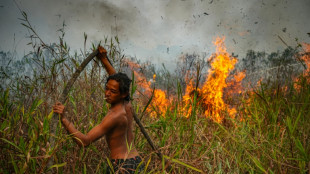 The wildfires choking Indonesia, sparking regional haze
 PU Prime Deepens Argentina Presence Through FX Expo Buenos Aires 2026

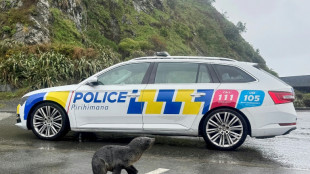 Nothing to seal here: NZ police help stranded pup home
 White House releases list of products US, China could tax less
 'Pseudo-journalism': Partisan 'news' sites target US midterms

 'Currently impossible': North Korea defections in freefall
 Erasmus sizes up 'improved' Wallabies ahead of 2027 World Cup
Before it could cast its first gold bar, Amaroq had to build a port and housing, repair a road, and ship over equipment -- a logistical nightmare highlighting the complexities of mining in inhospitable Greenland.
"This is obviously much, much harder than setting up any other business around the world," Eldur Olafsson, the head of the Canadian mining company, told AFP.
Amaroq operates one of only two active mines on the vast Arctic island, a region full of promise for mineral wealth but which has proven difficult to exploit.
From Ukraine, where US President Donald Trump wants to get his hands on natural resources, to the seabeds that numerous companies want to explore, minerals are today at the centre of major geopolitical and industrial ambitions.
Greenland remains almost entirely unexploited, and its minerals are seen as a potential springboard to independence, a goal backed by a majority of the island's 57,000 inhabitants.
Trump's stated ambitions to take over the Danish autonomous territory have only served to boost islanders' support for independence, and the timeframe for full sovereignty has been one of the main topics ahead of Greenland's March 11 legislative elections.
For many Greenlanders -- and probably Trump too -- the wealth generated by the minerals is front of mind.
They would likely generate enough revenue to replace the $565 million Denmark gives Greenland in annual subsidies.
With its underground riches, Greenland "could be a vital player" in the global mining industry, insists Thomas Varming, a geophysicist and consultant at the Geological Survey of Denmark and Greenland (GEUS).
"Many of these deposits that we have are actually crucial for the green transition: minerals that go into batteries -- lithium, graphite -- and also elements that go into super strong magnets that you use in wind turbines or your electric cars or if you want to electrify your trains," he explained.
But in order for those minerals to become a cash cow for Greenland, the price of raw materials has to go up, because right now it's not profitable enough to mine them.
Around 80 percent of Greenland is covered by ice, it has an extreme climate, very little infrastructure, and strict environmental considerations.
All those factors send operating costs soaring, while competitors like mining powerhouse China have few such issues.
- Red lines -
"There have been many mining projects on the table and the short version is: nothing has happened. There has simply not been a business case," said one economist.
Greenland Ruby, which operated a small ruby mine, went bankrupt last year.
"Mineral development is a very slow-moving business. It takes about 16 years to develop into a mine. And in that period of time, you just spend a lot of money. You don't earn a lot of money," stressed Naaja Nathanielsen, Greenland's Minister for Business and Mineral Resources.
"We have a lot of mines in the making, but they are still in this 16-year period," she told AFP in her office in Nuuk, the capital of Greenland.
She said eight companies were due to hold operating licences by the end of the year -- which doesn't necessarily mean there will be that many mines -- and around 80 exploration licences have also been issued.
Greenlandic authorities have drawn several red lines when it comes to mining: no uranium, no oil and gas, and no deep sea mining.
"We are very reliant on our fisheries, and we as a tourist nation try to brand ourselves as a green and pristine place in the world," Nathanielsen said.
"We don't want that image to be tarred by environmental hazards."
For now, the mining industry accounts for just a minute part of Greenland's economy, especially since many of the jobs go to foreigners due to a lack of skilled locals.
Even though the United States and the European Union have both signed memorandums of cooperation with Greenland, a mineral bonanza remains promising but distant, leaving the island without a key pillar needed for its economic independence.
"We are not developing the mineral sector to become independent. We're developing it to get revenue for the Greenlandic society and people, and better welfare. And at some point, we will get to independence as well," Nathanielsen said.
C.Kovalenko--BTB