Bogota ends one year of climate-induced water rationing / Photo: © AFP

 Alberta Unveils New High School Graduation Requirements to Increase Student Choice

 Daily Horoscope for November 14, 2026: Astrological Predictions for All Zodiac Signs

 Yes Bank Petitions Supreme Court to Reverse AT-1 Bond Write-Off Ruling

 TK Maxx Beauty Gift Sets Offer Alternative to Christmas Candles

 AI Unlocks Hundreds of Proved Theorems in Kurt Gödel’s Hidden Notebooks

 Info Edge’s Naukri Hits Rs 240 Crore Annualized AI Revenue Run Rate

 Honda Recalls 635,000 Vehicles Over Software-Induced Power Steering Failure
Residents in Colombia's biggest city Bogota won a much-desired reprieve from year-long water rationing Friday, with authorities announcing tough climate-induced cuts will end.
For 12 months, the capital's eight million residents have faced 24-hour water cuts every nine days, as the city tries to raise critically low reservoir levels.
Andes-nestled Bogota receives more annual rainfall than London. But increasingly extreme cycles of El Nino drought and Amazon deforestation have taken their toll on reserves.
Mayor Carlos Fernando Galan announced that from Saturday restrictions will be lifted.
"It has been the most complex crisis the city has faced in terms of water scarcity" he said, acknowledging the substantial impact on "the quality of life of Bogota's residents."
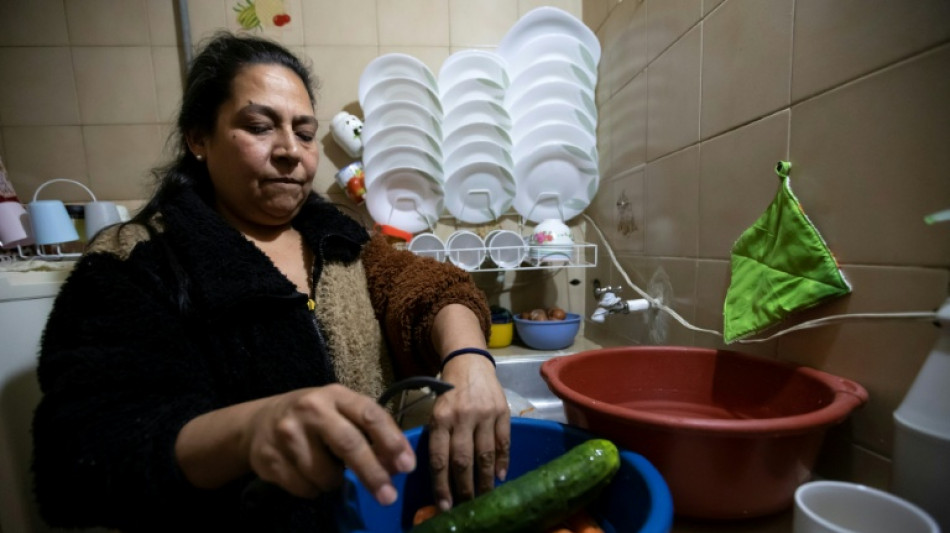
It has become a regular feature of Bogota life to keep containers ready and scramble late in the evening to store water for cooking or bathing the next day.
Briceida Torres had to fill buckets and carry them for household chores. "Obviously, it is inconvenient," she told AFP.
Car wash owner Benjamin Nunez Fletcher said he has learned to use "rainwater and filters... to keep the business running."
The restrictions are estimated to have lowered the city's average water consumption by more than eight percent -- from 17.7 cubic meters per second to 16.2.
While climate change has worsened the city's water woes, Andres Torres, director of the Water Institute at Javeriana University in Bogota, said cuts were like an x-ray exposing poor resource management over years.
"They penalized the population because they didn't do what they were meant to," he said.
D.Schneider--BTB