Swiss glacier collapse offers global warning of wider impact / Photo: © AFP

 Pope urges Europe to help combat 'deceit and lies' in international ties

 Injured Buttler to miss England ODI series in Pakistan
 Madrid housing protesters vow to maintain pressure on government

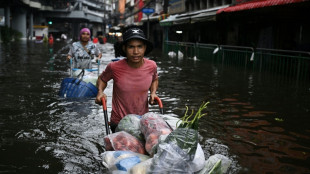 In kayaks or waist-deep in floodwater, shoppers return to Bangkok markets

 UK police probes Iran link to air base bomb scare: media

 Eala blasts into Asian Games quarters in just 55 minutes

 Taiwan gender-row boxer Lin Yu-ting guarantees Asian Games medal

 Comedian on trial for allegedly insulting Erdogan in standup show

 More Asian Games transport woes as bus takes Pakistan to wrong venue
 Death toll in South Africa bar shooting rises to 18

 Aide to Venezuelan opposition leader returns from exile

 Messi and Alcaraz love it, now padel takes step closer to Olympics

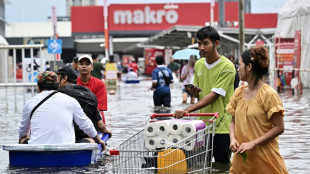 Tolls mount in Thailand, Myanmar floods
 Why India's opposition wants top poll official out

 PU Prime Strengthens UAE Momentum with Strong Showing at Forex Expo Dubai 2026

 Eight dead in Thailand floods since mid-September

 Oil prices spike after Trump rejects Iran truce offer

 Taylor Swift sets new record at MTV VMAs
 Seoul seeks apology after Ukraine reveals transfer of North Korean POWs

 Messi on target again but Miami downed by Columbus

 In Washington's political cauldron, a fight over foie gras
 Flavio Bolsonaro: political heir in his father's shadow

 Ravens grab last-second win in Rio as Commanders stop Seahawks
 Scheffler makes sportsmanship stand over tee screamer

 Anthropic CEO Amodei to dine with Trump at White House

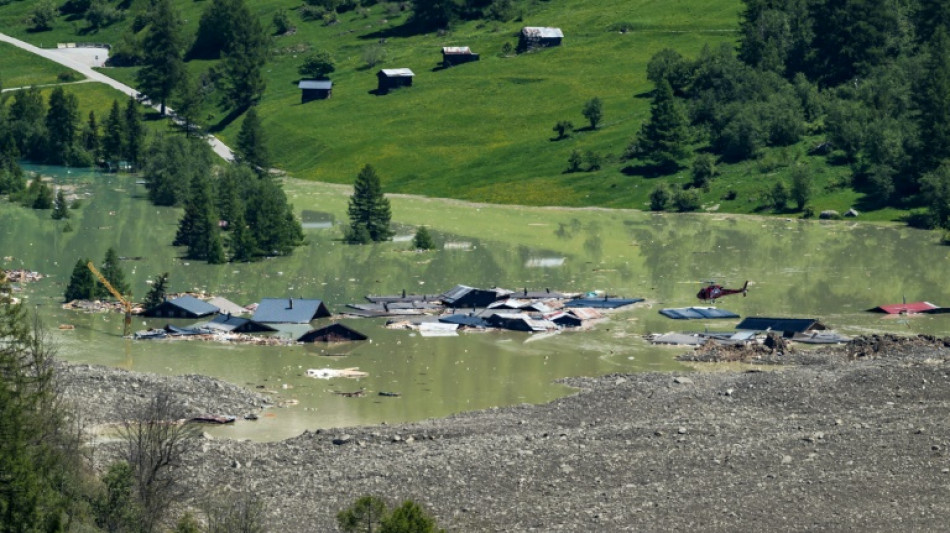
The collapse of the Swiss Birch glacier serves as a chilling warning of the escalating dangers faced by communities worldwide living under the shadow of fragile ice, particularly in Asia, experts say.
Footage of the May 28 collapse showed a huge cloud of ice and rubble hurtling down the mountainside, into the hamlet of Blatten.
Ali Neumann, disaster risk reduction advisor to the Swiss Development Cooperation, noted that while the role of climate change in the specific case of Blatten "still needs to be investigated", the wider impacts were clear on the cryosphere -- the part of the world covered by frozen water.
"Climate change and its impact on the cryosphere will have growing repercussions on human societies that live near glaciers, near the cryosphere, and depend on glaciers somehow and live with them," he said.
The barrage largely destroyed Blatten, but the evacuation of its 300 residents last week averted mass casualties, although one person remains missing.
"It also showed that with the right skills and observation and management of an emergency, you can significantly reduce the magnitude of this type of disaster," Neumann said at an international UN-backed glacier conference in Tajikistan.
Stefan Uhlenbrook, Director for Hydrology, Water and Cryosphere at the World Meteorological Organisation (WMO), said it showed the need for vulnerable regions like the Himalayas and other parts of Asia to prepare.
"From monitoring, to data sharing, to numerical simulation models, to hazard assessment and to communicating that, the whole chain needs to be strengthened," Uhlenbrook said.
"But in many Asian countries, this is weak, the data is not sufficiently connected."
- 'Not enough' -
Swiss geologists use various methods, including sensors and satellite images, to monitor their glaciers.
Asia was the world's most disaster-hit region from climate and weather hazards in 2023, the United Nations said last year, with floods and storms the chief cause of casualties and economic losses.
But many Asian nations, particularly in the Himalayas, lack the resources to monitor their vast glaciers to the same degree as the Swiss.
According to a 2024 UN Office for Disaster Risk Reduction report, two-thirds of countries in the Asia and Pacific region have early warning systems.
But the least developed countries, many of whom are in the frontlines of climate change, have the worst coverage.
"Monitoring is not absent, but it is not enough," said geologist Sudan Bikash Maharjan of the Nepal-based International Centre for Integrated Mountain Development (ICIMOD).
"Our terrains and climatic conditions are challenging, but also we lack that level of resources for intensive data generation."
That gap is reflected in the number of disaster-related fatalities for each event.
While the average number of fatalities per disaster was 189 globally, in Asia and the Pacific it was much higher at 338, according to the Belgium-based Centre for Research on the Epidemiology of Disasters’ Emergency Events Database.
Geoscientist Jakob Steiner, who works in climate adaptation in Nepal and Bhutan, said it is not as simple as just exporting the Swiss technological solutions.
"These are complex disasters, working together with the communities is actually just as, if not much more, important," he said.
- 'Sad disparity' -
Himalayan glaciers, providing critical water to nearly two billion people, are melting faster than ever before due to climate change, exposing communities to unpredictable and costly disasters, scientists warn.
Hundreds of lakes formed from glacial meltwater have appeared in recent decades. They can be deadly when they burst and rush down the valley.
The softening of permafrost increases the chances of landslides.
Declan Magee, from the Asian Development Bank's Climate Change and Sustainable Development Department, said that monitoring and early warnings alone are not enough.
"We have to think... about where we build, where people build infrastructure and homes, and how we can decrease their vulnerability if it is exposed", he said.
Nepali climate activist and filmmaker Tashi Lhazom described how the village of Til, near to her home, was devastated by a landslide earlier in May.
The 21 families escaped -- but only just.
"In Switzerland they were evacuated days before, here we did not even get seconds," said Lhazom.
"The disparity makes me sad but also angry. This has to change."
I.Meyer--BTB