What is the high seas treaty? / Photo: © AFP

 Pope urges Europe to help combat 'deceit and lies' in international ties

 Injured Buttler to miss England ODI series in Pakistan
 Madrid housing protesters vow to maintain pressure on government
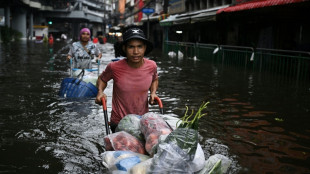 In kayaks or waist-deep in floodwater, shoppers return to Bangkok markets

 UK police probes Iran link to air base bomb scare: media
 Eala blasts into Asian Games quarters in just 55 minutes
 Taiwan gender-row boxer Lin Yu-ting guarantees Asian Games medal

 Comedian on trial for allegedly insulting Erdogan in standup show

 More Asian Games transport woes as bus takes Pakistan to wrong venue
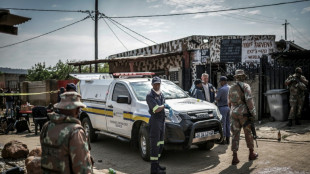 Death toll in South Africa bar shooting rises to 18

 Aide to Venezuelan opposition leader returns from exile

 Messi and Alcaraz love it, now padel takes step closer to Olympics

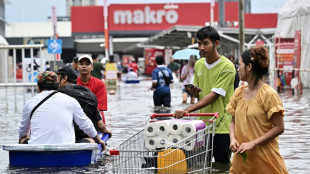 Tolls mount in Thailand, Myanmar floods

 Why India's opposition wants top poll official out

 PU Prime Strengthens UAE Momentum with Strong Showing at Forex Expo Dubai 2026

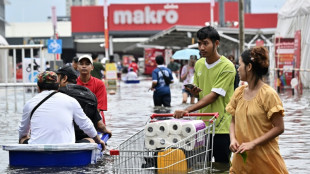 Eight dead in Thailand floods since mid-September
 Oil prices spike after Trump rejects Iran truce offer

 Taylor Swift sets new record at MTV VMAs
 Seoul seeks apology after Ukraine reveals transfer of North Korean POWs

 Messi on target again but Miami downed by Columbus
 In Washington's political cauldron, a fight over foie gras
 Flavio Bolsonaro: political heir in his father's shadow

 Ravens grab last-second win in Rio as Commanders stop Seahawks

 Scheffler makes sportsmanship stand over tee screamer

 Anthropic CEO Amodei to dine with Trump at White House

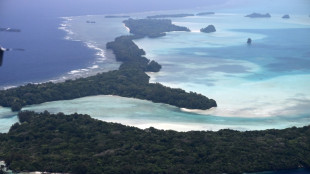
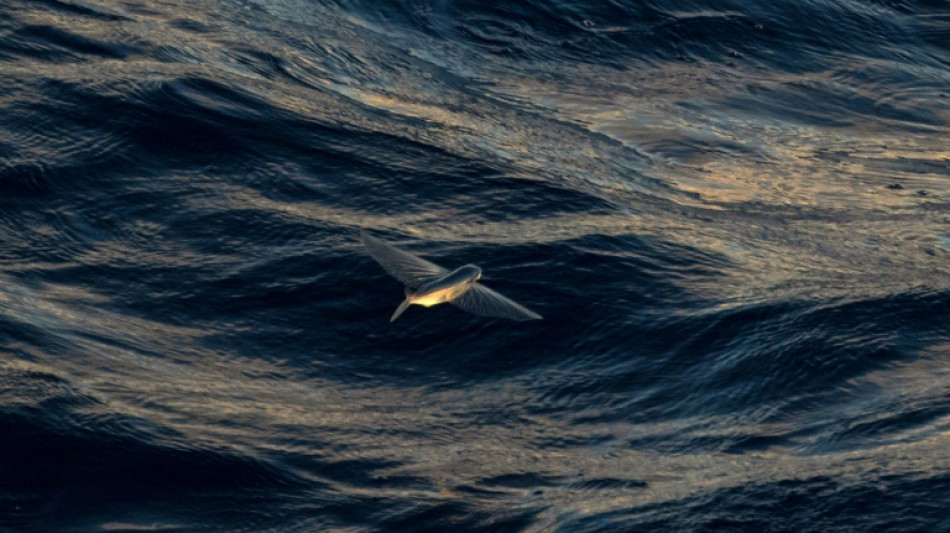
The high seas treaty could be law by the end of the year, affording protection to marine life in the vast swathes of ocean that belong to no one.
The treaty was adopted by UN member states in June 2023. It has been ratified by 31 nations plus the European Union, and comes into force 120 days after its 60th ratification.
But at the UN Ocean Conference this week, hosts France said around 50 countries have ratified the pact, bringing it within reach of enactment.
The United States signed the treaty in 2023 under Joe Biden but is not expected to ratify it while Donald Trump is president.
Here are the key points of the treaty text:
- International waters -
The treaty covers international waters, which fall outside the jurisdiction of any single state, and account for more than 60 percent of the world's oceans.
Specifically, it applies to waters beyond countries' exclusive economic zones, which extend up to 200 nautical miles from the coast.
It also covers what is known as "the Area", shorthand for seabed and subsoil beyond the limits of national jurisdiction. The Area comprises just over half of the planet's seabed.
Once enacted, a decision-making body -- a Conference of the Parties (COP) -- would have to work with regional and global organizations that already oversee different aspects of the oceans.
These include regional fisheries bodies and the International Seabed Authority, the arena where nations are hotly contesting a proposed set of rules to govern deep-sea mining.
Trump's decision to sidestep the authority -- to which the US is not a member -- and issue deep-sea mining permits in international waters has raised tricky questions of jurisdiction.
- Marine protected areas -
Currently, almost all protected marine areas (MPAs) are within national territorial waters.
The treaty, however, allows for these reserves to be created in the open ocean.
Most decisions would be taken by a consensus of the COP, but an MPA can be voted into existence with a three-quarters majority, to prevent deadlock caused by a single country.
One crucial shortcoming: the text does not say how these conservation measures will be monitored and enforced over remote swathes of the ocean -- a task that will fall to the COP.
Some experts say satellites could be used to spot infractions.
Individual countries are already responsible for certain activities on the high seas that they have jurisdiction over, such as those of ships flying their flags.
- Sharing the bounty? -
On the high seas, countries and entities under their jurisdiction will be allowed to collect animal, plant, or microbial matter whose genetic material might prove useful, even commercially.
Scientists, for example, have discovered molecules with the potential to treat cancer or other diseases in microbes scooped up in sediment, or produced by sponges or marine mollusks.
Benefits-sharing of those resources has been a key point of contention between wealthy and poorer nations.
The treaty establishes frameworks for the transfer of marine research technologies to developing countries and a strengthening of their research capacities, as well as open access to data.
But it's left to the COP to decide exactly how any monetary benefits will eventually be shared, with options including a system based on specific commercialized products, or more generalized payment systems.
- Environmental impact studies -
The treaty requires signatories to assess the environmental impacts of planned activities under their control on the high seas before they are authorized in instances when such activities may have more than a minor or transitory effect.
It also calls for countries to assess the potential impact on international waters of activities within national jurisdictions that may cause "substantial pollution" or harm the high sea marine environment.
Ultimately, states are responsible for giving the green light to any potentially harmful activity -- a role NGOs hoped would go to the COP, to make controversial approvals more difficult.
The treaty also requires states to publish updates on an activity's environmental impacts. Approvals can be called into question if unanticipated impacts arise.
Though they are not specifically listed in the treaty, activities that could come under regulation include transport and fishing, as well as more controversial subjects such as deep-sea mining or even geo-engineering initiatives to mitigate global warming.
C.Kovalenko--BTB