Texas floods: How geography, climate and policy failures collided / Photo: © AFP/File

 More Asian Games transport woes as bus takes Pakistan to wrong venue
 Death toll in South Africa bar shooting rises to 18
 Aide to Venezuelan opposition leader returns from exile

 Messi and Alcaraz love it, now padel takes step closer to Olympics

 Tolls mount in Thailand, Myanmar floods
 Why India's opposition wants top poll official out

 PU Prime Strengthens UAE Momentum with Strong Showing at Forex Expo Dubai 2026

 Eight dead in Thailand floods since mid-September

 Oil prices spike after Trump rejects Iran truce offer

 Taylor Swift sets new record at MTV VMAs
 Seoul seeks apology after Ukraine reveals transfer of North Korean POWs

 Messi on target again but Miami downed by Columbus

 In Washington's political cauldron, a fight over foie gras

 Flavio Bolsonaro: political heir in his father's shadow

 Ravens grab last-second win in Rio as Commanders stop Seahawks

 USA rallies to capture 11th consecutive Presidents Cup

 Phillies clinch, Astros wrap up division on final day of MLB season

 Commanders hand champion Seahawks their first loss

 Dupont scores twice to send Toulouse top of Top 14

 Ireland beat Israel but no handshakes due to war in Gaza

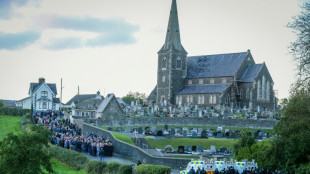 Tense standoff over flashpoint N.Ireland parade lasts into night

 Stunned McNulty wins 'miracle' road race world title

 Re-released 'Avengers: Endgame' snaps-up N. America box office lead

 American McNulty wins shock road race world title

 Serbia's President Aleksandar Vucic announces resignation

"There's no such thing as a natural disaster," geographers like to say -- a reminder that human choices turn hazards into tragedies.
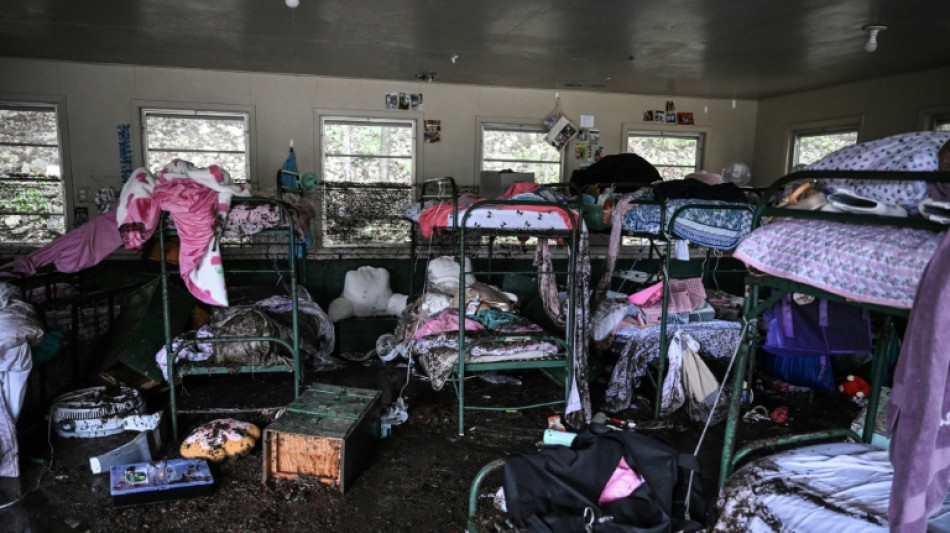
The Texas flash floods this weekend that left scores dead, including many children, offer a stark illustration.
Here is a look at the intertwined forces that amplified this storm's impact.
- 'Flash Flood Alley' -
Texas's Hill Country sits in an area known as "Flash Flood Alley," explains Hatim Sharif, a hydrologist at the University of Texas at San Antonio.
Warm Gulf air rushes up the Balcones Escarpment -- a line of steep hills and cliffs that arcs southwest down from near Dallas -- cools, and dumps torrents onto thin soils that quickly give way to bedrock.
Runoff then funnels through a dense web of creeks.
"Water will rise very, very quickly, within minutes or a few hours," Sharif told AFP.
The early hours of July 4 proved that.
Around 3:00 am, a gauge near Camp Mystic in Hunt showed the Guadalupe River rising nearly a foot (30 centimeters) every five minutes; by 4:30 am the river had surged more than 20 feet, National Weather Service data show.
That's enough water to sweep away people, vehicles and buildings.
An urgent NWS warning went out shortly after 1:00 am, but most campers were asleep; phones are banned, coverage is patchy, and darkness makes escape routes hard to judge.
Sharif urges the use of hydrologic forecasts that convert rainfall into likely river levels.
"Rainfall needs to be translated into runoff," he said. "If you have 10 inches, what will happen?"
Summer camps have long been drawn to the region for its natural beauty. But with increasing risks, Sharif warns that treating these sites as safe or permanent is unwise.
- 'We need to adapt' -
A warmer atmosphere holds more moisture, loading the dice for heavier downpours.
A new analysis by ClimaMeter finds that the meteorological conditions preceding the floods, which delivered more than twice the monthly average rainfall in a single day, could not be explained by natural variability alone.
"Climate change is already affecting us, so we need to adapt," said Mireia Ginesta, a climate scientist at the University of Oxford who co-authored the research, which is funded by the European Union and the French National Centre for Scientific Research (CNRS).
"We also need to cut our emissions, and make sure that proper funding is provided to the forecast services and research in general on climate change."
The call comes as the National Weather Service, like other agencies, has experienced deep staffing cuts under President Donald Trump's administration.
Experts stress, however, that NWS forecasters performed admirably under the circumstances.
The real failure, wrote climate scientist Daniel Swain on Bluesky, "was not a bad weather prediction, it was one of 'last mile' forecast/warning dissemination."
- No warning system -
For years, commissioners in Kerr County, where the camps lie, considered flood sirens and digital alerts to replace the informal practice of summer camp staff getting on the radio and warning fellow camps.
Minutes from a 2016 meeting show officials labeling even a feasibility study "a little extravagant," suggesting sirens would mainly help tourists, and vouching for the word-of-mouth system.
The debate rolled on. In 2021, commissioners again balked, this time wary of federal funds tied to the Biden administration that they opposed politically.
After the disaster, San Antonio mother Nicole Wilson -- who almost sent her daughters to Camp Mystic -- launched a petition on Change.org urging Governor Greg Abbott to approve a modern warning network.
"Five minutes of that siren going off could have saved every single one of those children," she told AFP.
K.Thomson--BTB