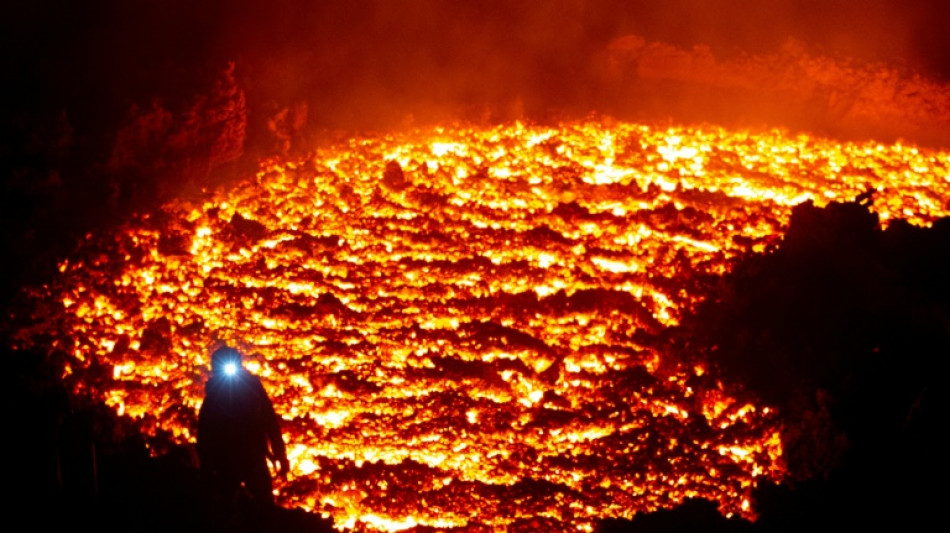
Volcanoes 'hidden source' of CO2 in past climate change: study / Photo: © AFP/File

 Putin visits Kuril islands claimed by Japan

 Swiatek downs Svitolina to reach first WTA final of 2026

 Jones says Japan 'watching videos of geese' for Australia clash

 Bloodied but unbowed, defending champ Shelton reaches Montreal final
 Wallabies make eight changes for return Japan Test

 Messi returns after father's death but Miami knocked out of Leagues Cup

 Outflanked by AI, stars fade for South Korea's blind fortune-tellers

 Venezuela govt, opposition wrap up round of post-Maduro talks

 Five things to know about Zambia as it goes to the polls

 Nakashima holds off Jodar to book first ATP Masters final in Montreal

 Trump 'low-key' bets on economic pressure against Iran
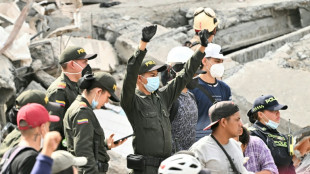
 Pitch invaders take selfies with Fernandes during Man Utd friendly

 No-stress Sabalenka won't fret over lackluster 2026 results

 Hometown hero Hudson-Smith basks in Euro glory

 PSG down Aston Villa to retain UEFA Super Cup

 Trump's spokesperson Karoline Leavitt to step down

 'Imposing ignorance': US climate science under siege

 As millions gazed in awe, a swathe of Spain plunged into darkness

 Xavi named first foreign Netherlands coach since 1978

 NBA triple-double king Westbrook to retire after 18 seasons
 'Trying to bury the science': US climate research under siege

 Eurovision to bar countries at war from hosting

 Italian teenager Curtis breaks 50m backstroke world record at Europeans

 New mum Sjostrom wins 50m butterfly for 18th European gold

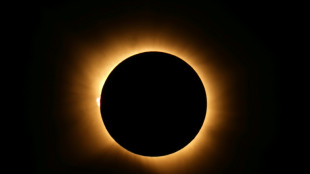
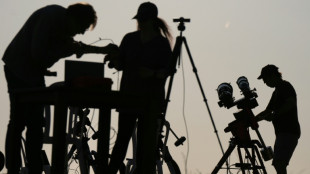 Solar eclipse darkens Arctic Russia on course for Spain
Massive fields of magma underneath ancient volcanoes spewed out carbon dioxide long after eruptions on the surface had ended, potentially explaining why past global warming episodes lasted longer than expected, a study said Wednesday.
Humans are emitting far more planet-heating carbon-dioxide (C02) than all the world's volcanoes put together. But scientists hope that by studying climate change in Earth's distant past, they can understand how the world heats up -- and crucially, how it can cool down again.
Scientists have long been puzzled by how long it took Earth's atmosphere to recover from a mass extinction event 252 million years ago that ended the Permian period.
It was the most severe extinction event in our planet's history, wiping out roughly 90 percent of marine species and 70 percent of those on land.
Scientists believe the upheaval was caused by huge volcanic eruptions in Siberia. The eruptions created what are called large igneous provinces -- huge underground regions of magma and rock -- which have been linked to four of the five big mass extinctions since complex life appeared on Earth.
It took Earth's climate nearly five million years to recover.
But according to scientific models, the world should have regrouped much more quickly.
"Earth's natural thermostat seems to have gone haywire during and after this event," said Benjamin Black, a researcher at Rutgers University in the United States and lead author of a new study in the journal Nature Geoscience.
- 'This gives me hope' -
To find out more, the US-led team carried out chemical analyses of lava, used computer models to simulate inner-Earth processes and compared climate records preserved in rock.
Their results suggested that even once volcanic activity had ended during past episodes, magma kept releasing carbon dioxide deep in the Earth's crust and mantle, which continued heating the globe.
"Our findings are important because they identify a hidden source of CO2 to the atmosphere during moments in Earth's past when climate has warmed abruptly and stayed warm much longer than we expected," Black said in a statement.
"We think we have figured out an important piece of the puzzle for how Earth's climate was disrupted, and perhaps just as importantly, how it recovered."
Black told AFP that the process described in the study "definitely cannot explain present-day climate change".
All the world's volcanoes currently "release less than one percent as much carbon to the atmosphere as human activities," he explained.
The type of volcanism the team investigated was last seen on Earth 16 million years ago, Black said, and was so enormous it could "cover the continental United States or Europe half a kilometre deep in lava".
But if the findings are confirmed, it could show that Earth's thermostat is working better than scientists had thought.
"This gives me hope that geologic processes will be able to gradually draw anthropogenic CO2 back out of the atmosphere," Black said.
"But it will still take hundreds of thousands to millions of years, which is obviously a long time for human beings."
H.Seidel--BTB