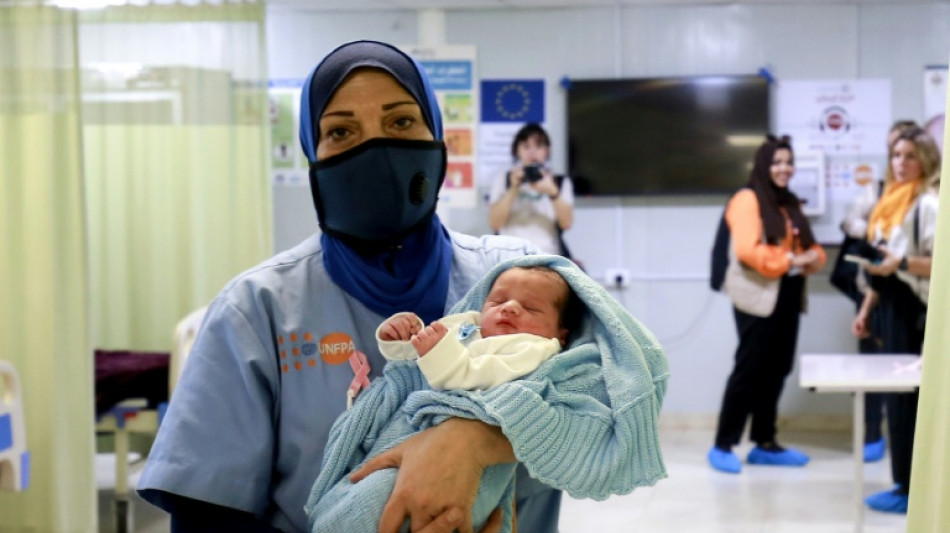
Trump's cuts are 'devastating' for vulnerable women worldwide: UN / Photo: © afp/AFP/File

 Italy bans burqas in schools, caps numbers of foreign students per class

 Israel policies threaten 'life and existence' of Palestinians, Abbas says

 Paolini steers Italy past China in BJK
 Zidane admits emotion on eve of first game as France coach
 Breetzke and Maharaj sink Australia in first one-day international
 Zelensky broke confidentiality with North Korea POWs disclosure: South's president

 Former Liverpool star Carroll reveals he was sexually assaulted
 Dominican Republic calls for Haiti force to be strengthened
 Dolly Parton's nephew ordered to stay away from estate staff, properties

 Early exit for Philippine darling Eala at Singapore Open

 Hurricane Polo triggers huge waves in coastal Mexican city
 What happens if the US bans diesel exports

 Macklemore hits back with 'Free Palestine Tour' after Sheeran split

 Met Opera to give New Yorkers free tickets in affordability push
 Top ECB official to resign to take up IMF role
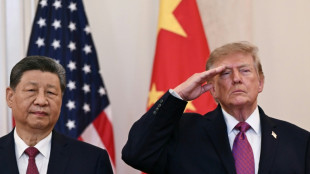 Xi and Trump call for peace in lavish White House state visit

 Five up-and-coming players looking to make mark in Nations League

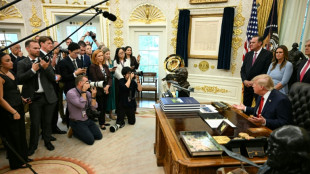 CNN, MS NOW, Politico request court hearing after White House access denied
 Eviction of pensioner puts Spain housing crisis in spotlight
 CNN, MS NOW, Politico say reporters still barred from White House
 Udinese sign ex-Real Madrid defender Alaba on free transfer

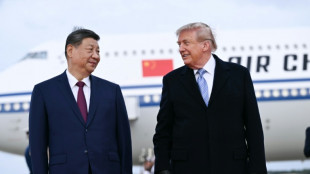 Trump welcomes Xi to Washington with lavish praise

 Kane relishing chance to become England's most-capped player

 Average EU diesel price hits record 2.23 euros a litre: AFP analysis

 Whitetip Investments Marks 10 Years of Regulation, Transparency & Responsible Trading

The United Nations Population Fund (UNFPA) has faced budget cuts before, but the impact of President Donald Trump's policies has been even more "devastating" for reproductive health worldwide, chief Natalia Kanem told AFP.
The agency has been targeted by US conservatives since the Kemp-Kasten Amendment's enactment in 1985 by Congress, when the administration of then president Ronald Reagan rallied against China's population policies, accusing Beijing of promoting forced abortions and sterilizations.
All subsequent Republican presidencies have cut US funding to UNFPA, and the second Trump administration is no exception.
"We've had over $330 million worth of projects ended," virtually overnight, in "some of the hardest hit regions of the world" like Afghanistan, Kanem said in an interview coinciding with the release of the UNFPA's annual report Tuesday.
"So yes, we are suffering."
Kanem pointed to the Zaatari refugee camp in Jordan as an example, where over the years more than 18,000 pregnancies were delivered by "heroic midwives" who "conducted these over 18,000 deliveries without a single maternal death, which you know, in a crisis situation is extraordinary."
"Those maternity wards today have closed. The funding cuts immediately have meant that those midwives are no longer able to do their jobs," Kanem said.
Although it is too soon to estimate the precise impacts of the US cuts, they will inevitably result in increased maternal mortality and more unintended pregnancies, according to Kanem.
"What's different this time for UNFPA is that our ecosystem of other reproductive health actors who might be able to fill in for us," Kanem said, adding they are "reeling from huge impact of having their funding denied."
The Trump administration has slashed many such external aid programs.
"So it is very lamentable that this year, to me, has been drastically worse than ever before, precisely because now everybody is caught up in the whirlwind."
"The withdrawal of the United States from the funding arena for reproductive health has been devastating," Kanem said.
- Desire and rights -
American policy is not only marked by funding cuts, but also a challenge to gender equality matters.
"There will be debates about concepts, but there shouldn't be any debate about the non-negotiability of the rights and choices of women and adolescent girls," Kanem emphasized.
"We always embrace change, but we should not compromise on these common values which spell the difference between life and death for women and girls all around the world," she continued.
"Women deserve support. Adolescent girls deserve to finish their schooling, not become pregnant, not be bartered or sent off into marriage as a non-solution to issues that families may face."
The UNFPA's annual report, published Tuesday and based on the results of an survey of 14,000 people from 14 countries -- nations which represent over a third of the world's population -- also underscores concerns that millions of people around the world cannot create the families they desire.
More than 40 percent of those over the age of 50 reported not having the number of children they wanted -- with 31 percent saying they had fewer kids than they desired and 12 percent saying they had more than they wanted.
More than half of respondents said economic barriers prevented them from having more children.
Conversely, one in five said they were pressured into having a child, and one in three adults reported an unintended pregnancy.
The majority of people "live in countries where fertility rates have fallen so far and so fast that they are below replacement," Kanem said.
"We know that the issue of population pressure takes almost like a headline drastic view. Some people think there are way too many people. Others are saying we don't have enough, women should have more babies," Kanem said.
"What UNFPA really cares about is a woman's true desire, rights and choices," Kanem said.
L.Janezki--BTB