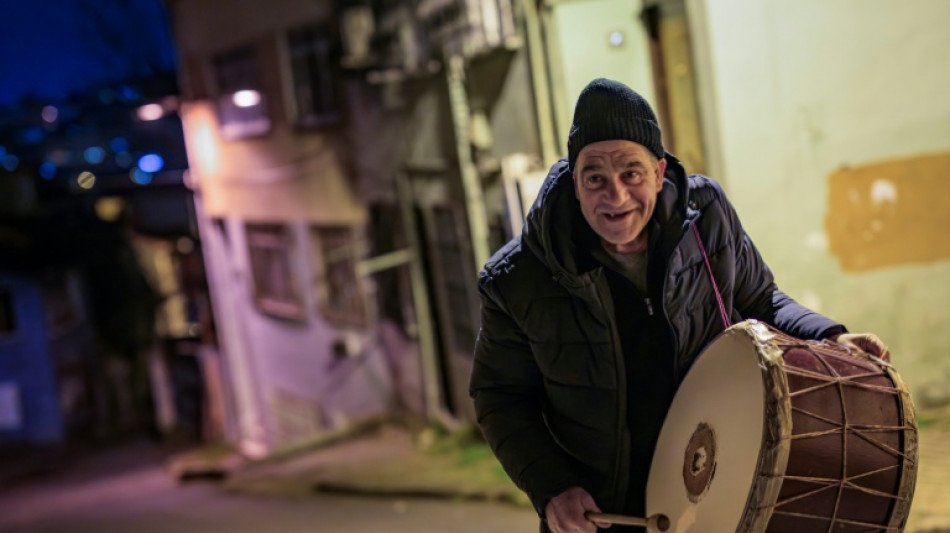
Before dawn, ancient drum rite wakes Istanbul faithful to fast / Photo: © AFP

 Typhoon Dujuan leaves four dead in Japan, 45,000 houses without power

 G7 leaders condemn Houthi strikes on Saudi Arabia
 Google data centre sparks protests in Austria

 Shin Ohashi: Junk food-loving teen and Japan's next big swimming hope

 Stocks rise on AI buzz, drop in oil prices

 China's robot dancers limber up for America's Got Talent final

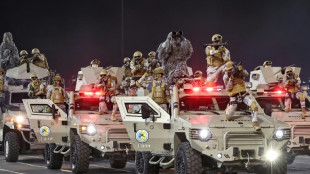 Despite military might, Saudi struggles to crush the Houthis

 Trump to tout deals, defend Iran war in UN speech

 Sri Lanka to issue verdict in landmark Easter attack trial

 No green light to lift EU sanctions on Russian oligarchs, talks to resume

 UK agrees support for Saudi in struggle with Houthis: reports

 EU foreign policy chief calls for continued sanctions on Russia

 Flights scrapped, evacuations urged as Typhoon Dujuan wallops Japan

 Fonseca to take break from tennis
 A Cuban zoo, and its animals, in epic battle for survival

 Infantino proposes consulting federations to reform FIFA

 El Nino weather pattern enters record territory: scientist
 OpenAI calls for US to lead global effort on AI standards
 South African ostriches plucked alive for luxury fashion: report

 US networks halt Trump coverage in revolt over White House ban

 Paramount settles with US states to clear Warner Bros. mega-merger

 Climate crisis a job for world leaders, not just activists: UK FM
 US networks halt Trump coverage over White House ban
 French singer accuses Miley Cyrus of plagiarism

 EU fines Google 403 mn euros for location data breach

It's 3:30 am and lights are slowly coming on in the homes lining a narrow Istanbul street as people are woken up by the rhythmic thump of a drum.
Emerging onto a balcony, Sibel Savas and her grandson look down as the drummer -- or davulcu in Turkish -- wanders through the Ayvansaray neighbourhood, his drumbeat waking the faithful for a last meal before the daily Ramadan fast begins at sunrise.
For the past 55 years, Hakan Ozbingol has got up at 3:00 am every day during Ramadan to play his davul, a large double-headed drum carried with a strap and played while walking through the streets.
He inherited the role from his father, with whom he started venturing out when he was 10.
Although their nightly sortie is purely voluntary, local residents traditionally give a tip at the end of the month, says Ozbingol, who is now 65.
If once this amounted to enough to buy the children a nice gift, these days it's barely enough "to buy them clothes or to cover the bills", he sighs, as people struggle to cope with Turkey's bitter economic crisis.
But for him, it's not a job but more of a sacred duty.
"As long as it's to do with Allah, this drum will never fall silent. We're doing Allah's work, it's our duty," he said hoarsely, trudging with bent back through the winding streets.
- Ottoman roots -
According to Harun Korkmaz, a music historian at Istanbul University, the Ramadan drum rite "dates back to the end of the 19th century" when the Ottoman military bands, or mehters, performed several times a day, setting the pace of daily life.
"The davulcu are continuing this tradition," he told AFP of a tradition that began in Istanbul and spread to the rest of the country.
As well as drumming, "real" davulcu will also chant "mani", or short rhythmic poems, under people's windows to flatter a sleepy audience, Ozbingol explained.
"In Turkey, there are few davulcus who know how to sing mani. It's not enough to pick up the drum and bang on it while walking around," he said, proudly tapping his temple to show where he keeps this knowledge.
The tradition began in the Fatih district near Istanbul's historic peninsula, and most of today's Ramadan drummers come from Turkey's Roma community, who today number around 2.7 million, research figures show.
As the davulcu walks the street where washing lines vie for space with Turkish flags draped from the high facades of the buildings, he is warmly greeted by a pensioner called Zafer, who is also a musician.
"If the Roma weren't here there would be nothing. They are the musicians and Istanbul's Ramadan drummers," the 71-year-old told AFP.
- 'A tradition that must not die' -
Still holding her grandson, Sibal Savas says she has no alarm clock and relies on the early-morning drum rite to wake her up.
"This tradition is important to us this. It comes from our ancestors," she told AFP.
In a nearby street, another drummer, 58-year-old Yurdaer, is trying to play a little more quietly as he passes the home of an elderly neighbour who has heart problems.
Across Istanbul, Turkey's largest city, there are a total of 3,000 davulcu who go out nightly to wake the faithful in 961 neighbourhoods, explains Selami Aykut, who heads an organisation representing the megacity's local mayors.
Since the pandemic, when the nightly rite was briefly halted, the authorities doubled the number of accredited drummers.
"We have increased the number we work with in order to better pass on our Ottoman traditions to young people, so that they can feel the excitement of Ramadan," Aykut told AFP.
With street vendors hawking traditional foods increasingly scarce across the city's streets, their services replaced by supermarkets, the davulcu is one rare tradition not at risk of disappearing due to his unique role at Ramadan.
"There are no more people selling boza (a fermented cereal-based drink), no more yoghurt sellers, nor other street vendors -- they've almost all disappeared," said Ozbingol.
"Only the davulcu are left," he murmurs, wandering off up the street.
O.Lorenz--BTB