
Carmen de Burgos: The Life and Legacy of Spain's Pioneer for Women's Rights

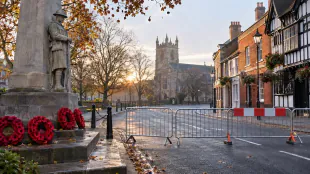 Worcestershire road closures announced for Remembrance Sunday events

 UBC professor describes police call after Galloway remark as act of care

 False voting claims spread rapidly during US Election Day

 Democrats Retake Congress, Ending Trump’s Legislative Majority

 Byron Donalds wins Florida governor race and underscores Republican strength

 Commentator predicts possible US strike on Iran as regional tensions rise

 Manchester United climbs standings after 3-2 Champions League win over Roma

 India introduces four-layer motor insurance choice from December 15

 BHEL wins Adani Power projects valued at up to ₹28,000 crore

 India seeks threefold increase in coal stocks to prevent summer power shortages

 Adobe PDF Spaces Introduces Shared AI Conversations for Document Collaboration

 KKR secures Indian regulator approval for Gentari Renewables investment

 Bharti Airtel revenue expected to grow at double-digit pace in second quarter

 Italy Claims Curling Silver at European Championships in Ostrava

 Kuwait finance minister holds economic cooperation talks at COMCEC

 Abdul El-Sayed declares victory in Michigan Senate contest

 Democrats capture US Congress in sweeping midterm victory

 Manchester United rallies past Roma as PSG dominates in Champions League

 Qatar sees tentative opening for renewed regional diplomacy
 Qatar Tourism joins Pacific Asia Travel Association at London travel market
 Abdul El-Sayed Wins Michigan Senate Seat in Historic Election

 Qatar media bodies discuss support for humanitarian initiatives
Carmen de Burgos, a prominent Spanish writer and journalist of the Generation of '98, dedicated her career to advocating for women's autonomy and civil rights. Known by the pseudonym Colombine, she broke barriers as Spain's first female daily newspaper columnist and became a leading voice for gender equality before her death in 1932.
Carmen de Burgos, a defining figure in early 20th-century Spanish literature and journalism, spent her life challenging the social constraints placed on women. Her work and biography reflect a consistent defense of personal autonomy, education, and civil rights during an era when female independence was severely limited.
Born in Almería in 1867, Burgos pursued a career that defied contemporary expectations. She became a teacher and later entered journalism, making decisions that prioritized individual aspiration over familial or societal imposition. Her commitment to these principles was reinforced by her personal experiences, including a difficult marriage that ended in separation.
In 1901, she moved to Madrid, marking the beginning of a significant professional phase. Two years later, in 1903, she made history by becoming the first woman to write a daily column for a Spanish newspaper, publishing under the pseudonym Colombine in Diario Universal. This milestone was not merely a personal achievement but a structural challenge to the male-dominated press.
Burgos’s activism extended beyond journalism into organized advocacy. In 1920, she was elected president of the Cruzada de Mujeres Españolas (Crusade of Spanish Women), an organization dedicated to securing equal rights for women. Her leadership in this role underscored her belief that social change required collaboration among those sharing similar ideals.
Her literary output was extensive and politically engaged. She wrote novels, essays, travel books, and articles that addressed critical issues such as divorce, education reform, and female suffrage. Burgos argued for a society where women could fully develop their capabilities without being conditioned by traditional impositions.
She died in Madrid in 1932 after decades of writing and activism. Her legacy remains a reference point for discussions on personal freedom and the importance of building lives based on individual values rather than external expectations.
H.Seidel--BTB