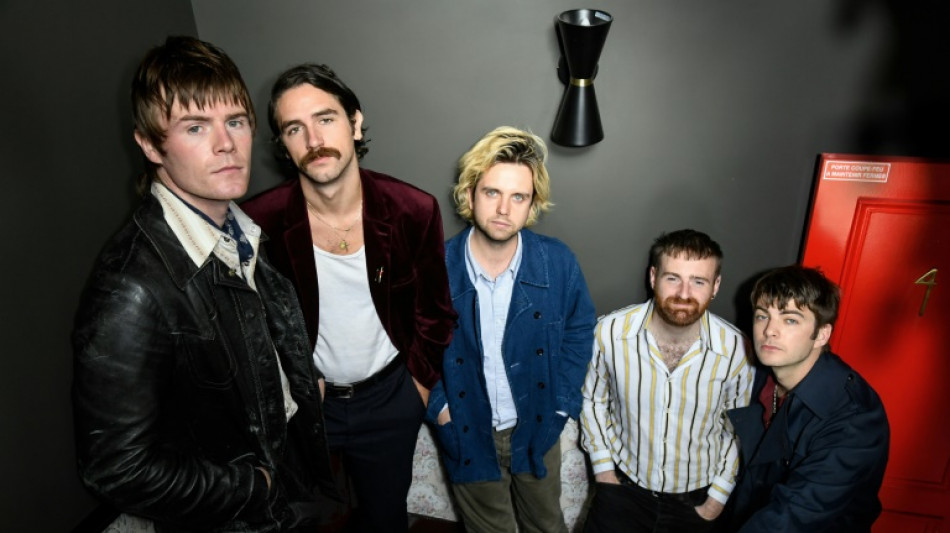
Fontaines DC, dark balladeers of Irish identity / Photo: © AFP/File

 Far-Right Extremists Claim Opportunity to Seize Control of GOP After Midterms

 New Campaign Highlights Knowledge Gaps on Carbon Monoxide Safety Among Americans

 JR East Launches 'teppay' to Integrate Suica Balance with Mobile Payments

 Phil Spencer on Housing Market Fairness: How Buyers and Sellers Navigate Falling Prices

 Beirut Cinema Festival Draws Thousands Despite War Fatigue

 AMD Forecasts First-Ever Revenue Lead Over Intel on AI Chip Surge

 GoodData.AI Launches the Agentic Serving Plane, a New Category of Enterprise Data Infrastructure for AI Agents

 Abu Dhabi Demand Response Project Achieves 401 MW Peak Reduction in 2025

 Panthers expected to begin 2027 NRL season away from new stadium
Fontaines DC's raw, romantic tales of Dublin street life marked them out as the Next Big Thing in rock. Moving to London in the pandemic has taken their music in a darker direction.
Labelled the "best band in the world" last month at Britain's NME Awards, the Irish five-piece have built up a daunting level of hype in a few short years.
Distilling the rowdy essence of Irish pubs and literature, their 2019 debut "Dogrel" was a relief to many who felt today's youth too clean-cut and worried about their mental health to carry forth the flame of dirty, drunken rock'n'roll.
Their attachment to home has not waned despite the band relocating to London.
"The things you miss and you yearn for become a kind of glue between us as Irish people abroad," guitarist Conor Curley told AFP during a recent visit to Paris.
Part of that was their shock at the prejudice they encountered in Britain —- which became the undercurrent of their third album "Skinty Fia", out on Friday.
Opening track "In ar gCroithe go deo" ("In our hearts forever") refers to a true story from 2020 when an Irish woman's family was denied the right to put the phrase on her gravestone because it might be mistaken for a political slogan.
"The story sent shivers down my spine," said Curley. "The idea that they thought the Irish language was provocative is incredibly hurtful — a language that (the British) tried to forcefully eradicate."
"Maybe previous generations that came before us thought 'Ah fuck it. Let's just ignore this stuff and get on with it'. But being in the position of artists, trying to question things, our view was: That's not fucking on."
- 'Get it in you' -
Their first two albums, "Dogrel" and "A Hero's Death", drew on the history of alternative indie with hints of classic rock'n'roll as the backdrop to frontman Grian Chatten's growling, shouted lyrics — a mix of romantic calls-to-arms and sombre visions of modern life.
"Skinty Fia" continues their move away from their early poppier anthems with a more electronic, clubby feel that reflects their decision to record exclusively at night.
"We were yearning for something that wasn't as rigid as a nine-to-five. We didn't want to feel like we were starting work every morning, bringing our lunch and so on," said Curley.
They were also conscious of wanting to escape the hype they had built, with so much fixation on their image as a bunch of "punk poets" trading their favourite verses in the backrooms of scuzzy Dublin pubs.
"That was the genesis of the band ... but it became like I didn't even want to read poetry anymore because I felt like people expected me to," Curley said with a laugh.
"Almost like journalists were pushing some Yeats towards me, saying 'Get it in you!'"
Still, the band have hardly given up on their old influences. The new album has titles like "Nabokov" and "Bloomsday" (a reference to James Joyce) that make clear literature remains the band's lifeblood.
Does that make them feel a little out of touch with a young generation often characterised as clean-cut and obsessed more with social media than books?
"Maybe we do feel a little bit out of our time. We're one of the last generations to glorify in smoking fags and going to the pub.
"We were never trying to be like that. It's always felt natural. We're just like-minded people who are incredibly romantic about that idea of the Dublin scene -- of writers like Patrick Kavanagh and all those heads floating around the city, being in pubs, sharing things that they've created."
R.Adler--BTB
