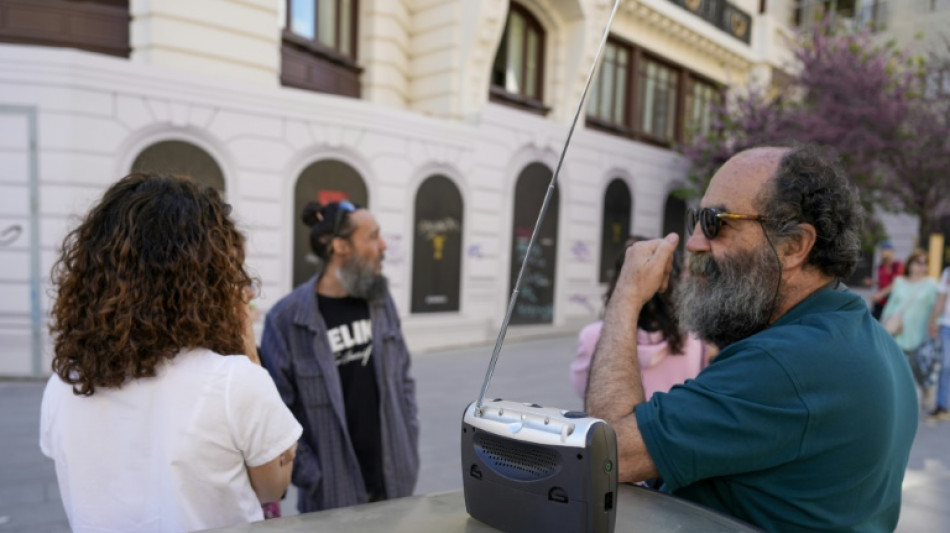
Candles and radios in demand in Spain as blackout lessons sink in / Photo: © AFP

 Justice Alito steps aside from major US climate case

 Willis happy with England exile after retains Top 14 player award
 Spain housing protests keep heat on government as PM seeks new law
 Wissa spoils Zimbabwe homecoming as DR Congo win AFCON qualifier

 UK police release on bail five men held over airbase incident

 Ex-All Black Plummer 'sure' New Zealand will find Super Rugby solution

 Shein sees 1% revenue growth in first half of 2026
 Netherlands regrets Israel retaliation in settlements row
 Moscow seizes Russian assets of German food retailer Metro
 Bulgarian spirits inflamed by new rakia rules

 Documentary turns camera on architect Peter Zumthor
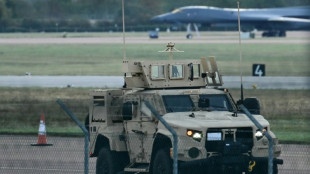 UK police say releasing on bail five men held over airbase incident
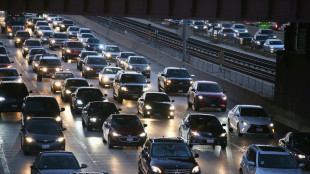 Trump admin finalizes reversal of US fuel economy standards
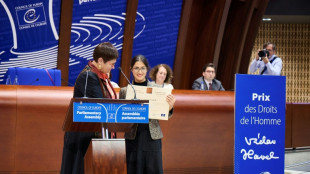
 US says no China arms sale plans after envoy cites Trump offer

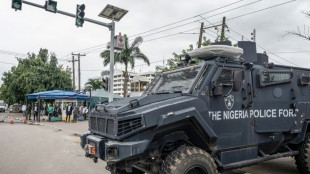 Dozens kidnapped in two weekend attacks in northern Nigeria
 Next stop the world: Pathirage wins Asian Games javelin gold

 Aster Launches Perpetual Grid Trading 2.0 with Up to 140,000 $ASTER Liquidity Mining Campaign
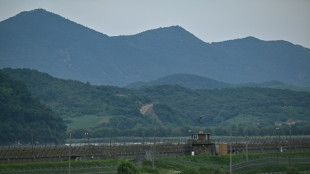 Seoul says North Korean mines 'highly suspected' as cause of DMZ blast
 Russia pummels Kyiv in latest deadly daytime attack
 Wartime Ukraine works to keep its railways on track

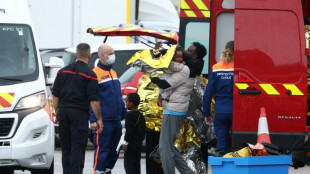 Boy among 3 dead in migrant Channel crossing accident: French authorities
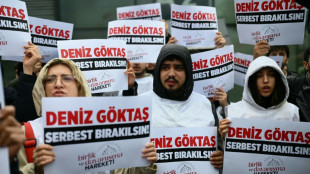
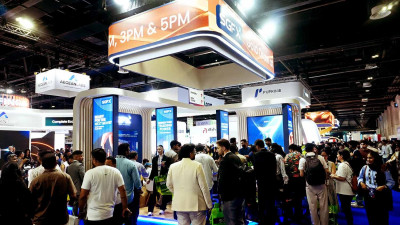 SGFX Creates a Standout Brand Experience at Forex Expo Dubai 2026
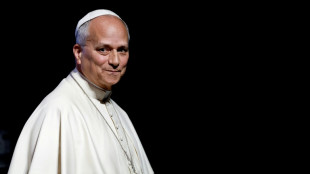 Pope urges Europe to help combat 'deceit and lies' in international ties

 Injured Buttler to miss England ODI series in Pakistan
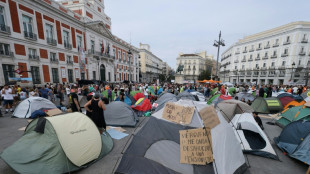 Madrid housing protesters vow to maintain pressure on government
Madrid residents returned to work Tuesday a day after a crippling nationwide blackout in Spain with a renewed sense of the necessity of candles, cash and battery-powered radios for emergencies.
After taking five times as long as usual to get home on Monday with only cards to make payments, Valentin Santiago told AFP he now knows "you should always carry cash".
The environmental technician said he now plans to buy a pocket flashlight and a battery-powered radio so he can more easily stay informed in the event of a future power outage.
With power down across Spain and Portugal on Monday, and phone coverage spotty, access to the internet and television was wiped out.
People were instead forced to gather around transistor radios in the streets or cars with their radios blaring and doors open to listen to the news.
"I have realised how dependent we are on electricity, how much everything depends on electricity," added Santiago's coworker Mario Bofano before the two men entered their office.
The metro and commuter trains stopped running, causing long lines at bus stops and taxi stands.
Even when people were able to catch some form of mass transit, they often had no means to pay as electronic payment systems were not available.
Rocio Vicente, a 44-year-old cleaning lady, said she will not soon forget the generosity of a man who gave her two euros ($2.30) to pay for a bus ticket since she had no cash.
- Emergency kits -
Many people walked for hours to get home. Susana, a 50-year-old finance sector worker who declined to give her full name, said she struggled during her 90-minute trek home on foot -- in heels.
The lesson she learned? "Wear sneakers," she joked as she had breakfast with coworkers at a central Madrid cafe where a television replayed images of the chaos unleashed by the massive blackout.
"You have to buy a transistor radio, candles, batteries and tins of white beans," she said.
Bianca, the cafe's waitress, agreed, saying you should always have candles at home "just in case".
Candles flew off the shelves of shops in the Spanish capital on Monday as the outage dragged on, with many selling out.
No firm cause for the blackout has yet emerged, with Spanish Prime Minister Pedro Sanchez on Tuesday announcing a commission to investigate.
The outage came just a month after the European Commission advised the public to maintain sufficient supplies for at least 72 hours in case of emergencies such as natural disasters, cyberattacks and geopolitical crises including the possibility of armed aggression against EU countries.
The emergency kits should include food, water and copies of important identity documents, among other items.
- 'Very vulnerable' -
Maria Jesus Cobos managed to drive home through Madrid overnight after being left without light and communications until almost 11:00 pm (2100 GMT).
"That showed that we are very vulnerable. There's something that isn't being done well. I had to drive without traffic lights," she told AFP.
But she added that people had been "very civilised".
"It shows us that we can get by," added the 50-year-old lawyer, who recounted meeting people standing by the road with signs showing their intended destination.
Some people, like 32-year-old lawyer Marcos Garcia, welcomed the pause as "an afternoon of respite, a technology break, an impromptu disconnection".
"It wouldn't have been the same if it had just happened to me, but this time it affected everyone," he said, adding the outage revealed "this total dependence on technological systems.
"Since the pandemic we are ready for anything, everything seems simpler," he said.
O.Krause--BTB