Traditional culture, fancy dress meet at Hong Kong's raucous bun festival / Photo: © AFP

 Daily Horoscope for November 14, 2026: Astrological Predictions for All Zodiac Signs

 Yes Bank Petitions Supreme Court to Reverse AT-1 Bond Write-Off Ruling

 TK Maxx Beauty Gift Sets Offer Alternative to Christmas Candles

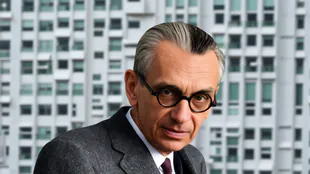 AI Unlocks Hundreds of Proved Theorems in Kurt Gödel’s Hidden Notebooks

 Info Edge’s Naukri Hits Rs 240 Crore Annualized AI Revenue Run Rate

 Honda Recalls 635,000 Vehicles Over Software-Induced Power Steering Failure

Kids dressed as real and fantasy heroes, drummers pounding a beat and sweet treats offered to powerful gods -- thousands of visitors poured onto a small island in Hong Kong for its annual Bun Festival on Monday.
Held on the Chinese city's outlying Cheung Chau, the raucous five-day festival transforms the usually quiet fishing community into an explosion of colour and noise that blends Cantonese traditions with modern culture and draws locals and tourists alike.
Monday's three-hour parade -- known as "Piu Sik", meaning floating colours -- traditionally saw locals march through town with statues of local gods.
These days, local children dress up as both real and imaginary figures, including Olympic fencing champion Cheung Ka Long, Ne Zha from a recent Chinese blockbuster animation, and the legendary Monkey King, Sun Wukong.
The five-day Bun Festival is said to date back to the 1800s, when fisherfolk drove away pirates and the plague by parading a statue of Taoist sea deity Pak Tai.
"It's my first time to visit the island and this showed me a new Hong Kong, completely different from downtown," Cedric Linet, a 49-year-old French banker, told AFP.
The buns represent good fortune, holding sweet bean paste in a crumbly pastry marked with Chinese characters for "peace" and "safety".
Crowds queued all day to get hold of the buns, used to make offerings to traditional deities and sacrifices to the souls of the dead.
The climax of the festival comes at midnight, when contestants climb a 14-metre high tower covered in buns -- hoping to be crowned "King of Kings" or "Queen of Queens".
Among those gathered were tourists from Communist Party-ruled mainland China, keen to get a glimpse of traditional Chinese culture not often seen back home.
Chinese students studying in Hong Kong, Gao Yidan and Cheng Qi, said they learnt about the festival on Xiaohongshu, an app similar to Instagram.
"The atmosphere of traditional culture is very strong here," Gao told AFP.
Another visitor from China's southwestern Sichuan province said she appreciated Hong Kong's celebrations of Buddha's birthday, which fell on Monday.
"We love the crowded atmosphere here, even though today's very hot," Huang Dan, a 42-year-old housewife, told AFP.
E.Schubert--BTB