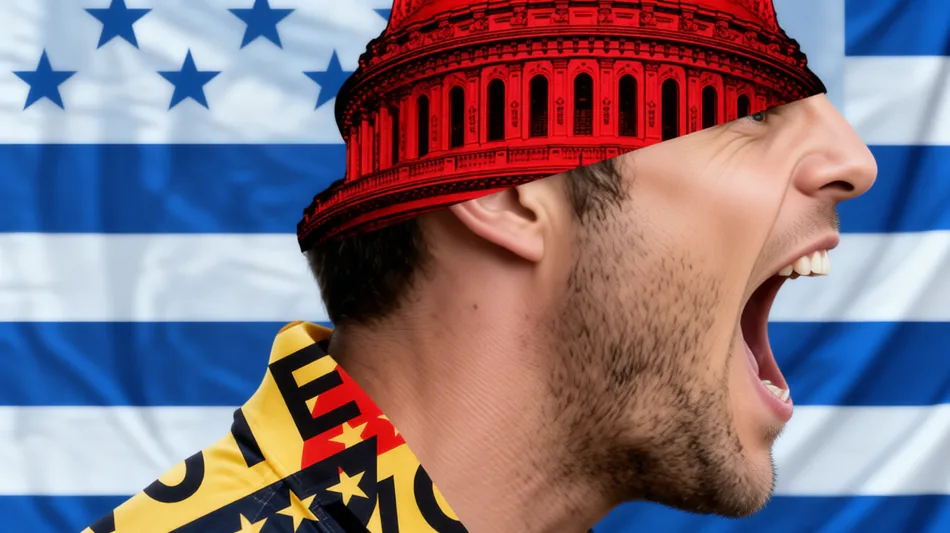
Far-Right Extremists Claim Opportunity to Seize Control of GOP After Midterms

 Far-Right Extremists Claim Opportunity to Seize Control of GOP After Midterms

 New Campaign Highlights Knowledge Gaps on Carbon Monoxide Safety Among Americans

 JR East Launches 'teppay' to Integrate Suica Balance with Mobile Payments

 Phil Spencer on Housing Market Fairness: How Buyers and Sellers Navigate Falling Prices

 Beirut Cinema Festival Draws Thousands Despite War Fatigue

 AMD Forecasts First-Ever Revenue Lead Over Intel on AI Chip Surge

 GoodData.AI Launches the Agentic Serving Plane, a New Category of Enterprise Data Infrastructure for AI Agents

 Abu Dhabi Demand Response Project Achieves 401 MW Peak Reduction in 2025

 Panthers expected to begin 2027 NRL season away from new stadium
Prominent far-right extremists and white nationalist groups are declaring that the recent midterm elections have created a critical opening for them to seize control of the Republican Party. Citing Democratic successes as evidence of liberal overreach, these figures argue that disaffected voters will eventually turn to the far right, urging supporters to organize a hostile takeover of GOP structures rather than waiting for future general elections.
Following the Democratic sweep in last week’s midterm elections, prominent far-right extremists and white nationalist figures have declared that the political landscape has shifted to their advantage. Rather than viewing the losses as a defeat for conservative causes, leaders within these movements argue that the results validate their long-standing criticisms of the Republican establishment and present a unique opportunity to forcibly take over the party from within.
Nick Fuentes, a white nationalist known for his online influence, urged his followers on X to vote for Democratic candidates on Election Day. The post garnered more than 12 million views. Hours later, after Democrats secured significant victories, Fuentes took credit for the outcome on Telegram, referring to the phenomenon as "the Groyper Effect," a nod to the nickname given to his supporters.
In recent livestreams, Fuentes has framed the election results not as a loss for conservatives, but as proof that the current political order is failing. "Let the Democrats rule, see how that goes," Fuentes said during one broadcast last week. He predicted that Democratic policies would eventually alienate voters, pushing them into the arms of the far right. "There will come a time when the far left will terrorize people, and they're going to push all of them into the arms of the right. Who's going to fight the far left? Only the far-right. This is why we have to take over the right wing now," he stated.
Fuentes issued a direct warning to Republican leadership in another stream: "It’s our party now … You need to cooperate with us… Groypers are open for business. It has [to] be America First—and if it's not, we'll do it again for the enemy."
A WIRED review of comments from white supremacist, Christian nationalist, and other far-right groups reveals a consistent narrative: while they attack former President Donald Trump’s failure to prioritize what they define as white, Christian American values, they simultaneously believe that a shift toward the left will trigger a backlash. They anticipate this reaction will drive more Americans to embrace far-right ideologies.
Jared Holt, a senior researcher at Open Measures, noted in an interview with WIRED that many prominent figures in racist extremist movements are declaring the MAGA movement dead following the midterms. "They claim that the results validate their previous criticisms of the Trump administration and opens new opportunities for their movements to push disaffected voters toward their ideological beliefs," Holt said.
Despite the broader political trends, far-right candidates achieved notable success in specific races. The Institute for Research and Education on Human Rights (IREHR) tracked 535 candidates running in statewide races who were members of at least one far-right Facebook group. Of the 476 races called by last Friday, 338 of these candidates won, resulting in a 71 percent win rate. The vast majority of these victories involved Republican incumbents retaining their seats.
In Florida, for example, Marshall Rawson, a 34-year-old citrus farmer who attended the 2017 Unite the Right rally in Charlottesville, easily defeated his Democratic opponent in the state’s 10th District State House race. His victory was cited by extremists as evidence of growing support for their agenda.
Beyond candidate wins, several states passed ballot measures aligned with far-right priorities, including anti-transgender regulations, strict voter ID laws, and anti-immigrant provisions. Devin Burghart, executive director of IREHR, highlighted the specific impact in Washington State, where voters approved a ban on transgender athletes in female sports. "Girls in Washington State, for instance, will now have to go through a genital exam or pass a DNA test before they can participate in youth sports," Burghart said during a briefing with reporters.
Extremist groups celebrated these ballot measure successes as proof that the current Republican Party could not deliver on issues their base cared about. The Cape Fear chapter of the Proud Boys, a street-fighting group whose activities have been largely disrupted by Immigration and Customs Enforcement operations in recent years, expressed optimism following the election losses.
"The ultimate rebuke of the current Republican establishment was citizens voting them out of office then doing their job for them by passing ballot measures on issues the Republicans should have already handled," the Cape Fear Proud Boys wrote in their Telegram channel.
Chuck Tanner, research director at IREHR, explained that these groups are interpreting the election data differently than mainstream political analysts. "What this signals to me is even in those places where they lost, they're getting 41-47 percent of the vote [so] there's still a mass base to try to be mobilized," Tanner said. "That's the lesson that some of these groups are taking out of it, is that there's still that mass base."
This perceived mass base forms the core of the extremists' strategy for an internal takeover of the Republican Party. Warren Balogh, a white supremacist from Pittsburgh who also attended the 2017 Unite the Right rally, wrote on his Telegram channel: "Now is the time, if you're a nationalist, to start looking at moving on the Republican Party where you live. And by that I mean, organizing your guys and going in to do a hostile takeover."
The Cape Fear Proud Boys echoed this sentiment in a post days after the election: "This may be the best thing that has happened to the Republican party in a half-century. Now you will learn to placate us, or you will continue to fail. Understand this: You’re going to run people we like and you're going to do what we say."
While some groups advocate for organizational infiltration, others are pushing for more immediate action. Joel Webbon, a Christian nationalist pastor, stated in an online video posted after the election: "I'm not saying that we will win through democracy, I'm just saying we'll win." Webbon and fellow far-right pastors, along with conspiracy theorist Alex Jones, are scheduled to meet at a conference in Texas this week. At least one talk at the event is titled "battle plans" for "Christian nationalists on the right to be able to seize power."
Experts WIRED spoke to reported that they have not yet observed explicit calls for violence from the far-right groups they are tracking. However, some figures are already planning activities ahead of January 3, when Congress is set to certify the midterm election results.
Jake Lang, a far-right activist and pardoned January 6 rioter, announced plans for an event in Washington, D.C., on that date. It remains unclear how many people plan to attend; one Christian nationalist pastor listed by Lang as an official speaker has already indicated he will not be speaking. Lang did not respond to a request for comment regarding the event.
The convergence of electoral successes for specific candidates, the passage of aligned ballot measures, and the public rhetoric from extremist leaders suggests a coordinated effort to redefine the Republican Party’s direction. Whether this internal pressure translates into structural change within the party or remains confined to online discourse and fringe gatherings will depend on how GOP leadership responds to these demands in the coming months.
J.Fankhauser--BTB