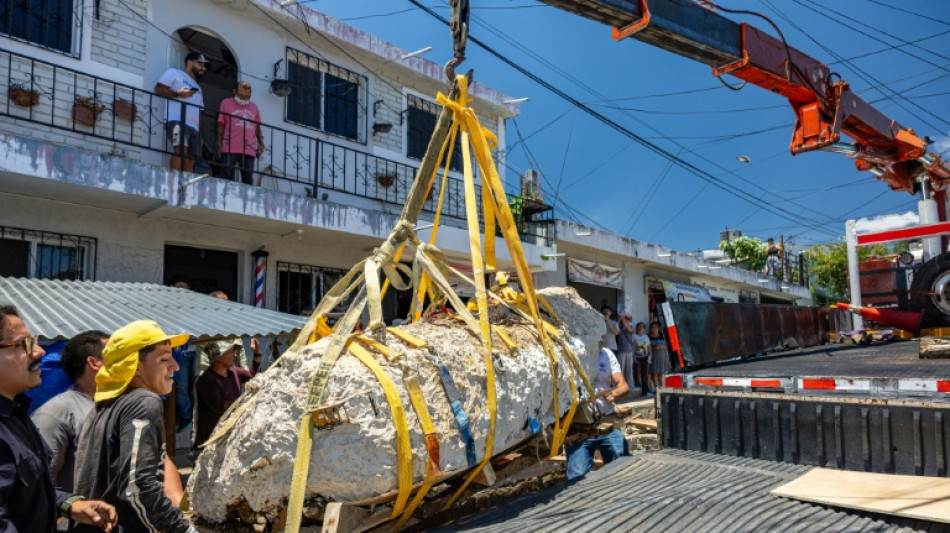
Nearly 3,000-year-old human remains unearthed in El Salvador / Photo: © EL SALVADOR'S PRESIDENCY PRESS OFFICE/AFP

 Far-Right Extremists Claim Opportunity to Seize Control of GOP After Midterms

 New Campaign Highlights Knowledge Gaps on Carbon Monoxide Safety Among Americans

 JR East Launches 'teppay' to Integrate Suica Balance with Mobile Payments

 Phil Spencer on Housing Market Fairness: How Buyers and Sellers Navigate Falling Prices

 Beirut Cinema Festival Draws Thousands Despite War Fatigue

 AMD Forecasts First-Ever Revenue Lead Over Intel on AI Chip Surge

 GoodData.AI Launches the Agentic Serving Plane, a New Category of Enterprise Data Infrastructure for AI Agents

 Abu Dhabi Demand Response Project Achieves 401 MW Peak Reduction in 2025

 Panthers expected to begin 2027 NRL season away from new stadium
Archaeologists in El Salvador exhumed human remains believed to be nearly 3,000 years old on Tuesday, the Ministry of Culture said.
The remains were first uncovered on July 2 in a burial site at Antiguo Cuscatlan, a suburb of San Salvador, and are estimated to date back to around 850 BC, according to the ministry.
The burial pit also contained a small Usulutan-style ceramic vessel shaped like a sea turtle, as well as remnants of cassava branches preserved beneath layers of volcanic ash deposited over different periods.
The remains were found face down and will undergo radiocarbon dating to determine their age. DNA analysis will also be carried out to determine the person's sex.
According to the ministry, the site may contain burials similar to those uncovered at the Chalchuapa archaeological site in western El Salvador, where archaeologists unearthed the remains of 33 people in the 1970s.
The discovery -- considered the earliest known evidence of human sacrifice in Mesoamerica -- included 26 complete skeletons, four partial skeletons and three isolated skulls.
Many were found face down with their hands and feet bound, while others showed signs of mutilation or decapitation.
J.Bergmann--BTB
