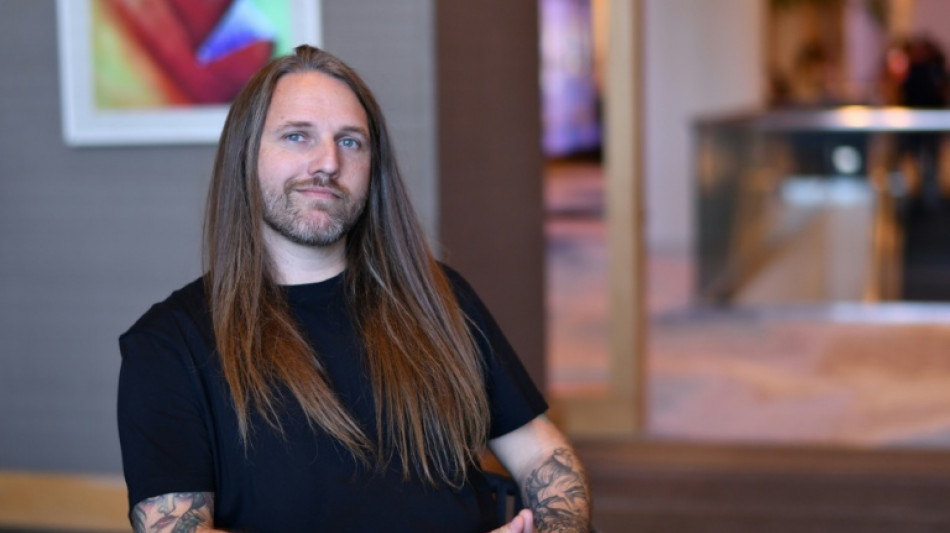
Documentary on Stan Lee's final years faced industry opposition, filmmaker says / Photo: © AFP

 Far-Right Extremists Claim Opportunity to Seize Control of GOP After Midterms

 New Campaign Highlights Knowledge Gaps on Carbon Monoxide Safety Among Americans

 JR East Launches 'teppay' to Integrate Suica Balance with Mobile Payments

 Phil Spencer on Housing Market Fairness: How Buyers and Sellers Navigate Falling Prices

 Beirut Cinema Festival Draws Thousands Despite War Fatigue

 AMD Forecasts First-Ever Revenue Lead Over Intel on AI Chip Surge

 GoodData.AI Launches the Agentic Serving Plane, a New Category of Enterprise Data Infrastructure for AI Agents

 Abu Dhabi Demand Response Project Achieves 401 MW Peak Reduction in 2025

 Panthers expected to begin 2027 NRL season away from new stadium
Comic book enthusiast Jon Bolerjack began filming with Stan Lee around 2014, intending to document how the legendary creator behind some of the world's most beloved superheroes was spending his 90s.
But along with Lee's superstardom -- fans clamoring for photos and autographs -- the filmmaker documented worrying instances of alleged exploitation that he warns could happen to anyone.
"Stan Lee: The Final Years" hits streaming platforms on Tuesday, despite what Bolerjack described as opposition from some in the industry.
The documentary includes allegations from people close to Lee of exploitation by two former managers, one of whom was charged in 2019 -- a year after Lee's death at the age of 95 -- with fraud, theft, and the unlawful deprivation of liberty.
Bolerjack, who said he was with Lee in the days before his death, told AFP in an interview at Comic-Con in San Diego that he faced pressure not to release the film, including from one of Lee's former managers and several companies -- which he would not identify.
"There are companies that did things that feel guilty," he said.
"But then the other side of that is -- if you want Stan's face on a lunchbox, do you want people to think happy thoughts about Stan, or do you want them to know that it wasn't so happy?"
- Bad deal -
Born in 1922 in New York, Stanley Martin Lieber began working as a teenager at Marvel's predecessor, Timely Comics, where he adopted the pen name Stan Lee and co-created some of the most famous superheroes, including Spider-Man and Black Panther.
His characters were flawed men -- endowed with superpowers but also plagued by mundane problems -- which captivated audiences and created legions of fans.
Bolerjack's documentary portrays Lee as an affable artist but terrible dealmaker.
"Nobody has made more bad business decisions than I have," Lee admits in one scene.
He describes how Disney, as it sought to acquire Marvel, offered him a percentage of future profits. But on the advice of a lawyer, he instead accepted a one-time payment of $6 million, half of which his lawyer reportedly took.
Marvel films, including the highly successful "Avengers" movies, went on to become some of the highest grossing blockbusters of all time.
Bolerjack said that Lee "knew that he made a bad deal, and he never tried to blame Disney for that."
He also "didn't have any animosity towards Marvel."
"He loved being the mascot. He loved doing the cameos."
- Allies -
In his final days, Lee was actually visited by Marvel Studios chief Kevin Feige, according to Bolerjack.
"Kevin was very gracious and very nice and took the time. And Stan, I know appreciated it -- made him feel, you know, special that he came all the way out like that."
Bolerjack insisted that the documentary is not about a famous person who was swindled, but rather about a situation that can happen to anyone.
"The story is that anything can happen to you. Anything can happen to your parents. You should pay attention."
He said that right down the hall at Comic-Con -- where Lee was a frequent guest-of-honor -- someone could be making a bad deal, if they didn't have the right people in their corner.
"If I took you right now... down to the floor and I pointed at someone, and I said, 'That guy is the next Stan Lee.' What would you do about it?"
R.Adler--BTB