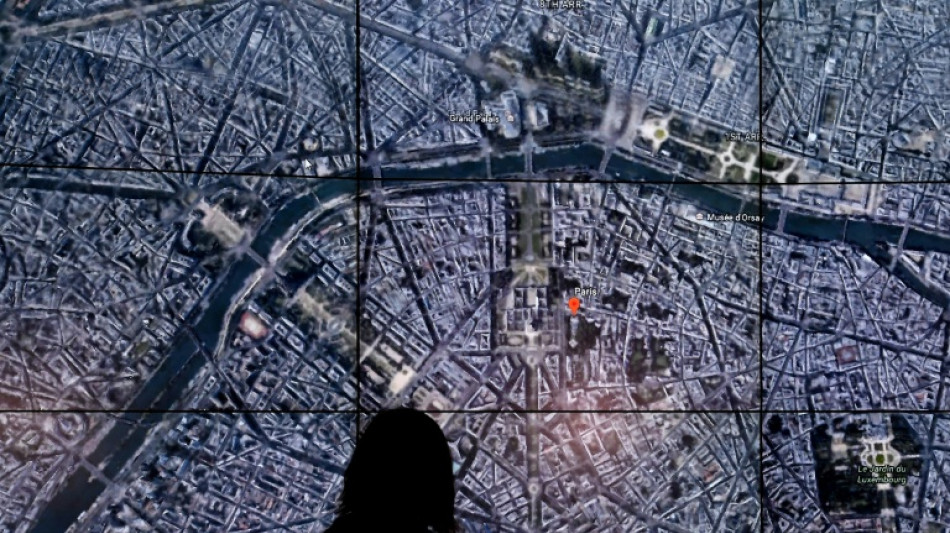
Google rolls back new satellite image AI tool after backlash / Photo: © AFP

 Pope to celebrate giant Paris mass after 'peace' appeal

 Homes flooded, roads submerged: Bangkok declares disaster over heavy rains

 Ahead of Paris mass, pope urges life together in 'dignity and peace'

 Austria 'ghetto' language classes leave children to repeat school
 S.African women runners arm themselves after string of killings
 'I felt embarrassed': Japan eSports whizz-kid, 11, wins Games gold

 Indonesia fires threatens critically-endangered orangutan: IUCN

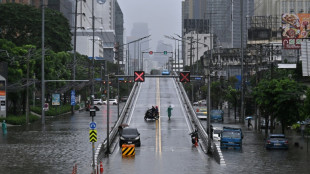 Bangkok declares flood disaster across city

 'World records not enough': North Korea weightlifters target Olympic gold rush

 Iran proposes Hormuz plan, Trump reportedly refuses
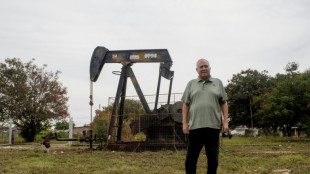
 El Nino rewrites the menu in the world's top restaurants
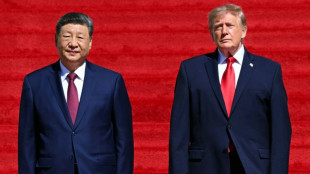
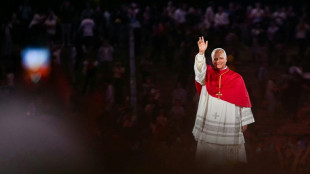 Pope to hold giant mass on Champs-Elysees

 TikTok to pay Alabama $100 mn under pre-trial settlement

 Internationals take 7-3 Presidents Cup lead after foursomes sweep

 Brazil team returns to Colombian site of doomed jet crash

 Mbappe injured as Zidane wins on France debut, Italy lose on Mancini return

 Senegal draw in Vieira debut, Nigeria survive scare as Cape Verde crash

 U2 performs surprise 50th anniversary gigs in Dublin

 Pope calls worshippers 'saints of France' after AI warning

 US court sides with Pentagon in Anthropic AI ban

 Wall Street stocks rise, greeting optimism over possible US-Iran deal

 NFL players chief raises concerns over pitch for Maracana game

 Daytime Russian attacks kill seven in Kyiv
 Spotting AI writing: how reliable are the detectors?
 French youth await pope after AI 'paradise of machines' warning
Google rolled back Friday a new feature allowing Google Earth users to generate AI visualizations on top of the service's satellite imagery, following a furious backlash from researchers and open-source intelligence experts about the potential for disinformation.
"We've seen geospatial professionals using this feature for a range of useful purposes, however we've also seen people sharing screenshots of generated imagery that appear to violate our policies," a Google spokesperson said in a statement to AFP. "So we're rolling back this feature in Google Earth while we work on implementing stronger guardrails."
"We know that people uniquely trust Google Earth for a reliable view of the world," the statement added.
The "create image" tool, unveiled Thursday, had integrated Google's Nano Banana 2 image-generation technology into Google Earth, letting users zoom into locations and build pictures in seconds based on the program's satellite, aerial and 3D-mapping data.
Google had described it as a way to "visualize history, create real estate plans and more."
But disinformation researchers warned that it could enable bad actors to misuse Google Earth -- a key resource for fact-checking and verification -- to create realistic geospatial fakes.
"Google spent 20 years building the reference the world checks against," digital investigations expert Henk Van Ess wrote in one widely shared post on Substack. "Today it added a button that makes things up."
Brady Africk, a research analyst at the American Enterprise Institute specializing in satellite imagery analysis, told AFP the Google Earth update would have made it "easier to generate convincing fake satellite imagery that can spread quickly online and mislead the public."
Such fakes "erode public trust in satellite imagery, and make the jobs of journalists and researchers more difficult," he said.
- 'Irrevocably damaged overnight' -
As the critiques piled up, Google had said on X that the images created with the feature included SynthID digital watermarks, invisible markers embedded in media generated using the company's artificial intelligence tools.
"We take misinformation seriously," the company wrote, linking to an AI policy that instructs users against "misinformation, misrepresentation or misleading activities."
AFP's tests of the feature on Friday were able to fabricate satellite images that could have had serious global consequences: an explosion in Paris, a nuclear site in Iran, a bomb crater in Russia and an Islamic State group training ground in Syria.
The tool also fulfilled prompts to visualize other fake scenes, including floods across Bangladesh, a migrant caravan camped at the US-Mexico border and a suspicious warehouse holding vans in Georgia -- one of several states US President Donald Trump has falsely accused of widespread election fraud.
The "create image" button no longer appeared within Google Earth after Google paused its use.
Similar fakes have previously had real-world impacts. In 2023, an AI image depicting an explosion at the Pentagon briefly rattled the markets.
Early in the US war with Iran, an AI-altered satellite image depicting a destroyed US military base garnered millions of views across platforms.
Among the groups that called for Google to reverse its decision was the London-based Centre for Information Resilience, whose executive director Ross Burley told AFP the feature was "irresponsible."
"Trust in satellite imagery has taken decades to build and could be irrevocably damaged overnight," Burley said.
GeoConfirmed, a volunteer-driven open-source intelligence project that verifies visuals from conflicts around the globe, had also urged Google to reconsider.
"We are already observing individuals exploiting the new Google Earth web tool to make military positions, relabel buildings as schools, and experiment with manipulating the information environment," the group wrote on X, before Google announced it was rolling back the feature.
"The primary, and perhaps only, practical use of this tool appears to be the creation and dissemination of mis- and disinformation."
D.Schneider--BTB