Slow Fire at Jermyn Street Theatre Examines Survival and Moral Choice

 Far-Right Extremists Claim Opportunity to Seize Control of GOP After Midterms

 New Campaign Highlights Knowledge Gaps on Carbon Monoxide Safety Among Americans

 JR East Launches 'teppay' to Integrate Suica Balance with Mobile Payments

 Phil Spencer on Housing Market Fairness: How Buyers and Sellers Navigate Falling Prices

 Beirut Cinema Festival Draws Thousands Despite War Fatigue

 AMD Forecasts First-Ever Revenue Lead Over Intel on AI Chip Surge

 GoodData.AI Launches the Agentic Serving Plane, a New Category of Enterprise Data Infrastructure for AI Agents

 Abu Dhabi Demand Response Project Achieves 401 MW Peak Reduction in 2025

 Panthers expected to begin 2027 NRL season away from new stadium
A play that explores complex ideas, brought to life by strong performances Director Rex Ryan brings a post-apocalyptic tale into the bunker of the Jermyn Street Theatre. The small but beautiful theatre is the perfect setting for writer Simon Stephens’ world to come to life, as two men hunker down.
Michael Holland
28th August 2026
Lifestyle & Events , Westminster
A play that explores complex ideas, brought to life by strong performances
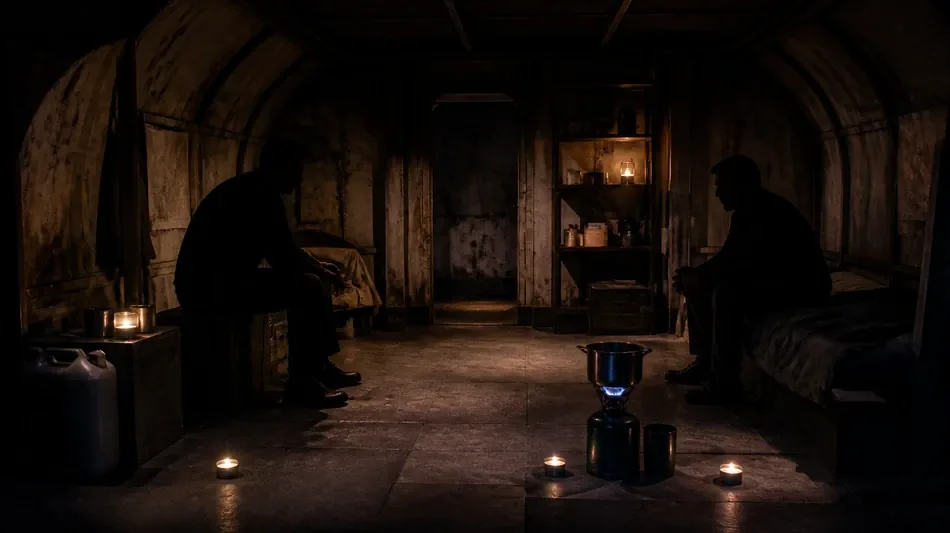
Director Rex Ryan brings a post-apocalyptic tale into the bunker of the Jermyn Street Theatre. The small but beautiful theatre is the perfect setting for writer Simon Stephens’ world to come to life, as two men hunker down and fight for survival. Reece (Ian Toner) and Ashton (Ross Gaynor) do this by rationing their supplies, recounting stories of their lives and waiting… Hoping and waiting are at the core of Stephens’ apocalyptic tale, writes Leo Dunlop.
We first encounter the two main characters seemingly asking each other on a date, yet their incongruous setting, a bunker where tea lights flicker and a camping hob sits on the floor, immediately leaves the audience asking questions. We soon realise that this is part of their survival. They recount stories of their lives to each other, asking the other to play the part of someone they knew before, playing parts in their own memories. Through this, Stephens drip-feeds us fragments of their lives: family, break-ups, a lost son. Reece, a porter, and Ashton, a professor, would never have had a relationship ‘before’, but now, forced together, they offer each other the only option for company and a way to keep those memories alive. But how long can you live in the past?
There is a clear distinction between before and after the event that has left them here. We see it in the luxury they take in the small normalities of ‘before’: hearing music again through a muffled record player or finally savouring the flavour of pork served with rice. Yet despite this distinction, the characters exist in a sort of limbo, isolated and untethered from time. And waiting… waiting for what? At times, the audience can feel the same way. The pacing never quite finds its rhythm, but with the arrival of Fionn Ó Loingsigh’s Presley, the stories and characters suddenly spring into life. Decisions have to be made. Will they trust this newcomer, this other survivor, or will they revert to being the “human animal”?
What the audience are left with is a play that explores complex ideas within a small, intimate story, brought to life by strong performances. Some of the drama and tension gets lost in the way the story is plotted and paced, but it ultimately finds its way to an engaging ending, one that begins to reveal the complexity of hope.
A Slow Fire is, above all, an exploration of memory: the stories we tell to make sense of our past and future, to protect ourselves and to protect the memories and people contained within them. But it is also an exploration of where hope lies: in waiting for change, in taking the risk to seek it out, or in the stories we tell ourselves to make the waiting bearable.
Jermyn Street Theatre until 26th September.
Booking and full details: www.jermynstreettheatre.co.uk – www.glassmasktheatre.com
Related Posts
Classic Boat Festival Returns
28th August 2026
The Brown Suite
28th August 2026
Roll up! Roll up!
28th August 2026
Pressure on HMS Belfast
28th August 2026
F.Pavlenko--BTB
