Let them eat bread: the origins of the baguette / Photo: © AFP/File

 Bid by Italy's Intesa bank to take over MPS gets boost

 Stablecoins Are Quietly Becoming Business Infrastructure, NOWPayments Data Shows

 Oil surges, stocks sink as US reportedly eyes new Iran strikes

 Woman in botched US execution walking, mentally 'foggy': lawyer

 Farhan hopes Pakistan's new combination takes off in Sri Lanka T20Is

 Teenager Andreeva seals China Open semi-final with Bartunkova
 Britain's Burnham says open to Germany joining warplane project

 Kovac's tough love has Dortmund dreaming of title charge

 China announces candidate for WHO chief

 South Korea test-fires its first homegrown hypersonic weapon: presidency

 ONAR Advances Nasdaq Listing Preparation Following Advertise Purple Acquisition and Financing

 Thailand opens extradition process for reporter sought by China
 France struggles to wean social housing off gas

 Germany lifts GDP forecast as economy withstands Iran war

 Sri Lanka appoints Kusal Mendis as Test captain

 Norris confident McLaren can shine in Singapore

 Alex Bodi pushes ahead with expansion: ALIX LASERS showroom planned for Bucharest

 Fossil fuels off COP31 agenda as global output keeps rising

 Haze not 'a threat' to Singapore F1 race: organisers

 COP31 organisers say to seek 'ambitious' action with their text

 Bartunkova thrashes Muchova to reach China Open semi-finals

 Drone hits Yandex data centre, in first such attack on Russia

 Oil prices surge and stocks sink on fresh inflation worries

 AI startup Manus raises $500m after Meta acquisition blocked by China
 From refuge to repatriations: Malaysia's Myanmar U-turn

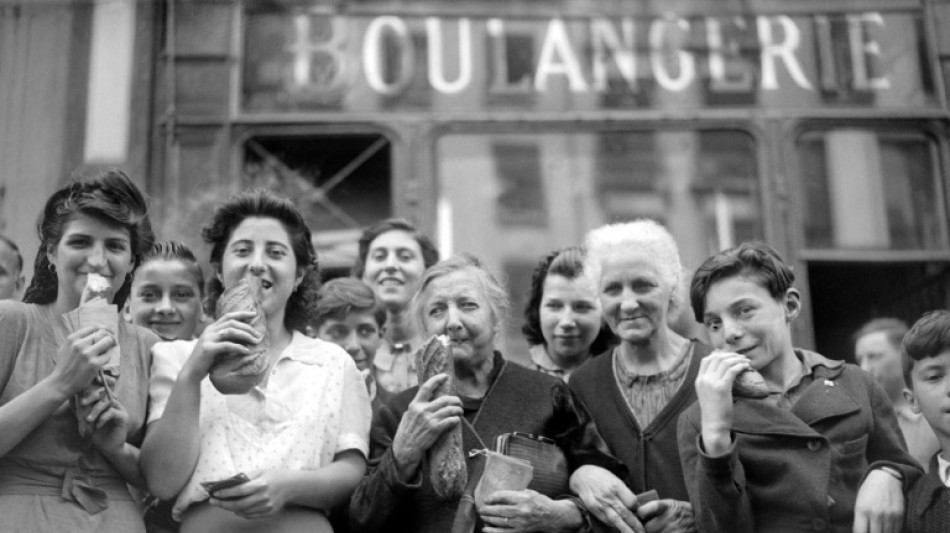
It is as much a part of French culture as the Eiffel Tower or Edith Piaf but the origins of the humble baguette, which UNESCO on Wednesday added to its List of Intangible Cultural Heritage, remain a mystery.
Here are some of the more popular theories:
- Napoleon's bread of war -
The oldest tale has the baguette being kneaded by bakers in Napoleon's army. Less bulky than a traditional loaf, the long slim shape of the baguette made it faster to bake in brick ovens hastily erected on the battlefield.
France's most famous man of war was preoccupied with getting his men their daily bread.
During his Russian campaign in 1812, he toured the ovens daily to sample the day's offering and ensure the crusty batons were being distributed regularly, according to historian Philippe de Segur.
He also had portable bread mills sent to occupied Moscow, but the setbacks suffered by the Grande Armee in one of the deadliest military campaigns in history ended his bid to export the doughy staple.
- The Viennese connection -
Another theory has the baguette starting out in a Viennese bakery in central Paris in the late 1830s.
Artillery officer and entrepreneur August Zang brought Austria's culinary savoir-faire to Paris in the form of the oval-shaped bread that were standard in his country at the time.
According to the Compagnonnage des boulangers et des patissiers, the French bakers' network, Zang decided to make the loaves longer to make them easier for the city's breadwomen to pluck from the big carts they pushed through the city's streets.
- Breaking bread -
Another theory has the baguette being born at the same time as the metro for the 1900 Paris Exposition.
People from across France came to work on the underground and fights would often break out on site between labourers armed with knives, which they used to slice big round loaves of bread for lunch.
According to the herodote.net history site, to avoid bloodshed, one engineer had the idea of ordering longer loaves that could be broken by hand.
- Early rising -
In 1919, a new law aimed to improve the lives of bakers by banning them from working from 10 pm to 4 am.
The reform gave them less time to prepare the traditional sourdough loaf for the morning, marked the widespread transition to what was called at the time the yeast-based "flute", which rose faster and was out of the oven in under half an hour.
Standardised at 80 centimeters (30 inches) and 250 grams (eight ounces) with a fixed price until 1986, the baguette was initially the mainstay of wealthy metropolitans, but after World War II became the emblem of all French people.
J.Bergmann--BTB