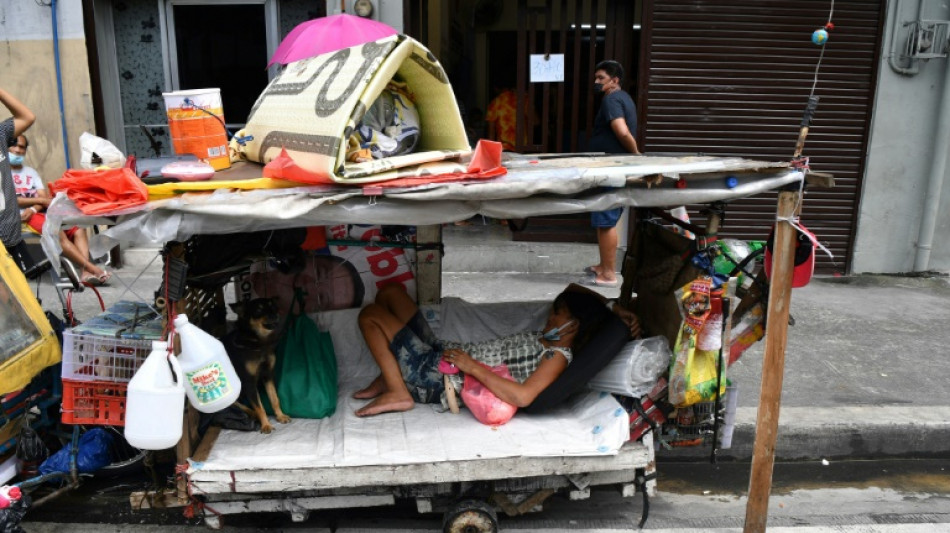
Street life: Manila's homeless find shelter in pushcarts / Photo: © AFP

 Bid by Italy's Intesa bank to take over MPS gets boost

 Stablecoins Are Quietly Becoming Business Infrastructure, NOWPayments Data Shows

 Oil surges, stocks sink as US reportedly eyes new Iran strikes

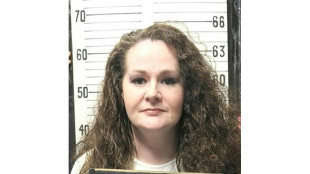 Woman in botched US execution walking, mentally 'foggy': lawyer

 Farhan hopes Pakistan's new combination takes off in Sri Lanka T20Is

 Teenager Andreeva seals China Open semi-final with Bartunkova

 Britain's Burnham says open to Germany joining warplane project

 Kovac's tough love has Dortmund dreaming of title charge

 China announces candidate for WHO chief

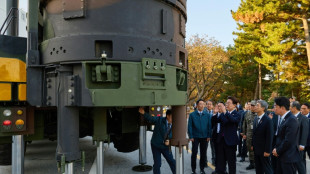 South Korea test-fires its first homegrown hypersonic weapon: presidency

 ONAR Advances Nasdaq Listing Preparation Following Advertise Purple Acquisition and Financing

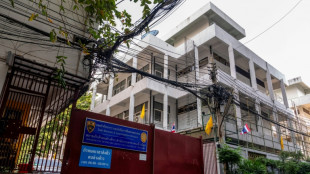 Thailand opens extradition process for reporter sought by China

 France struggles to wean social housing off gas

 Germany lifts GDP forecast as economy withstands Iran war
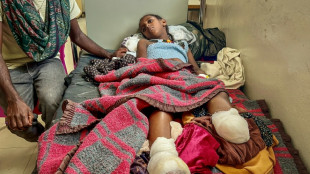
 Sri Lanka appoints Kusal Mendis as Test captain
 Norris confident McLaren can shine in Singapore
 Alex Bodi pushes ahead with expansion: ALIX LASERS showroom planned for Bucharest
 Fossil fuels off COP31 agenda as global output keeps rising

 Haze not 'a threat' to Singapore F1 race: organisers

 COP31 organisers say to seek 'ambitious' action with their text

 Bartunkova thrashes Muchova to reach China Open semi-finals

 Drone hits Yandex data centre, in first such attack on Russia

 Oil prices surge and stocks sink on fresh inflation worries

 AI startup Manus raises $500m after Meta acquisition blocked by China
 From refuge to repatriations: Malaysia's Myanmar U-turn

Like thousands of homeless people in the Philippine capital Manila, Maricel Abawag and her son used to sleep on flattened cardboard boxes laid out on footpaths. Then they got a pushcart.
Pushcarts, known as karitons, are a common sight in the city of more than 13 million people.
Often made from scraps of wood, the human-powered carts are used as shelter, storage and a source of income, such as collecting trash to sell to recyclers.
Abawag, 44, received her pushcart in November 2020 from a Catholic brother.
About a year earlier Abawag had "lost everything" when her partner was jailed for beating her. He died of a heart attack in custody.
She began sleeping on the streets while still breastfeeding her baby.
"If I were to look for a house we would need to pay rent," Abawag told AFP.
"Then we would need to pay for electricity, water, rice and milk -- I don't have enough money."
Nearly 50 percent of Filipino families consider themselves poor, according to the latest survey by research organisation Social Weather Stations.
Many live in overcrowded slums or on the streets.
- 'I'm not afraid' -
Ed Billones, who donated the pushcart to Abawag, said people without homes were often viewed as "lazy and addicts".
In reality, many have come from the provinces in search of work that did not materialise or were forced from their homes by domestic abuse or the loss of the family breadwinner.
Scavenger Boyet Torres, 59, said he fled a violent father decades ago.
He has lost count of the number of pushcarts that have been confiscated by local officials during street-clearing operations.
"If I don't have one, I'm unable to earn," said Torres, who collects plastic bottles and cardboard.
"I'll only earn 30 pesos (54 cents) a day (using sacks) and that's just enough for food. If I have a kariton, I can earn up to 150 pesos."
Every night, Abawag and her now four-year-old son sleep inside their pushcart parked under a tree on the footpath of a busy street.
The cart is 1.6 metres (5.2 feet) long and 31 centimetres (about one foot) wide and contains all their worldly goods like a torch, radio, soap, pillows, blankets and toys.
When it rains, Abawag pulls a clear plastic sheet over the top to keep them dry.
Metres away, people eat at restaurants that Abawag will likely never be able to afford.
After losing a precious bag of clothes to a thief, Abawag now locks the pushcart and secures it to the tree before she sets out on foot every day to sell rags.
"If I sell enough rags, I buy food. If I don't have any sales then I wait for people to give us food," she said.
Abawag said she was embarrased when she began living on the streets. But her religious faith helped her adjust.
"I'm not afraid to live on the street because I pray to God to not abandon us," she said.
D.Schneider--BTB