IMF risks losing legitimacy over Argentina loan: minister / Photo: ©

 South Africa arrests three more suspects, after nine women murdered
 Carse needs time away from England, says captain Brook
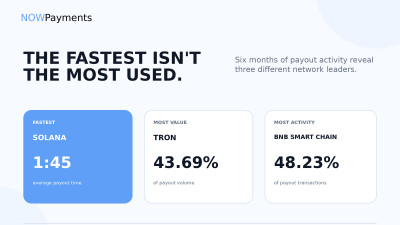 NOWPayments Releases Cross-Chain Payout Data Revealing Key Performance Benchmarks Across TRON, BNB Chain, and Solana
 British Museum bans photos of Bayeux Tapestry as crowds linger
 COP31 host says AI climate footprint to be a summit priority

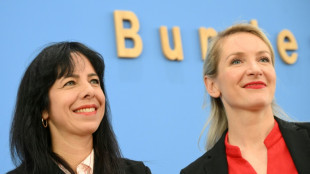 Berlin's far-left vote winners reject anti-semitism charges

 Mancini eager for 'new adventure' on Italy return

 Mbappe says having Zidane as France coach 'like a film'
 Palmer, Rice out of England Nations League squad

 German auto workers stage mass protests in bid to save jobs
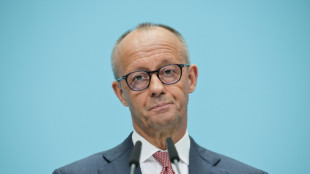 Embattled Merz vows to keep ruling for 'democratic future' of Germany

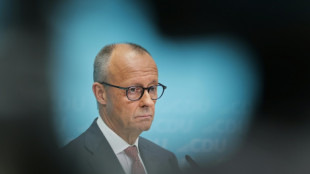 Merz vows to keep ruling coalition together for 'democratic future' of Germany
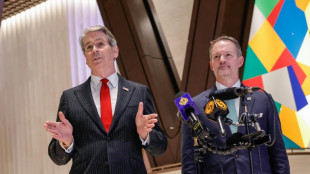
 Spain coach De la Fuente gets new deal after World Cup success
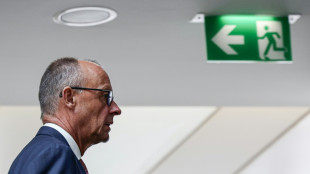 Pressure grows on Germany's Merz after election defeats

 China's Zhang beats Japan rivals to Asian Games gymnastics gold
 Samlingen Haupt: Vad pengar avslöjar om oss människor

 Tens of thousands of German auto workers protest to save jobs

 हॉप्त् कलेक्शन: पैसा हमारे बारे में एक इंसान के रूप में क्या प्रकट करता है

 Συλλογή Haupt: Τι αποκαλύπτει το χρήμα για εμάς τους ανθρώπους
 TradersYard Shifts Focus to Futures Trading

 ハウプト・コレクション:お金が人間について明かすこと

 하우프트 컬렉션: 돈이 우리 인간에 대해 드러내는 것

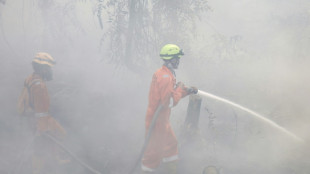 Indonesia doing 'everything' but struggling to curb fires
 Sbírka Haupt: Co o nás lidech prozrazují peníze
 North and South Korea fight out draw in niggly Asian Games clash
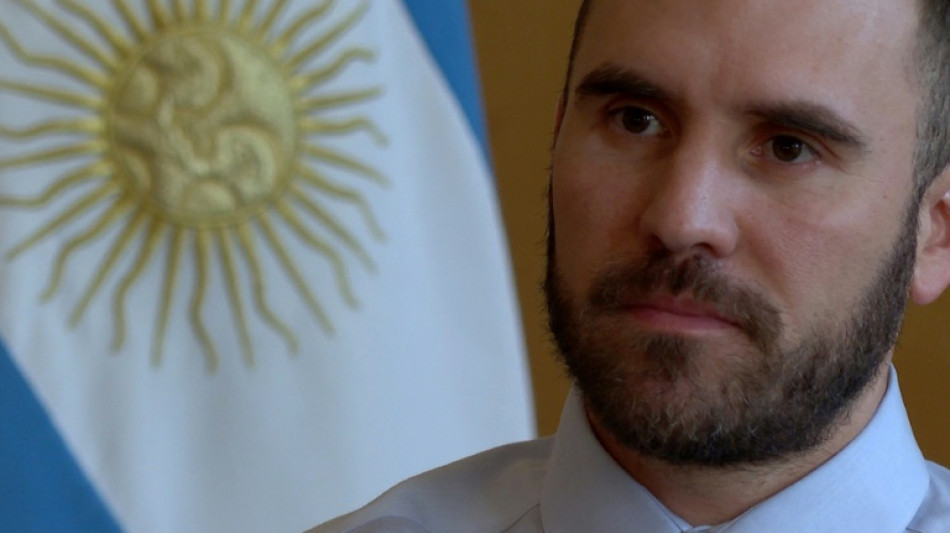
Argentina's economy minister, renegotiating a massive loan with the International Monetary Fund, warned the lender risked losing credibility if it "pushes" the country "into a destabilizing situation."
Argentina has received $44 billion of a $57 billion loan the lender itself said last month had failed to achieve its objectives of restoring confidence in the country's fiscal viability and fostering economic growth.
Latin America's third-largest economy has been in recession since 2018 and is seeking to renegotiate its down payment plan, with amounts of $19 billion and $20 billion due in 2022 and 2023.
The country registered GDP growth of 10 percent in 2021 after a drop of 9.9 percent the previous year largely due to the coronavirus pandemic.
Guzman, in an interview with AFP, said the repayment calendar was "unsustainable" for a country battling a poverty rate of some 40 percent and one of the highest inflation rates in the world at 50 percent.
The government of center-left President Alberto Fernandez, who refused to accept the last $13 billion of the IMF's biggest-ever loan arranged in 2018 under his conservative predecessor Mauricio Macri, is seeking a deal that will reduce Argentina's fiscal deficit through economic growth, not reduced public spending.
Here is what the minister said:
Q: How do you see 2022 unfolding? Is there a risk of a default?
A: Argentina has a very high trade surplus, which is at the highest levels we have achieved. It was over $15 billion in 2021. What is the balance of payments problem facing Argentina in 2022? It is precisely the debt with the IMF. And that is why it is important to refinance it.
It is important for the country and also for the IMF.
If the IMF pushes Argentina into a destabilizing situation, it will also have less legitimacy in the future when other countries require multilateralism in order to solve their problems with the international community.
If we want to protect each other and protect the workings of multilateralism, it is important to agree on something that is credible. And credible means implementable.
We have a set of economic and social objectives, and of course we want to deliver on our commitments, but we need time. We need to be able to refinance these debts.
We need not, for that time, to be burdened with a conditionality that stops recovery and inhibits Argentina's capacity for development in the medium and long term.
Q: Are you expecting support from the United States as the IMF's biggest shareholder? What do you make of the call by Democratic lawmakers to US Treasury Secretary Janet Yellen to back a review of IMF surcharges on larger, outstanding loans, especially at a time that countries need additional resources to fight the pandemic?
A: That was an important request to the Secretary of the Treasury of the United States to support in the IMF board a review of this policy, which harms countries in crisis that have what is called "exceptional access to the International Monetary Fund."
They are charged more when the situation is worse. That... does not help to fulfil the Fund's mission of ensuring global financial stability. Countries with these interest surcharges lose resources with which to carry out the investments needed to improve repayment capacity.
Q: Where does the disagreement lie?
A: There is nearly agreement on where to converge; what is the primary fiscal outcome (before the payment of interest).
The disagreement lies in the speed (of repayment) and this has to do with differing objectives.
In 2021, with an economy growing at 10 percent, the primary fiscal deficit fell by 3.5 percent of GDP. The fiscal deficit in 2021 was between 2.9 percent and 3.0 percent of GDP -- the figure will be known on January 20. It is a strong decline. Good fiscal consolidation is taking place.
What the IMF has put forward is that there must be faster fiscal consolidation.
But there are two problems: the first is that how they propose it be done would halt economic recovery in the short term. The second is that... it would focus on a smaller expansion of investment in public infrastructure. For us this is critical, because that investment is what Argentina needs most, from a productive point of view. That is where the tension lies.
Q: You have made reference to the difference between a perfect agreement and an acceptable one. Are you getting closer to an acceptable deal?
A: There is no perfect agreement...
What we are looking for is to move forward rather than backward. I'd say we are a little better than we were a week ago, but there is a long road ahead. The frequency (of contacts with the IMF) is not only daily, but several times a day.
O.Lorenz--BTB