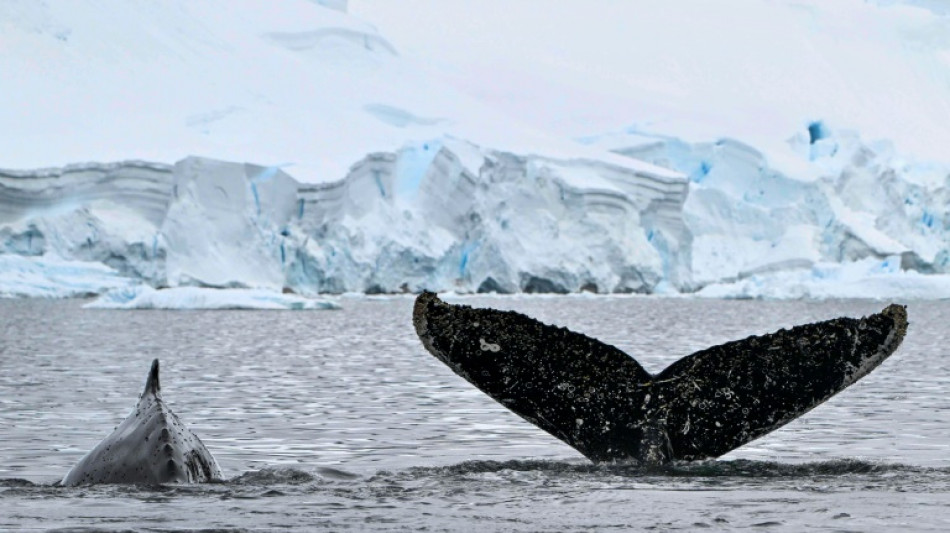
In Antarctica, scientists study extent of microplastics / Photo: © AFP

 Same-sex couple takes fight for equality to Slovakian court
 'High hopes' as Indonesian women get a football league, again

 'Expectations high' for Bordeaux-Begles' Champions Cup hat-trick bid, says Depoortere
 Rennie urges All Blacks to stay focused against 'hurting' Wallabies

 Palmeiras beat Fluminense 2-1 in Libertadores semi-final first leg

 Brewers blasts leave Dodgers on brink

 Tech stock lead rout after US inflation fuels rate hike bets
 Al-Fayed survivors say UK police missing 'bigger picture'

 Online 'witch hunt' sweeps up Asians misidentified as US rape accused

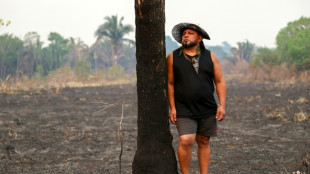 Prospect of Bolsonaro win looms large over Brazil's Indigenous

 Freed from Belarus, founder of Lady Gaga's biggest fan site tells his story

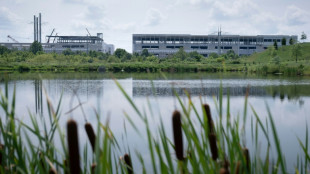 Behind AI's carbon footprint, a potential climate tool

 Trump's new press secretary faces scrutiny over credentials

 PSG 'got lucky' to win Man City thriller, says Luis Enrique

 Real Madrid comeback stuns Roma as Mourinho enjoys happy reunion
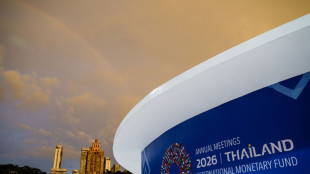
 Shakhtar make winning start at new Champions League 'home'

 Hat-trick hero Barcola primed to shine for Liverpool: Iraola

 Villa put six past Fenerbahce in record rout

 US stocks fall after hot inflation report as leading AI shares tumble
 Government buildings torched in violent Albanian protests

 Wall Street grills Bank of America over money laundering fine

 Mekies extends contract as Red Bull team principal until 2031
 Indonesia rescues starved orangutan from fires: officials

 Real Madrid's Vinicius banned for Clasico after red card
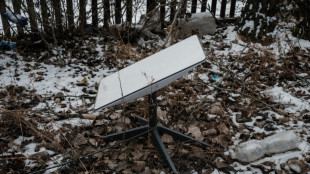
 Restrictions expose Ukraine's Starlink dependency in Russia war: observers
In remote Antarctica, Colombian marine biologist Paulo Tigreros dips a net into the icy waters in his hunt for microplastics in what should be one of the best-preserved ecosystems in the world.
Like a sieve, the net lets water pass through as it retains the small solid particles that float in the Gerlache Strait, a natural corridor approximately 160 kilometers (99 mile) long separating the Palmer Archipelago and the end of the Antarctic Peninsula.
Microscopic studies and other tests on the samples will allow the team of scientists to determine the level of microplastics they contain.
Microplastics are particles made of polymers and other toxic compounds that are smaller than five millimeters, and have come under increasing global attention as they have been found in oceans, clouds, food and throughout the bodies of animals and humans.
Tigreros, 51, and his colleagues are aboard the ARC Simon Bolivar, a Colombian navy vessel carrying out a scientific expedition in the Antarctic and have no doubt that they will detect microplastics on their mission.
Research carried out in 2019 by New Zealand's University of Canterbury revealed the existence of microplastics in Antarctic snow.
More than 430 million tonnes of plastic are produced each year worldwide, according to the UN.
Microplastics come from the breakdown of products such as synthetic car tires, textiles, and ordinary consumer products.
Little is yet known about their impact on human health and the environment.
Tigreros said microplastics are already "omnipresent" in the oceans and their effects can be fatal for animals and ecosystems.
"We consider Antarctica as a continent totally isolated" from human activity, but "it reflects the environmental problems" of the planet, said Jorge Tadeo Lozano, a researcher at the University of Bogota, who is taking part in the expedition.
He said microplastics may have arrived in the region via ocean currents. They can also be transported in the atmosphere and through the excrement of marine animals and fish.
With tweezers, Tigreros picks up a krill and some algae from his sample.
The tiny marine crustacean feeds on the microscopic algae known as phytoplankton, but often mistakes tiny microplastic particles for its food.
Krill in turn is a food source for many larger animals, thus contaminating the rest of the food chain.
"When a whale feeds on this krill, the microplastic most likely enters its intestines," affecting its lung system, reproductive system and even its ability to swim, said Tigreros.
The Antarctic ice sheet, home to penguins and seals, has been suffering for years from rising global temperatures.
The International Atomic Energy Agency (IAEA), in cooperation with Argentina, this month launched its first scientific research expedition to investigate the extent of microplastics in Antarctica.
According to the IAEA, microplastics could further damage the great white continent "by reducing ice reflectivity, altering surface roughness, promoting microbial activity, acting as thermal insulators, and contributing to mechanical weakening of the ice structure."
According to the World Meteorological Organization, the melting of glaciers, which contain 90 percent of the planet's freshwater, could cause sea levels to rise by up to 60 meters.
O.Bulka--BTB