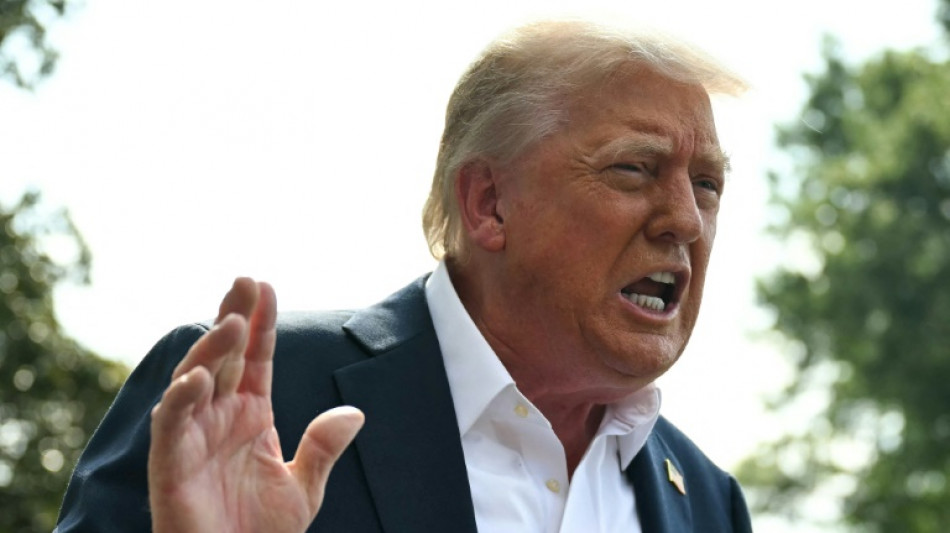
Impact of US tariffs varies across European Union / Photo: © AFP/File

 Djokovic crashes out of Shanghai Masters in his first match

 EU says Turkey's crackdown on rights hampers membership bid

 Two Renoir paintings stolen in France recovered: mayor

 German leader outraged at Schroeder birthday visit to Putin

 Stocks up, oil retreats as Trump rules out pre-vote Iran attack

 South African judge Navi Pillay wins Nobel Peace Prize

 'I completely trust the club,' says Man City boss Maresca

 '10 out of 10' Quintana reminisces over dream Vuelta win

 Maddinson given shock recall but fails to score

 Navi Pillay, South African rights champion, wins Nobel Peace Prize

 Saudi Arabia says three killed at airport as Yemen war expands

 Everton's US owners mull sale of club two years after takeover

 Ukraine takes Russia fight to 'scorching sands' of Sahel
 Chinese AI tool pulled to prevent 'misuse' after South Korea hacks
 Asian stocks mostly up as traders weigh AI, oil dips after surge

 Walking through flames: orangutans rescued in Indonesia fires

 LeBron shines in pre-season debut for re-tooled 76ers

 Okinawa resolution calls for revision of US forces pact after murder

 Verdict expected Friday in Mexico trial over murders of Australia, US surfers

 New York mayor says asking Trump to withdraw ICE after shooting

 Walking through flames: orangutan rescued in Indonesia fires
 James shines in pre-season debut for re-tooled 76ers

 Fuel, fertilizer costs strain US farmers' support for Republicans in midterms

 Trump's 'super intelligence' rebrand to sell AI faces uphill battle

 Fiji demands US provide evidence Chinese official paid bribes for Beijing
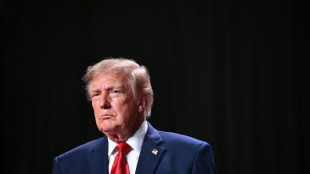
European countries are not all equally exposed to the US market and so will not suffer the same consequences should President Donald Trump go ahead with his threats to impose 30-percent tariffs on the European Union.
Ireland, with a major pharmaceutical industry, is in the front line along with Germany, for whom the United States is a major outlet for its cars, steel and machine tools.
France is less exposed, even if it does have aeronautics, food, wine and luxury goods companies that risk losing markets.
The EU as a whole has an annual trade surplus with the United States of $235.6 billion, according to the Bureau of Economic Analysis (BEA), which reports to the U.S. Department of Commerce. Only China has a higher amount.
- Ireland, Europe's lab -
Ireland has the largest surplus among EU members, at $86.7 billion.
That is largely due to the presence of major American pharmaceutical companies such as Pfizer, Eli Lilly, and Johnson & Johnson. They all set up in Ireland to benefit from a 15 percent corporate tax, compared to 21 percent in the United States.
These companies can thus host their patents in Ireland and sell on the American market, where drug prices are traditionally higher than in the rest of the world.
Ireland also hosts most of the European headquarters of American tech giants, such as Apple, Google and Meta, also attracted by the attractive Irish tax system.
Overall, pharmaceuticals account for 22.5 percent of EU exports to the United States, according to Eurostat, with many major players having announced major investments in the United States.
- Germany, the industrial powerhouse -
Germany, the EU's largest economy, is under particular pressure due to its dependence on exports: it has a surplus of $84.8 billion with the United States, thanks to its large automobile, chemical, steel and machine industries.
The United States accounts for 23 percent of the revenue of Mercedes Benz. While some of that is accounted for by SUVs manufactured in the United States and exported, they risk being hit by any tariff reprisals from the EU.
The Federation of German Industries (BDI) reacted promptly to Donald Trump's announcements on Saturday, calling on the EU and the United States to "quickly find solutions and to avoid an escalation".
- Italy, France in the second line -
Italy and France, with surpluses of $44 billion and $16.4 billion respectively, according to US statistics (French data says the surplus is much smaller), would appear to be less affected. But some sectors are heavily exposed.
The food and wine industries would be particularly affected in both countries, as is also the case for Spain.
A 30-percent tariff would be a "catastrophe" for the French wine and spirits sector, Jerome Despey, head of the viticulture branch of the FNSEA union, said Saturday.
Coldiretti, Italy's main agricultural organisation, said Saturday that tariffs of 30 percent would cost US consumers and Italian food producers some $2.3 billion.
Like Germany, Italy is also concerned about its automotive sector. Franco-Italian manufacturer Stellantis (particularly Fiat and Peugeot) has suspended its forecasts for the year due to these uncertainties.
Exposed French sectors also include aeronautics and luxury goods. LVMH, the world's largest luxury conglomerate, makes a quarter of its sales in the United States.
About a fifth of France's exports to the United States come from the aerospace industry, much of it from Airbus.
Austria and Sweden also have surpluses with the United States, $13.1 billion and $9.8 billion respectively.
L.Dubois--BTB