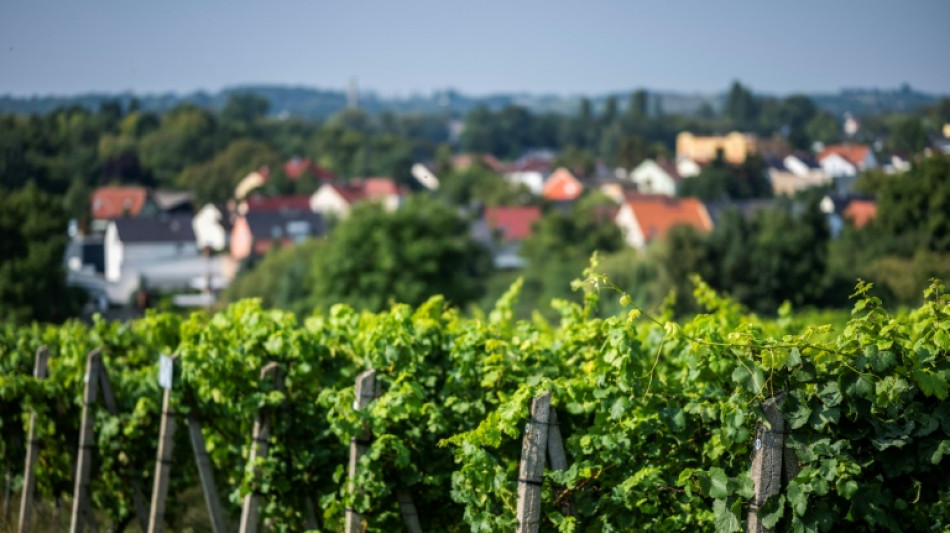
Warmer climate boosts north German vineyards, for now / Photo: © AFP

 Bid by Italy's Intesa bank to take over MPS gets boost

 Stablecoins Are Quietly Becoming Business Infrastructure, NOWPayments Data Shows
 Oil surges, stocks sink as US reportedly eyes new Iran strikes

 Woman in botched US execution walking, mentally 'foggy': lawyer
 Farhan hopes Pakistan's new combination takes off in Sri Lanka T20Is

 Teenager Andreeva seals China Open semi-final with Bartunkova
 Britain's Burnham says open to Germany joining warplane project

 Kovac's tough love has Dortmund dreaming of title charge

 China announces candidate for WHO chief

 South Korea test-fires its first homegrown hypersonic weapon: presidency

 ONAR Advances Nasdaq Listing Preparation Following Advertise Purple Acquisition and Financing

 Thailand opens extradition process for reporter sought by China

 France struggles to wean social housing off gas

 Germany lifts GDP forecast as economy withstands Iran war
 Sri Lanka appoints Kusal Mendis as Test captain
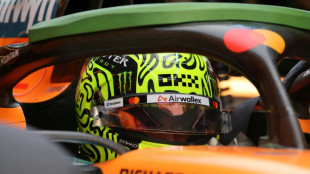 Norris confident McLaren can shine in Singapore

 Alex Bodi pushes ahead with expansion: ALIX LASERS showroom planned for Bucharest
 Fossil fuels off COP31 agenda as global output keeps rising

 Haze not 'a threat' to Singapore F1 race: organisers

 COP31 organisers say to seek 'ambitious' action with their text

 Bartunkova thrashes Muchova to reach China Open semi-finals
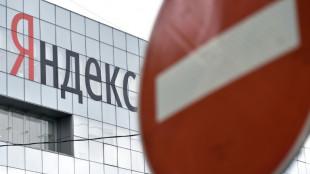 Drone hits Yandex data centre, in first such attack on Russia

 Oil prices surge and stocks sink on fresh inflation worries

 AI startup Manus raises $500m after Meta acquisition blocked by China

 From refuge to repatriations: Malaysia's Myanmar U-turn

The morning sun shines on lush vines as harvesters pick grapes. The hillside vineyard looks like it could be in Italy but lies near Berlin, where climate change has transformed winemaking.
The 75-year-old owner, Manfred Lindicke, said that rising global temperatures over the decades had helped his grapes sweeten and ripen earlier.
"When I started here in 1996, we used to harvest around October 1," he said. "Now we start on September 1."
The climate crisis may be wreaking havoc globally on island nations, deserts and coastal regions, and intensifying disasters from droughts and wildfires to hurricanes and floods.
But in some regions, businesses have benefited from some of its impacts -- including on Lindicke's 7.6-hectare vineyard in Werder, about 35 kilometres (20 miles) southwest of the German capital.
His wine production is among the northernmost in Europe and on the same latitude as Mongolia and Alaska.
Grapevines were grown here in the Middle Ages but disappeared by the mid-19th century "due to frost and economic hardships", Lindicke said.
After Germany's 1990 reunification, pioneers brought winemaking back to this corner of the formerly communist-ruled east, a picturesque town close to the city of Potsdam.
They have benefited from a rise in average summer temperatures of more than 1C since, said Ernst Buescher of the German Wine Institute.
Over 200 hectares of vineyards have been planted in northern Germany since the European Union in 2016 permitted members to expand land used for vineyards by up to one percent a year.
- 'Suitable temperatures' -
About 20 wineries have since also sprung up in the nearby western German state of Lower Saxony, which stretches up to the North Sea.
"Now we have suitable temperatures," said Jan Brinkmann, head of the state's winemaking association. "It was only made possible by climate change."
Brinkmann decided to swap grains on part of his own land for grapes because the vines are a hardier, "less vulnerable" crop, he said.
But he granted that it "will certainly take time" for the product to mature into a truly fine wine.
Werder, for its part, already makes impressive Pinotin, a light and fruity red.
"The wine keeps improving, especially the reds," said volunteer Peter Weymann, 71, who asserted that nowadays "German winemakers have no need to fear the Italians or the Spanish".
But Lindicke said that climate change cuts both ways, with the weather now more unpredictable.
Early harvests, late frosts, droughts and intense sun scorching some grape varieties have all presented growing problems.
"August was relatively dry until its last week," he said, adding that a drip irrigation system fitted to local water pipes meant that "we could, thank God, cover the whole 7.6 hectares".
But the last week of August brought "a lot of rain, much too much", he added.
- 'Flipside: extreme weather' -
For now, German winemakers are "generally winners from climate change", Buescher said, but added that the "flipside" was a rise in extreme weather and some crop diseases.
"Changes in the climate have brought an increasing number of risks for German winemaking in recent years,"he added.
Those risks include downy mildew, a plant disease that flourishes in wet weather, as well as esca, a fungal infection that prefers hot, dry summers.
Fungus-resistant grape varieties now take up three percent of Germany's cultivated vineyards and about half of Lindicke's.
The climate adaptation efforts make life harder for German winemakers as they battle against the well-established industries in southern Europe.
Lindicke said all of this makes it harder to stay competitive against mass-produced wine from neighbouring countries.
"If you can buy a Sauvignon Blanc from France for 2.50 euros ($2.95) and mine costs 12 or 15 euros, it doesn't make sense," he said.
At 75, he is still searching for somebody to take over the family vineyard.
J.Horn--BTB