Sought by luxury labels, Nigerian leather reclaims home market / Photo: © AFP

 Bid by Italy's Intesa bank to take over MPS gets boost

 Stablecoins Are Quietly Becoming Business Infrastructure, NOWPayments Data Shows

 Oil surges, stocks sink as US reportedly eyes new Iran strikes

 Woman in botched US execution walking, mentally 'foggy': lawyer

 Farhan hopes Pakistan's new combination takes off in Sri Lanka T20Is

 Teenager Andreeva seals China Open semi-final with Bartunkova

 Britain's Burnham says open to Germany joining warplane project

 Kovac's tough love has Dortmund dreaming of title charge

 China announces candidate for WHO chief

 South Korea test-fires its first homegrown hypersonic weapon: presidency

 ONAR Advances Nasdaq Listing Preparation Following Advertise Purple Acquisition and Financing

 Thailand opens extradition process for reporter sought by China
 France struggles to wean social housing off gas
 Germany lifts GDP forecast as economy withstands Iran war
 Sri Lanka appoints Kusal Mendis as Test captain

 Norris confident McLaren can shine in Singapore

 Alex Bodi pushes ahead with expansion: ALIX LASERS showroom planned for Bucharest

 Fossil fuels off COP31 agenda as global output keeps rising

 Haze not 'a threat' to Singapore F1 race: organisers

 COP31 organisers say to seek 'ambitious' action with their text

 Bartunkova thrashes Muchova to reach China Open semi-finals
 Drone hits Yandex data centre, in first such attack on Russia

 Oil prices surge and stocks sink on fresh inflation worries

 AI startup Manus raises $500m after Meta acquisition blocked by China
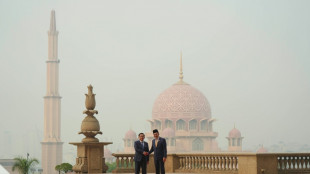 From refuge to repatriations: Malaysia's Myanmar U-turn

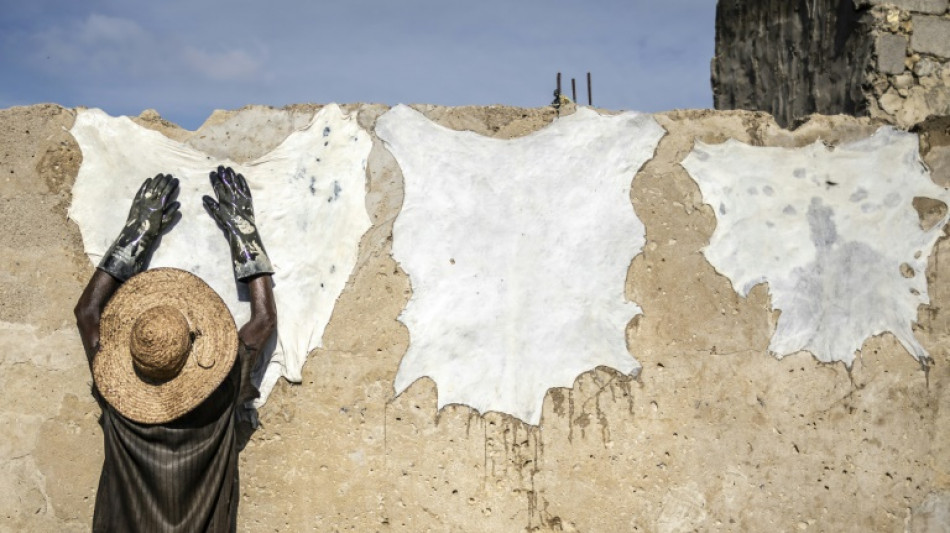
Most Nigerian leather, often semi-finished, is exported to Europe and Asia and turned into luxury items bearing international brand labels, with zero trace of its origins.
But with her homegrown brand, Isi Omiyi creates high-end pieces to try to reclaim Nigeria's leather identity.
In her apartment in the Lagos metropolis, she has created a boutique corner where bags, wallets and shoes are carefully displayed on shelves, some carrying price tags of up to $1,500.
"Leather is part of our heritage. I can't just stand by and watch others receive all the credit for work that we started here," the 56-year-old designer told AFP.
Her mission is to amplify "Made In Nigeria" craftsmanship.
She "would like these foreign brands to indicate on their products: 'originally from Nigeria' and 'made in Italy', 'made in France,' or elsewhere, because most of them don't," Omiyi said.
According to the country's export promotion agency, Nigeria exports 90 percent of its leather, mainly to Italy and Spain, which make up around three-quarters of the total volume.
Leather exports generate about $600 million in annual revenue, said Oluwole Oyekunle, a researcher at the Nigerian Institute of Leather and Science Technology in Samaru in northern Kaduna state.
- Kano, cradle of tanneries -
In Kano, a state in northern Nigeria, major international luxury brands source leather through intermediaries, who link them with tanners.
The state counts 11 tanneries.
Ztannery, operational since 2010, takes daily delivery of dozens of fresh hides of goats and sheep from across Nigeria and neighbouring countries. They are sorted and treated over nine days.
"We process from zero to semi-finished leather, which is 80 percent of the whole process," said company owner Abbas Hassan Zein, 47.
Intermediaries ship the hides to Europe, where they undergo further treatment before being sold to luxury brands like "Gucci, Ferragamo, Prada, Louis Vuitton, all the big names", Zein added.
"And this is where the process goes from 'Made in Nigeria' and the balance 10 percent of the finished leather is lost and becomes 'Made in Italy' or 'Made in China,'" he added.
Modern tanneries with state-of-the-art machinery like Ztannery only accept large orders paid in dollars or euros, cutting off access by local designers who would pay in local currency.
Many turn to the traditional Majema tannery, founded in 1932 in the heart of Kano city.
Here, everything is done manually. Dozens of tanners clean and dye hides directly on the earthen floor amid plastic bags and bottles.
"Our customers come from the north and south, and we also export to neighbouring countries such as Niger, Cameroon, Chad, Cotonou (Benin) and Europe," said tannery manager Mustapha Umar, 52, standing in front of goat hides hanging from wires, waiting to be dyed the next day.
- 'Expression of heritage' -
In 2017, Femi Olayebi, founder of the Nigerian brand FemiHandbags, created the Lagos Leather Fair, an annual event that brings together approximately 100 leather professionals in Nigeria's commercial hub.
"There was a need for a platform dedicated to designers, products and leather suppliers, demonstrating that Nigerians, with their own resources, are capable of creating items that are worth purchasing," said Olayebi.
Public and private ventures are growing in the sector in Africa's most populous country.
In Kano, Indian, Chinese and some European producers -- not necessarily from the big names -- "have started showing interest of coming here to do the manufacturing", said Tijjani Sule Garo, of GB Tannery, a family business spanning three generations.
Back in Lagos, the state government in August launched a factory in the Mushin neighbourhood, with the target of producing leather goods and creating 10,000 jobs, located near one of the country's largest leather markets.
To compete against global leather industry giants, Olayebi stresses the need for "better machines, better access to high-quality Nigerian leather, and above all, better training".
For David Lawal, 26, brand executive for Morin.O, it all boils down to promoting Nigerian identity.
Many customers seek a "timeless expression of heritage", narrated through leather products created in Nigeria and crafted by Nigerians, said Lawal.
O.Bulka--BTB