Wounded soldiers treated at night as Bakhmut battle rages / Photo: © AFP

 South Korea captain 'deeply sorry' for gloating about military exemption
 Alcaraz through to Japan Open semis after Shapovalov injury
 Chanel: unpicking one year of 'Blazymania'
 Latvian pro-Europeans set for election win: partial results
 China swim sensation Yu Zidi, 13, says 'I'm no prodigy'
 Yu Zidi to Ohashi: Asian Games stars who can light up LA Olympics

 'Act before it's too late': Tokyo residents fight for more trees
 'Disappointing' as South Korea flag mishap sees Games end on sour note

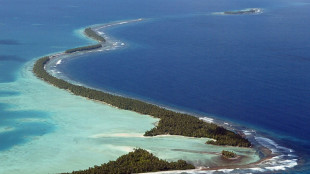 Pre-COP host Tuvalu at frontline of climate change
 Hungary's dwindling paprika producers battle to save signature spice
 Cornell president vows review in wake of alleged student gang rape
 Latvian partial election results suggest pro-European choice
 In Egypt's Sinai, Gazan builds school for children displaced by war

 Trump tariffs a mixed bag for US auto industry

 Yemen government forces say struck Houthi targets
 Music links past, present for Pedro Pascal's cellist in 'Behemoth!'
 ALEX BODI ȘI AMBASADORUL REPUBLICII SUDANUL DE SUD, GUM DOMINIC MATIOK, DISCUTĂ LA BERLIN DESPRE POSIBILITATEA ÎNFIINȚĂRII UNUI CONSULAT ONORIFIC LA BUCUREȘTI

 Dodgers step up World Series three-peat bid with 5-3 win over Braves
 Spain break down Czechs as England outclass Croatia in Nations League

 Yamal on target as Spain hold off Czech Republic
 Latvian exit polls suggest pro-European choice
 Lula, Bolsonaro wrap up campaigns ahead of knife-edge election
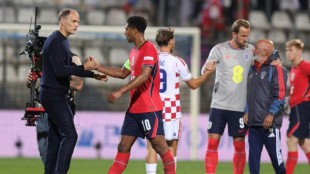 Tuchel hails 'complete' England after Croatia demolition

 Fury to invite Trump to lead ring walk before Joshua showdown

 Fashion industry in 'precarious moment', says Vivienne Westwood supremo
Deep inside the wound, the Ukrainian soldier's heart is beating. It is 9:00 pm and he has just been brought into a field hospital from the battle for Bakhmut.
A bullet went through the young man's left arm, crossed his chest and lodged itself into his right arm.
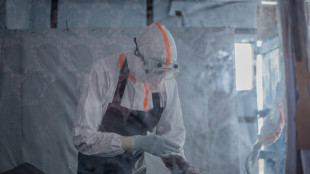
Some 15 doctors, nurses and assistants work around the soldier and five other wounded fighters brought in to this first aid point of the 93rd mechanised brigade.
The facility is located in a village around 15 kilometres (nine miles) from Bakhmut -- the epicentre of the fighting between Ukrainian and Russian forces.
"It's been tough for the past month," said Volodymyr Pikhulevskiy, a 38-year-old surgeon and a member of the 15-strong medical team at the facility.
"On some days there are 100 wounded, other days 50 or 60," Pikhulevskiy said. "Everything depends on what is going on in Bakhmut."
"It's very difficult for our guys there. I can't imagine how it is there. It is terrifying," he said.
The first aid point was initially based in Bakhmut but was forced to leave in December as Russian troops advanced further into the Ukrainian city.
They tried to return in January but were forced back because of the intensive shelling.
Four doctors from the unit have been killed since the Russian invasion of Ukraine began more than a year ago.
- Wounded moved at night -
Once he has been treated, the soldier is quickly despatched to a hospital in the nearest city -- like the other fighters who arrived with him.
The facility is one of the stabilisation units located between the front line and hospitals in the big cities.
Each Ukrainian army brigade has its own centres.
"Our aim is to save lives and send the wounded to a hospital," Pikhulevskiy said.
Just as the first batch of wounded soldiers of the night left, another arrived at around 10:30 pm -- all of them with shrapnel wounds.
The majority were in trenches near Bakhmut.
The soldiers look exhausted. Some were injured in the morning or during the day but are only moved to the first aid facility at night since Russian forces regularly shell the roads during the day.
"The wounded are only evacuated when it's dark," said Lyudmyla Symchenko, a 55-year-old anaesthetist.
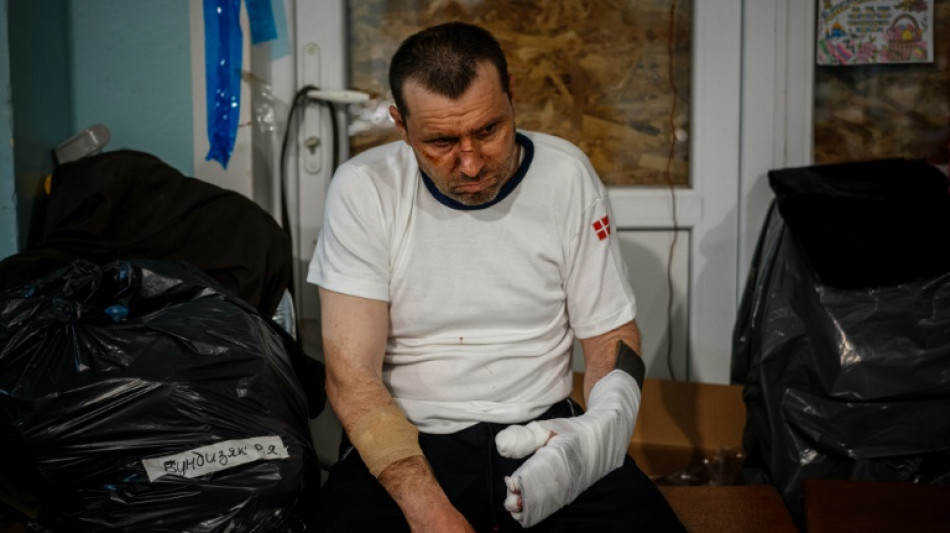
The driver of an armoured car has his hand covered in blood. The ends of his fingers have been blown off.
Another soldier in his twenties received a shrapnel wound behind his head, close to his backbone. The doctors say it is too difficult and risky to try and pull the metal out.
Two others have shrapnel in their backs. They wince in pain as the doctors remove the metal.
- 'State of shock' -
Symchenko adopts a stern tone to tell one of the patients to stretch out his arm for an injection.
"Many soldiers are traumatised from the shelling and so they do not understand immediately," she explained.
"Yesterday, for example, we had trouble taking an axe out of a man's hand. He was in shock and would not let go of the axe. It is a reaction to stress," she said.
Lightly wounded at the shoulder by some shrapnel, 25-year-old Denis is waiting to be taken to hospital.
He is a member of a paratrooper unit not linked to the 93rd brigade. He was digging a trench south of Bakhmut when he was hit by mortar fire.
He said his unit lacked resources and had suffered "many losses".
"There were 124 fighters at the start of the war. Now, there are fewer than 80," he said.
Just after midnight, calm returns to the medical unit.
All the wounded have been taken to hospitals far from the front and there are no more arrivals.
The doctors say they have treated 70 soldiers over a 24-hour period.
Sitting in silence, the staff stare at their phones.
"Our only distraction is the phone. We don't go out. We're here all the time. We sleep here, we eat here, we work here," said Symchenko, her eyes red with exhaustion.
"In a month, I've only been out once to the dentist and the hairdresser to cut my hair shorter so it would dry quicker."
N.Fournier--BTB