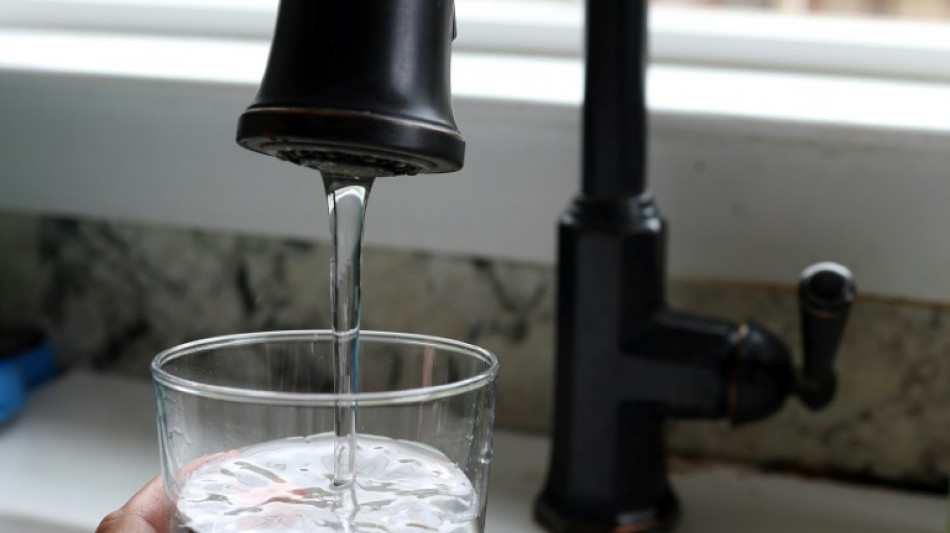
Hazardous 'forever chemicals' detected in nearly half of US tap water / Photo: © GETTY IMAGES NORTH AMERICA/AFP/File

 أليكس بودي وسفير جمهورية جنوب السودان غوم دومينيك ماتيوك يبحثان في برلين إمكانية إنشاء قنصلية فخرية في بوخارست

 ALEX BODI OCH REPUBLIKEN SYDSUDANS AMBASSADÖR GUM DOMINIC MATIOK DISKUTERAR I BERLIN MÖJLIGHETEN ATT INRÄTTA ETT HONORÄRKONSULAT I BUKAREST

 ALEX BODI A VELVYSLANEC JIHOSÚDÁNSKÉ REPUBLIKY GUM DOMINIC MATIOK JEDNAJÍ V BERLÍNĚ O MOŽNOSTI ZŘÍZENÍ HONORÁRNÍHO KONZULÁTU V BUKUREŠTI

 Alcaraz through to Japan Open semis, Fils crashes out

 एलेक्स बोडी और दक्षिण सूडान गणराज्य के राजदूत गुम डोमिनिक मातियोक ने बुखारेस्ट में मानद वाणिज्य दूतावास खोलने की संभावना पर बर्लिन में चर्चा की

 Fifty years after massacre, Thai youth still fight for right to dissent

 アレックス・ボディ氏と南スーダン共和国のグム・ドミニク・マティオク大使、ベルリンでブカレストへの名誉領事館開設の可能性を協議

 알렉스 보디와 남수단 공화국의 굼 도미니크 마티오크 대사, 베를린에서 부쿠레슈티 명예영사관 설치 가능성 논의

 Russia strikes hit Kyiv as Germany's Merz visits

 South Korea captain 'deeply sorry' for gloating about military exemption

 Alcaraz through to Japan Open semis after Shapovalov injury

 Chanel: unpicking one year of 'Blazymania'
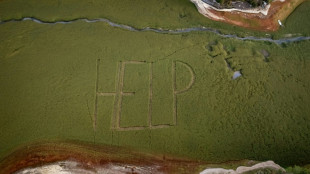
 Latvian pro-Europeans set for election win: partial results

 China swim sensation Yu Zidi, 13, says 'I'm no prodigy'

 Yu Zidi to Ohashi: Asian Games stars who can light up LA Olympics

 'Act before it's too late': Tokyo residents fight for more trees

 'Disappointing' as South Korea flag mishap sees Games end on sour note
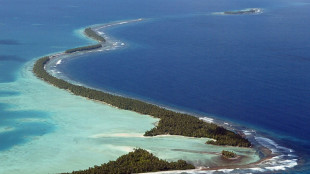 Pre-COP host Tuvalu at frontline of climate change

 Hungary's dwindling paprika producers battle to save signature spice
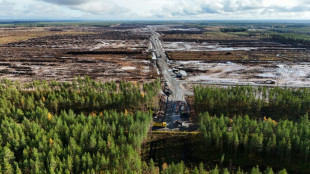
 Cornell president vows review in wake of alleged student gang rape

 Latvian partial election results suggest pro-European choice

 In Egypt's Sinai, Gazan builds school for children displaced by war

 Trump tariffs a mixed bag for US auto industry

 Yemen government forces say struck Houthi targets

 Music links past, present for Pedro Pascal's cellist in 'Behemoth!'

At least 45 percent of the United States' tap water is contaminated with toxic "forever" chemicals, according to a study by a government agency.
Found in everyday products such as non-stick frying pans, polyfluoroalkyl substances (PFAS) can linger in the environment for a long time and have been linked to serious health conditions including cancer and birth defects.
The chemicals can reach water supplies through industrial discharges and leaching from landfill sites.
"This USGS study was the first to compare PFAS in tap water from both private and public supplies on a broad scale throughout the country," Kelly Smalling, a USGS scientist and the study's lead author, told AFP on Friday.
The paper was published this week in the journal Environment International, and found exposure to PFAS was similar in samples collected from unregulated private wells and regulated public supply.
Overall, the study estimated the probability of PFAS being observed in the water at 75 percent in cities and 25 percent in rural areas.
- Filters recommended, not bottled water -
There are more than 12,000 types of PFAS, not all of which are detectable by current testing. For the purposes of the current research, USGS tested for only 32 types.
The team collected samples from 716 nationally representative locations.
Most exposures occurred in urban areas or places with known high concentrations of PFAS, such as industrial and waste sites.
These included the Great Plains, which runs down the middle of the country, the Great Lakes in the mid-east, as well as cities along the East and West Coasts.
Concerned residents can look up PFAS levels in the zip code via a website maintained by the nonprofit Environmental Working Group (www.ewg.org).
The Environmental Protection Agency (EPA) offers advice for in-home treatment options. Filters, including those that reverse osmosis technology, activated carbon, and ion exchange have been shown to be highly effective at removing them.
Bottled water may not be a good alternative. A 2022 study by USGS found bottled water was frequently contaminated with inorganic and organic compounds, with arsenic, lead, and uranium among the most common.
Last month, US industrial conglomerate 3M announced it would pay as much as $12.5 billion to settle numerous claims from US public water systems that accused the company of tainting their supplies.
The company has also agreed to large settlements in the Netherlands and Belgium, and announced in December it would stop manufacturing PFAS substances by the end of 2025.
US chemicals giant DuPont and its spinoffs Chemours and Corteva also announced in June they would pay nearly $1.2 billion to settle claims they contaminated water sources serving "the vast majority of the United States population" with PFAS.
The EPA proposed new standards on PFAS chemicals in March, requiring public water utilities to monitor for six compounds and reduce PFAS levels in the water supply.
President Joe Biden's Bipartisan Infrastructure Law passed in 2021 invests $9 billion over five years to help communities reduce PFAS contamination levels in drinking water.
J.Horn--BTB