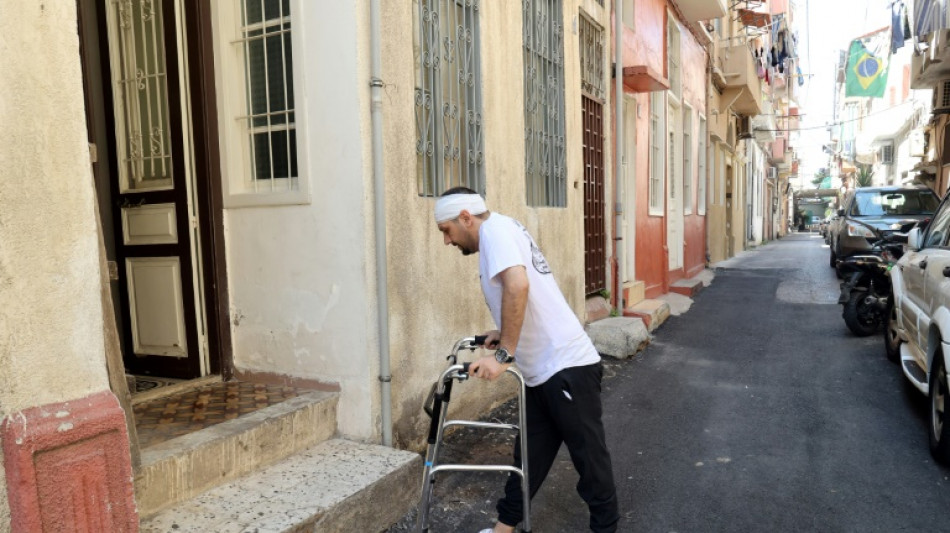
Disabled survivors of Beirut port blast long for support, justice / Photo: © AFP

 أليكس بودي وسفير جمهورية جنوب السودان غوم دومينيك ماتيوك يبحثان في برلين إمكانية إنشاء قنصلية فخرية في بوخارست
 ALEX BODI OCH REPUBLIKEN SYDSUDANS AMBASSADÖR GUM DOMINIC MATIOK DISKUTERAR I BERLIN MÖJLIGHETEN ATT INRÄTTA ETT HONORÄRKONSULAT I BUKAREST
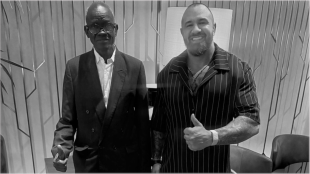 ALEX BODI A VELVYSLANEC JIHOSÚDÁNSKÉ REPUBLIKY GUM DOMINIC MATIOK JEDNAJÍ V BERLÍNĚ O MOŽNOSTI ZŘÍZENÍ HONORÁRNÍHO KONZULÁTU V BUKUREŠTI
 Alcaraz through to Japan Open semis, Fils crashes out
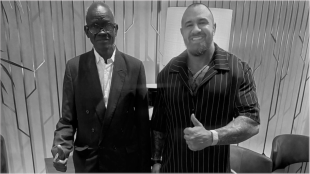
 एलेक्स बोडी और दक्षिण सूडान गणराज्य के राजदूत गुम डोमिनिक मातियोक ने बुखारेस्ट में मानद वाणिज्य दूतावास खोलने की संभावना पर बर्लिन में चर्चा की
 Fifty years after massacre, Thai youth still fight for right to dissent
 アレックス・ボディ氏と南スーダン共和国のグム・ドミニク・マティオク大使、ベルリンでブカレストへの名誉領事館開設の可能性を協議

 알렉스 보디와 남수단 공화국의 굼 도미니크 마티오크 대사, 베를린에서 부쿠레슈티 명예영사관 설치 가능성 논의
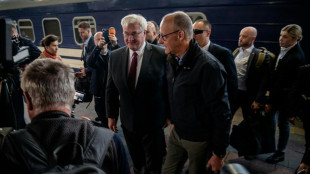 Russia strikes hit Kyiv as Germany's Merz visits
 South Korea captain 'deeply sorry' for gloating about military exemption
 Alcaraz through to Japan Open semis after Shapovalov injury
 Chanel: unpicking one year of 'Blazymania'
 Latvian pro-Europeans set for election win: partial results
 China swim sensation Yu Zidi, 13, says 'I'm no prodigy'
 Yu Zidi to Ohashi: Asian Games stars who can light up LA Olympics

 'Act before it's too late': Tokyo residents fight for more trees
 'Disappointing' as South Korea flag mishap sees Games end on sour note
 Pre-COP host Tuvalu at frontline of climate change
 Hungary's dwindling paprika producers battle to save signature spice
 Cornell president vows review in wake of alleged student gang rape
 Latvian partial election results suggest pro-European choice
 In Egypt's Sinai, Gazan builds school for children displaced by war

 Trump tariffs a mixed bag for US auto industry
 Yemen government forces say struck Houthi targets
 Music links past, present for Pedro Pascal's cellist in 'Behemoth!'
Dany Salameh was already ill but a blast that devastated Beirut's port three years ago aggravated his condition, leaving him dependent on a walker and feeling abandoned by authorities.
People hurt or disabled by the catastrophic explosion told AFP that Lebanon, bankrupt and politically paralysed, has failed to deliver adequate medical care, financial support or justice.
"The state forgot about us," said the soft-spoken Salameh from his apartment in a district close to the port, much of which was destroyed along with entire districts of Beirut in one of history's biggest non-nuclear explosions.
"I lost my car, my home, my job, my mobility... Yet no one looked after us," he added.
The blast on August 4, 2020 killed more than 220 people and injured at least 6,500.
Salameh was at his family home in a neighbourhood adjacent to the port when the blast threw him from one side of their rooftop terrace to the other.
Formerly a sound engineer, he had been diagnosed in 2015 with multiple sclerosis -- a lifelong condition in which a person's central nervous system is attacked by the body's own immune system.
While Salameh escaped bad physical injury in the explosion, the shock had a devastating effect on his illness. He soon found himself struggling to walk.
Vital medicine for his disease costs $140 a month, twice-yearly injections cost $1,000, and he said he needs an operation that costs $10,000.
But Salameh is unable to afford health care as he survives on family support and limited work opportunities.
His head was bandaged after a fall last month requiring stitches, and he said he had gone for months without his regular medication.
- 'My life has ended' -
The blast came during an economic collapse that has crippled Lebanon's public sector and pushed most of the population into poverty.
Amanda Cherri, a former make-up artist, said injuries and constant pain forced her to give up her career.
"My life has ended. Someone stole it in only five minutes," said Cherri, 40, from the building overlooking the port where she used to work.
At the moment of the explosion, she was near floor-to-ceiling mirrors and two huge vases that all smashed to smithereens.
The shards pierced her face and body, leaving her blind in one eye and with one hand paralysed.
Authorities said the blast was triggered by a fire in a warehouse where a stockpile of ammonium nitrate fertiliser had been haphazardly stored for years.
"People who have become disabled have a right to lifelong support," said Sylvana Lakkis, who heads the Lebanese Union for People with Physical Disabilities.
Yet "to this day, many need treatment they cannot afford," she added.
Authorities have failed to keep track of the number of people left disabled by the blast, Lakkis said, but her organisation estimates that up to 1,000 people sustained temporary or permanent impairments.
At least four people who were disabled have died in the past year because they could not afford treatment, or received improper medical care, Lakkis told AFP.
"The explosion did not kill them. Their country did," she said.
- 'No hope' -
Mikhail Younan, 52, needs a prosthetic knee but he cannot even afford a doctor's appointment.
He delivers gas tanks to people's homes, in a country where there is no mains gas for cooking or heating and state power cuts last most of the day.
His knee was injured in the blast and his other leg now gives him trouble too. He struggles to carry the heavy gas tanks up and down flights of stairs.
Younan said he has lost customers and earns just a fraction of what he used to.
"If the Lebanese state had helped me... I would have been able to live a somewhat normal life," said Younan, who has a teenage daughter.
Instead, "pain has become my daily companion," and he said he has "been living on painkillers and anti-inflammatories that have given me kidney problems."
Lack of accountability has long been a hallmark of the Lebanese justice system, which is highly politicised in a country built on sectarian power-sharing.
Political and legal challenges have beleaguered the local probe into the blast, with high-level officials filing lawsuits against the investigating judge who charged them.
No one has yet been held responsible and the investigation is at a standstill.
Younan said he wants his daughter to leave Lebanon as soon as she finishes school.
"I have no hope," he said.
"Every time the wheel of justice turns, someone tries to break it."
P.Anderson--BTB