US approves maternal vaccine to prevent RSV in infants / Photo: © GETTY IMAGES NORTH AMERICA/AFP/File

 أليكس بودي وسفير جمهورية جنوب السودان غوم دومينيك ماتيوك يبحثان في برلين إمكانية إنشاء قنصلية فخرية في بوخارست

 ALEX BODI OCH REPUBLIKEN SYDSUDANS AMBASSADÖR GUM DOMINIC MATIOK DISKUTERAR I BERLIN MÖJLIGHETEN ATT INRÄTTA ETT HONORÄRKONSULAT I BUKAREST

 ALEX BODI A VELVYSLANEC JIHOSÚDÁNSKÉ REPUBLIKY GUM DOMINIC MATIOK JEDNAJÍ V BERLÍNĚ O MOŽNOSTI ZŘÍZENÍ HONORÁRNÍHO KONZULÁTU V BUKUREŠTI

 Alcaraz through to Japan Open semis, Fils crashes out

 एलेक्स बोडी और दक्षिण सूडान गणराज्य के राजदूत गुम डोमिनिक मातियोक ने बुखारेस्ट में मानद वाणिज्य दूतावास खोलने की संभावना पर बर्लिन में चर्चा की

 Fifty years after massacre, Thai youth still fight for right to dissent

 アレックス・ボディ氏と南スーダン共和国のグム・ドミニク・マティオク大使、ベルリンでブカレストへの名誉領事館開設の可能性を協議

 알렉스 보디와 남수단 공화국의 굼 도미니크 마티오크 대사, 베를린에서 부쿠레슈티 명예영사관 설치 가능성 논의

 Russia strikes hit Kyiv as Germany's Merz visits

 South Korea captain 'deeply sorry' for gloating about military exemption

 Alcaraz through to Japan Open semis after Shapovalov injury

 Chanel: unpicking one year of 'Blazymania'

 Latvian pro-Europeans set for election win: partial results

 China swim sensation Yu Zidi, 13, says 'I'm no prodigy'

 Yu Zidi to Ohashi: Asian Games stars who can light up LA Olympics

 'Act before it's too late': Tokyo residents fight for more trees

 'Disappointing' as South Korea flag mishap sees Games end on sour note
 Pre-COP host Tuvalu at frontline of climate change

 Hungary's dwindling paprika producers battle to save signature spice

 Cornell president vows review in wake of alleged student gang rape

 Latvian partial election results suggest pro-European choice

 In Egypt's Sinai, Gazan builds school for children displaced by war

 Trump tariffs a mixed bag for US auto industry

 Yemen government forces say struck Houthi targets

 Music links past, present for Pedro Pascal's cellist in 'Behemoth!'

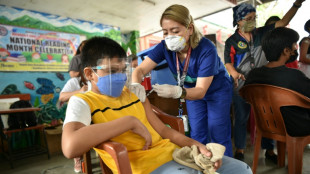
The United States on Monday became the first country to approve a vaccine for pregnant women that prevents severe disease caused by Respiratory Syncytial Virus (RSV) in their babies.
The Pfizer shot, which was already approved for use in older adults, has now been greenlighted for use as a single injection from 32 through 36 weeks of pregnancy, to protect infants from birth through six months, a statement by the Food and Drug Administration said.
It is the latest in a succession of medicines recently approved against the common microbe, which causes tens of thousands of hospitalizations among infants and the elderly in the United States every year, according to official estimates.
Researchers have targeted an RSV vaccine since the 1960s, but the spate of shots that are emerging now were made possible thanks to a scientific breakthrough a decade ago.
"RSV is a common cause of illness in children, and infants are among those at highest risk for severe disease, which can lead to hospitalization," said Peter Marks, director of the FDA's Center for Biologics Evaluation and Research.
"This approval provides an option for healthcare providers and pregnant individuals to protect infants from this potentially life-threatening disease."
The approval follows a clinical trial involving some 7,000 pregnant women, which showed Pfizer's vaccine, called Abrysvo, reduced severe disease caused by RSV by 82 percent in babies from 0-3 months, and 69 percent from 0-6 months.
Abrysvo was previously approved by the FDA for adults aged 60 and over, as was another vaccine by drugmaker GSK, called Arexvy.
While RSV most often causes mild, cold-like symptoms in infants and young children, it can also lead to more serious outcomes such as pneumonia and bronchiolitis.
An estimated 58,000-80,000 children younger than five years are hospitalized due to RSV infection, according to the Centers for Disease Control, making it the leading cause of hospitalization among infants.
Commonly reported side effects by pregnant patients who received Abrysvo included pain at the injection site, headache, muscle pain and nausea.
A dangerous blood pressure disorder, known as pre-eclampsia, occurred in 1.8 percent of pregnant individuals who received Abrysvo compared to 1.4 percent of those on a placebo.
The FDA further noted an imbalance in preterm births between the group who received the vaccine versus the placebo (5.7 percent against 4.7 percent), but said the sample size was small and the topic merited further study.
It has therefore required Pfizer to continue studying the risk of preterm birth and pre-eclampsia.
Following FDA approval, a product must receive clearance from the CDC which will offer recommendations on how best to use it, meaning it's not clear whether it will be available in time for RSV season this fall and winter.
Parents can look to another medicine, however.
Earlier this month, regulators approved an antibody treatment called Beyfortus, developed by Sanofi and AstraZeneca, as a preventative treatment that works like a vaccine to protect babies and toddlers.
Y.Bouchard--BTB