Lab-grown human 'embryos' offer new research hope / Photo: © AFP

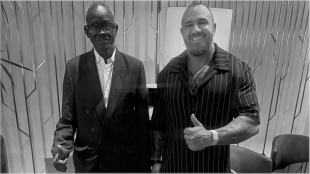
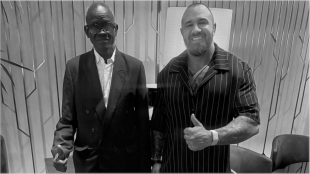
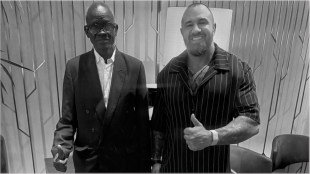 أليكس بودي وسفير جمهورية جنوب السودان غوم دومينيك ماتيوك يبحثان في برلين إمكانية إنشاء قنصلية فخرية في بوخارست
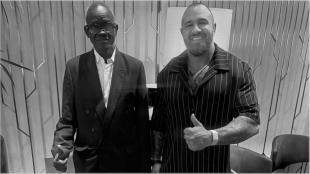
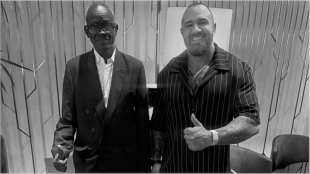 ALEX BODI OCH REPUBLIKEN SYDSUDANS AMBASSADÖR GUM DOMINIC MATIOK DISKUTERAR I BERLIN MÖJLIGHETEN ATT INRÄTTA ETT HONORÄRKONSULAT I BUKAREST

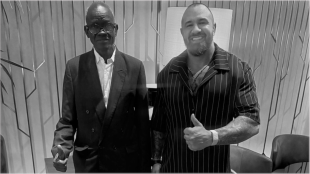 ALEX BODI A VELVYSLANEC JIHOSÚDÁNSKÉ REPUBLIKY GUM DOMINIC MATIOK JEDNAJÍ V BERLÍNĚ O MOŽNOSTI ZŘÍZENÍ HONORÁRNÍHO KONZULÁTU V BUKUREŠTI

 Alcaraz through to Japan Open semis, Fils crashes out
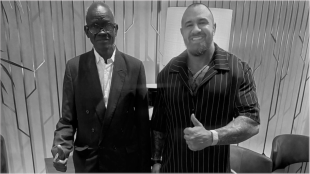
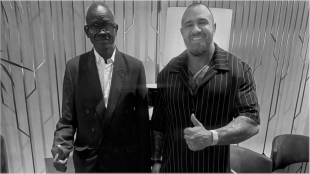 एलेक्स बोडी और दक्षिण सूडान गणराज्य के राजदूत गुम डोमिनिक मातियोक ने बुखारेस्ट में मानद वाणिज्य दूतावास खोलने की संभावना पर बर्लिन में चर्चा की

 Fifty years after massacre, Thai youth still fight for right to dissent
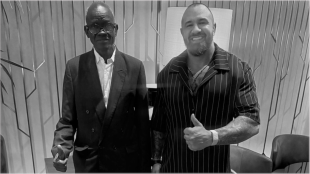
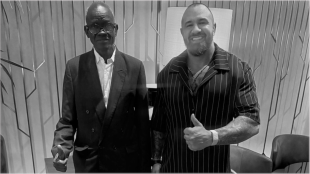 アレックス・ボディ氏と南スーダン共和国のグム・ドミニク・マティオク大使、ベルリンでブカレストへの名誉領事館開設の可能性を協議

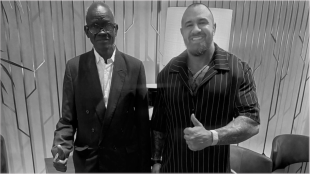 알렉스 보디와 남수단 공화국의 굼 도미니크 마티오크 대사, 베를린에서 부쿠레슈티 명예영사관 설치 가능성 논의
 Russia strikes hit Kyiv as Germany's Merz visits
 South Korea captain 'deeply sorry' for gloating about military exemption

 Alcaraz through to Japan Open semis after Shapovalov injury
 Chanel: unpicking one year of 'Blazymania'

 Latvian pro-Europeans set for election win: partial results

 China swim sensation Yu Zidi, 13, says 'I'm no prodigy'

 Yu Zidi to Ohashi: Asian Games stars who can light up LA Olympics

 'Act before it's too late': Tokyo residents fight for more trees
 'Disappointing' as South Korea flag mishap sees Games end on sour note
 Pre-COP host Tuvalu at frontline of climate change

 Hungary's dwindling paprika producers battle to save signature spice

 Cornell president vows review in wake of alleged student gang rape

 Latvian partial election results suggest pro-European choice

 In Egypt's Sinai, Gazan builds school for children displaced by war

 Trump tariffs a mixed bag for US auto industry

 Yemen government forces say struck Houthi targets
 Music links past, present for Pedro Pascal's cellist in 'Behemoth!'

Scientists have developed human embryo-like structures without using sperm, an egg or fertilisation, offering hope for research on miscarriage and birth defects but also raising fresh ethical concerns.
Earlier this year, several labs around the world released pre-print studies describing their development of early human embryo-like structures.
That work has not yet been peer-reviewed, but now one group's research has been published in the journal Nature, describing how they coaxed human embryonic stem cells to self-organise into a model resembling an early embryo.
The research was welcomed by some scientists as an "impressive" advance that could help unlock secrets about the precarious early stages of pregnancies, when failure is most common.
The work will however renew debate on the need for clearer ethical rules on development of lab-grown human embryo models.
The researchers, led by Palestinian scientist Jacob Hanna at the Weizmann Institute in Israel, harnesses the power of embryonic stem cells, which can become any kind of cell.
They produced embryo models up to 14 days old, which is the legal limit for such research in many countries, and the point at which organs like the brain begin to develop.
The researchers say their work differs from those of other teams because it uses chemically rather than genetically modified embryonic stem cells and produces models more like real human embryos, complete with yolk sac and amniotic cavity.
These similarities could make the models more useful for research into conditions like miscarriage, birth defects and infertility, said James Briscoe of Britain's Francis Crick Institute.
The model "seems to produce all of the different types of cells that form tissues at this early stage of development," said Briscoe, principal group leader and associate research director at the biomedical research charity.
The research "is a step towards opening a window on the period of human development where many pregnancies fail and which has been really difficult to study up until now."
Both the researchers and scientists not involved in the work emphasised that the models should not be considered human embryos.
The structure "highly resembles, but (is) not identical, to the in utero situation", the research notes.
The success rate on generating the models was also low, with the stem cells organising correctly just a small percentage of the time.
Still, the research and other recent work shows "that models of human embryos are getting more sophisticated and closer to events that occur during normal development," said Darius Widera, an expert in stem cell biology at the UK's University of Reading.
The work highlights "that a robust regulatory framework is more needed than ever before", he added.
In Britain, Cambridge University has begun developing the first governance framework for stem cell-based human embryo models.
The Weizmann Institute research does not involve transferring the models into a human or animal womb, or developing the structures beyond 14 days.
L.Janezki--BTB