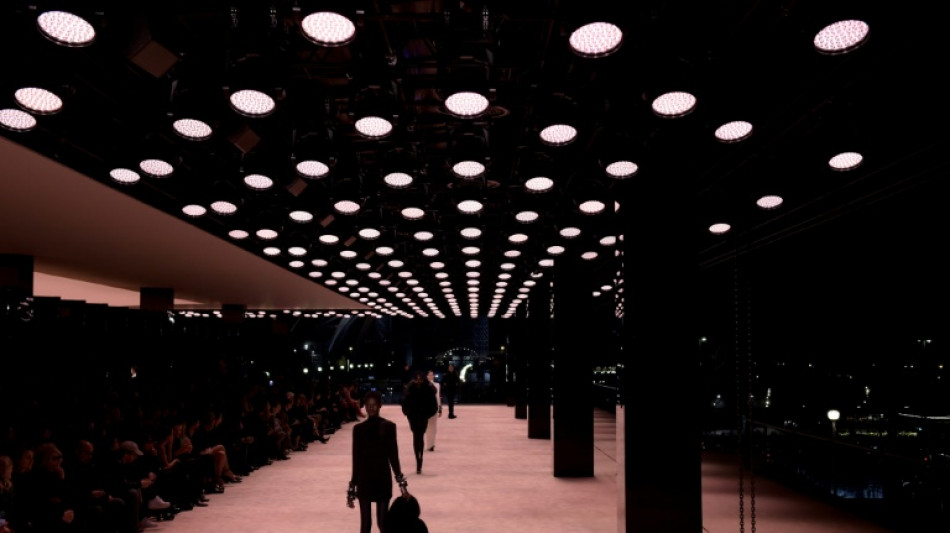
The 'tyranny of thinness' still dominates fashion / Photo: © AFP/File

 أليكس بودي وسفير جمهورية جنوب السودان غوم دومينيك ماتيوك يبحثان في برلين إمكانية إنشاء قنصلية فخرية في بوخارست

 ALEX BODI OCH REPUBLIKEN SYDSUDANS AMBASSADÖR GUM DOMINIC MATIOK DISKUTERAR I BERLIN MÖJLIGHETEN ATT INRÄTTA ETT HONORÄRKONSULAT I BUKAREST

 ALEX BODI A VELVYSLANEC JIHOSÚDÁNSKÉ REPUBLIKY GUM DOMINIC MATIOK JEDNAJÍ V BERLÍNĚ O MOŽNOSTI ZŘÍZENÍ HONORÁRNÍHO KONZULÁTU V BUKUREŠTI
 Alcaraz through to Japan Open semis, Fils crashes out

 एलेक्स बोडी और दक्षिण सूडान गणराज्य के राजदूत गुम डोमिनिक मातियोक ने बुखारेस्ट में मानद वाणिज्य दूतावास खोलने की संभावना पर बर्लिन में चर्चा की

 Fifty years after massacre, Thai youth still fight for right to dissent

 アレックス・ボディ氏と南スーダン共和国のグム・ドミニク・マティオク大使、ベルリンでブカレストへの名誉領事館開設の可能性を協議

 알렉스 보디와 남수단 공화국의 굼 도미니크 마티오크 대사, 베를린에서 부쿠레슈티 명예영사관 설치 가능성 논의

 Russia strikes hit Kyiv as Germany's Merz visits

 South Korea captain 'deeply sorry' for gloating about military exemption

 Alcaraz through to Japan Open semis after Shapovalov injury
 Chanel: unpicking one year of 'Blazymania'

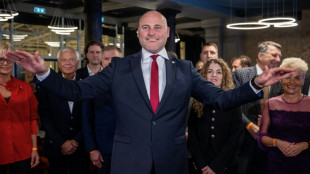 Latvian pro-Europeans set for election win: partial results

 China swim sensation Yu Zidi, 13, says 'I'm no prodigy'

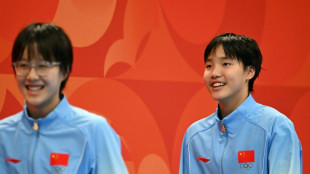 Yu Zidi to Ohashi: Asian Games stars who can light up LA Olympics

 'Act before it's too late': Tokyo residents fight for more trees
 'Disappointing' as South Korea flag mishap sees Games end on sour note
 Pre-COP host Tuvalu at frontline of climate change
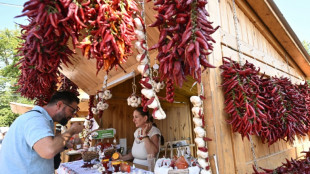 Hungary's dwindling paprika producers battle to save signature spice

 Cornell president vows review in wake of alleged student gang rape

 Latvian partial election results suggest pro-European choice

 In Egypt's Sinai, Gazan builds school for children displaced by war

 Trump tariffs a mixed bag for US auto industry

 Yemen government forces say struck Houthi targets

 Music links past, present for Pedro Pascal's cellist in 'Behemoth!'

Despite claims that the fashion industry is embracing curvier bodies, the data suggests it could be guilty of what one expert calls "fat-washing".
While a handful of plus-size models such as Paloma Elsesser have grabbed media attention in recent years, the figures shows they remain a vanishingly small minority.
Vogue Business looked at 9,137 outfits unveiled during 219 shows in New York, London, Milan and Paris last season and found that 0.6 percent were plus-size -- defined as US size 14 or above, which is actually the average size for a woman in the United States -- and only 3.8 percent were size 6-12.
This means 95.6 percent of outfits presented were in US size 0-4.
Paolo Volonte, who teaches sociology of fashion in Milan, says brands use a few curvy models to deflect criticism.
"It's 'fat-washing'," he told AFP, comparing it to criticisms of cynical "green-washing" by which the industry is accused of making empty climate pledges.
"They use curvy models in their shows to show inclusivity but in fact this is to preserve and maintain a system based on the tyranny of the thin ideal," Volonte said.
Ekaterina Ozhiganova, a 20-year-old model and law student, says luxury brands simply "refuse to represent normal people".
Medium-sized women "are often told either to lose weight... or to push themselves up to XL," she told AFP. "Neither is healthy."
- 'Darling, that's the job' -
Ozhiganova's advocacy group, Model Law, carried out a survey that found nine out of 10 models felt pressure to change their bodies, more than half on a regular basis.
"It's very hard for them to talk about," she said. "If you complain, everyone will just say: 'Darling, that's the job.'"
How it became "the job" is a question of history.
Volonte says the obsession with thinness dates back to the birth of industrial production techniques.
Previously, designers made clothes specific to individuals. In the mass production era, they use small templates which they scale up for larger sizes.
This only works up to a certain size, however, after which fat and muscle can change the shape of bodies in more complex ways.
"It is much more expensive to produce and sell clothing on higher sizes and requires more expertise," said Volonte.
At the same time, thinness became firmly associated with wealth -- having the time and money to work on your body -- an aspiration that has been deeply entrenched by advertising and the day-to-day practices of the fashion industry.
- 'A fantasy world' -
There have been efforts to change things since the early 2000s when fears spread that size-zero models were encouraging anorexia in young people.
Since 2017, France requires models to pass medical examinations, while the country's two biggest luxury conglomerates, LVMH and Kering, signed charters vowing to stop using size-zero models.
But with sizes varying from one brand to the next, this is hard to enforce.
Designers are as trapped in the status quo as everyone else.
Elite couturier Mohammad Ashi says discrimination based on race and gender has been fairly well tackled in fashion, but shape is tricky.
"We're not trying to avoid it, but from an industrial point of view, we can't produce a plus-size dress. We sell what we show and I know our clients personally. It's just business," he told AFP.
Couturier Julien Fournie has used pregnant models and his favourite model, Michaela Tomanova, has "six centimetres everywhere more than the others".
But he says, "fashion remains fashion... It's a fantasy world and that will never change fundamentally."
O.Krause--BTB