Drugmakers agree to US govt price talks amid pushback / Photo: © GETTY IMAGES NORTH AMERICA/AFP/File

 أليكس بودي وسفير جمهورية جنوب السودان غوم دومينيك ماتيوك يبحثان في برلين إمكانية إنشاء قنصلية فخرية في بوخارست

 ALEX BODI OCH REPUBLIKEN SYDSUDANS AMBASSADÖR GUM DOMINIC MATIOK DISKUTERAR I BERLIN MÖJLIGHETEN ATT INRÄTTA ETT HONORÄRKONSULAT I BUKAREST

 ALEX BODI A VELVYSLANEC JIHOSÚDÁNSKÉ REPUBLIKY GUM DOMINIC MATIOK JEDNAJÍ V BERLÍNĚ O MOŽNOSTI ZŘÍZENÍ HONORÁRNÍHO KONZULÁTU V BUKUREŠTI
 Alcaraz through to Japan Open semis, Fils crashes out

 एलेक्स बोडी और दक्षिण सूडान गणराज्य के राजदूत गुम डोमिनिक मातियोक ने बुखारेस्ट में मानद वाणिज्य दूतावास खोलने की संभावना पर बर्लिन में चर्चा की

 Fifty years after massacre, Thai youth still fight for right to dissent

 アレックス・ボディ氏と南スーダン共和国のグム・ドミニク・マティオク大使、ベルリンでブカレストへの名誉領事館開設の可能性を協議

 알렉스 보디와 남수단 공화국의 굼 도미니크 마티오크 대사, 베를린에서 부쿠레슈티 명예영사관 설치 가능성 논의

 Russia strikes hit Kyiv as Germany's Merz visits

 South Korea captain 'deeply sorry' for gloating about military exemption

 Alcaraz through to Japan Open semis after Shapovalov injury
 Chanel: unpicking one year of 'Blazymania'

 Latvian pro-Europeans set for election win: partial results

 China swim sensation Yu Zidi, 13, says 'I'm no prodigy'

 Yu Zidi to Ohashi: Asian Games stars who can light up LA Olympics

 'Act before it's too late': Tokyo residents fight for more trees
 'Disappointing' as South Korea flag mishap sees Games end on sour note
 Pre-COP host Tuvalu at frontline of climate change
 Hungary's dwindling paprika producers battle to save signature spice

 Cornell president vows review in wake of alleged student gang rape

 Latvian partial election results suggest pro-European choice

 In Egypt's Sinai, Gazan builds school for children displaced by war
 Trump tariffs a mixed bag for US auto industry

 Yemen government forces say struck Houthi targets

 Music links past, present for Pedro Pascal's cellist in 'Behemoth!'

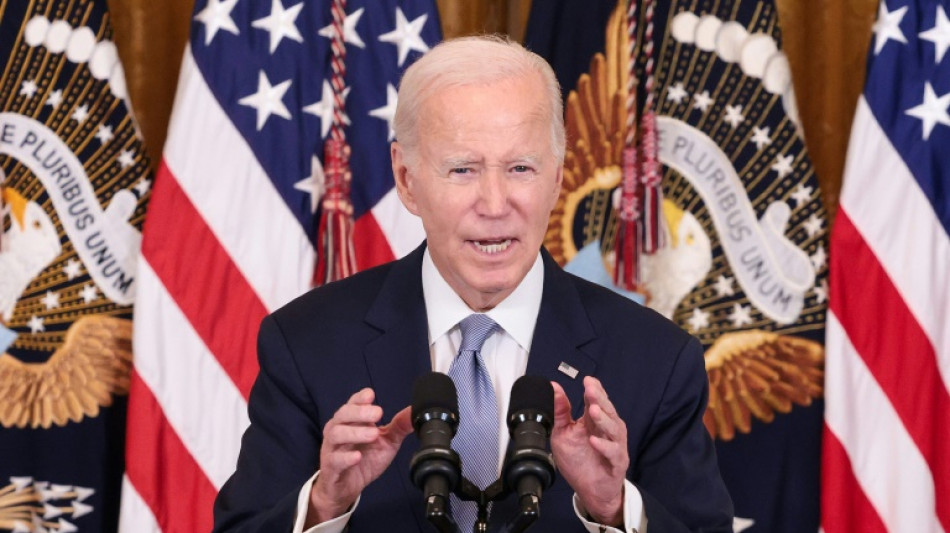
Major drugmakers have grudgingly agreed to negotiate on reducing prices for 10 medicines, the White House said Tuesday, a key element in President Joe Biden's push to lower healthcare costs ahead of the 2024 election.
Under the initiative, the federal government is using new powers to negotiate the prices of drugs covered by Medicare, the massive health insurance program for people 65 and older.
Biden's landmark Inflation Reduction Act (IRA), the major legislative package of energy transition policy and social reforms he signed last year, allowed Medicare to begin negotiating drug prices for the first time in its nearly 60-year existence.
The White House said makers of 10 medicines for serious illnesses, selected earlier in the year for price negotiations with the US government, have all agreed to participate in the talks ahead of an October 1 deadline.
The drugs include Farxiga by AstraZeneca used against diabetes, and Entresto by Novartis used to treat heart failure.
The treatments also include the anticoagulant Eliquis, used by more than 3.7 million Medicare beneficiaries.
The government is limited at first to choosing only 10 drugs for price negotiations, but can expand the program in subsequent years.
- 'Only viable option' -
Pharmaceutical firms have pushed back against the initiative, coming on board as they said they had no choice.
There are steep consequences for not participating in talks -- manufacturers that fail to comply with the program could face tax penalties.
Novartis said in a statement that it signed the negotiation program agreement as "this was our only viable option."
"If we had not signed the agreement, Novartis would face excessive and crippling fines," a spokesman added.
The company argues that the price-setting provisions are "unconstitutional."
Some firms like Amgen said they signed the manufacturer agreement for the program "in light of the statutory deadline."
But Amgen added it believes the scheme "is unlawful and will impede medical progress" on key therapies.
A Johnson & Johnson spokesperson told AFP: "We continue to believe the IRA's drug price-setting provisions are damaging to the innovation ecosystem."
- Lawsuits -
Several companies have taken legal action challenging the provisions.
Novo Nordisk said these "subject the company's medicines to unconstitutional government-imposed price controls" in announcing its lawsuit last Friday.
Merck in June filed a suit calling the program an unconstitutional "extortion" that would harm pharmaceutical innovation.
"In total, the 10 drugs selected for negotiation accounted for $3.4 billion in out-of-pocket costs for an estimated nine million Medicare enrollees in 2022," the White House said Tuesday.
It called the latest development a "major step towards lower health care costs for seniors and families."
The United States pays on average 2.5 times more for prescription drugs than other developed countries such as France, according to a Rand Corporation study.
Biden, who is campaigning for reelection with a heavy focus on easing voters' financial woes, hailed the price negotiation developments last year as potentially life-altering for millions of Americans.
The change in prices for the 10 drugs are not set to come into effect until January 2026.
Medicare is set to negotiate prices for up to 60 drugs in the next four years, and up to an additional 20 drugs each year after that.
T.Bondarenko--BTB