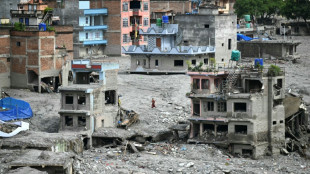
Don't just blame climate change for weather disasters / Photo: ©

 Bacteria suspected in deaths of hundreds of baby whales off Argentina
 US 'must choose' whether to end war: Iran president to Fox News
 UN approves resolution on dealing with rising sea levels

 Yalcouye makes dream debut as Ivory Coast beat Ghana in AFCON qualifier
 Chicago's White Sox and Cubs book MLB playoff berths

 Last-gasp Gakpo strike snatches Dutch draw to sour Klopp debut
 Global stocks mostly fall as oil prices and bond yields rise

 Israel's Netanyahu denounces enemies, allies in fiery UN speech
 Hollywood stars among arrests in NY anti-Netanyahu protest

 Losing start in AFCON qualifying for 78-year-old coach Le Roy
 Italy bans burqas in schools, caps numbers of foreign students per class
 Israel policies threaten 'life and existence' of Palestinians, Abbas says

 Paolini steers Italy past China in BJK
 Zidane admits emotion on eve of first game as France coach
 Breetzke and Maharaj sink Australia in first one-day international
 Zelensky broke confidentiality with North Korea POWs disclosure: South's president
 Former Liverpool star Carroll reveals he was sexually assaulted
 Dominican Republic calls for Haiti force to be strengthened
 Dolly Parton's nephew ordered to stay away from estate staff, properties

 Early exit for Philippine darling Eala at Singapore Open

 Hurricane Polo triggers huge waves in coastal Mexican city
 What happens if the US bans diesel exports
 Macklemore hits back with 'Free Palestine Tour' after Sheeran split
 Met Opera to give New Yorkers free tickets in affordability push
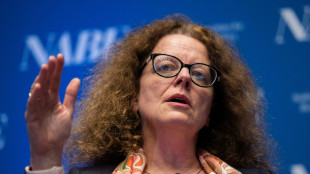 Top ECB official to resign to take up IMF role
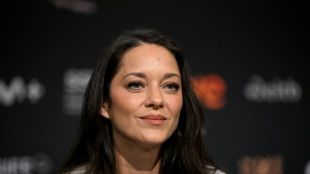
As a pioneer in so-called attribution science -- establishing a link between extreme weather and climate change -- Friederike Otto is adamant that the rising toll of heatwaves and hurricanes cannot be explained by global warming alone.
AFP spoke to Otto, a physicist at the Grantham Institute for Climate Change at Imperial College London, ahead of the release of a major UN climate report on climate change impacts and how humanity can adapt to them.
Q. Is 'natural disaster' a contradiction in terms?
To talk about natural disasters the way that we usually do is not very helpful because it turns the attention away from the agency that we have as humans.
You have to search very hard to find climate disasters that are purely natural. Even without climate change, if humans are involved, such disasters occur for the most part when vulnerability and exposure meet extreme weather events. Global warming just makes it worse.
Q. Can you give an example?
Last year there were major floods in western Germany which led to lots of lost lives, damaged property.
Yes, climate change made the rainfall more intense. But even without global warming there would have been a huge, heavy rainfall event. And it would have landed in a densely populated geography where the rivers flood very easily and the water has nowhere to go.
Q. Has attribution science led to blaming disasters just on climate change?
When we started to do attribution, everyone -– we, the media –- were excited to finally have an answer to the question: what is the role of climate change in these disasters? It was a breakthrough to be able to say an individual event was made, say, 10 times more likely.
But if we ignore vulnerability, then we also ignore to a large degree what we can actually do to cope with and protect ourselves from climate change.
Q. How do we assess responsibility for a natural disaster?
The goal... is not so much to pinpoint fault or blame, but to understand the causes. The next step is to ask: what do we need to change? Who has the agency to do that? Then you can ask about responsibility.
We know now that building mansions on the beach or cliffs of Malibu is probably a stupid idea. It is deliberately exposing oneself to risk.
A 1,000-year-old city built on what has now become a flood plain is different. But we still have to adapt: educate people not to build there anymore, build in a way -– on stilts, for example -- that can withstand floods. We also need better flood forecasting.
Q. Is it also an equity issue?
It's the vulnerable in society who suffer the greatest loss and damages. They live in houses that can't withstand natural hazards; they live in floodplains; they can't afford insurance. And it's not just Global North vs Global South. Who's still suffering today from the consequences of Hurricane Katrina, that devastated New Orleans in 2005? It's not the rich and white. It's the poor, and people of colour.
Q. What is 'maladaptation', and where does that fit in?
Just blaming climate for disasters can lead to maladaptation. If you think of climate disasters purely as a physical problem, you're likely to favour a technical solution, like building a dam. That may result in less flooding in a small part of a city but have bad consequences along the rest of the river.
If the measure you put in place to adapt makes things worse in the long run or for the majority of people, that's maladaptation. Adaptation also means education, governance, and so on. But investing in those things is harder, and it can take decades to see results.
Q. Have disasters been incorrectly blamed on climate change?
The drought and famine in Madagascar. Climate change is really not playing a role there. The population is extremely dependent on rain-fed agriculture, but the rains are just naturally not terribly reliable.
And there's a very high rate of poverty. Outside disaster assistance has been very short-term. Lots of things that have gone really wrong on the vulnerability side. But climate change is not really a driver.
Q. The UN identified Madagascar at the world's first climate-driven famine
Even without doing an attribution study, just from everything that we knew before from IPCC reports, it should have been clear that climate change is not the only, and not even a major driver of the drought in southern Madagascar.
I can see why they do that -– to raise funds and so on. But it's just not helpful to say, "everything is tickety-boo and then the big, bad climate change monster comes and eats us all". That's not how it works.
S.Keller--BTB