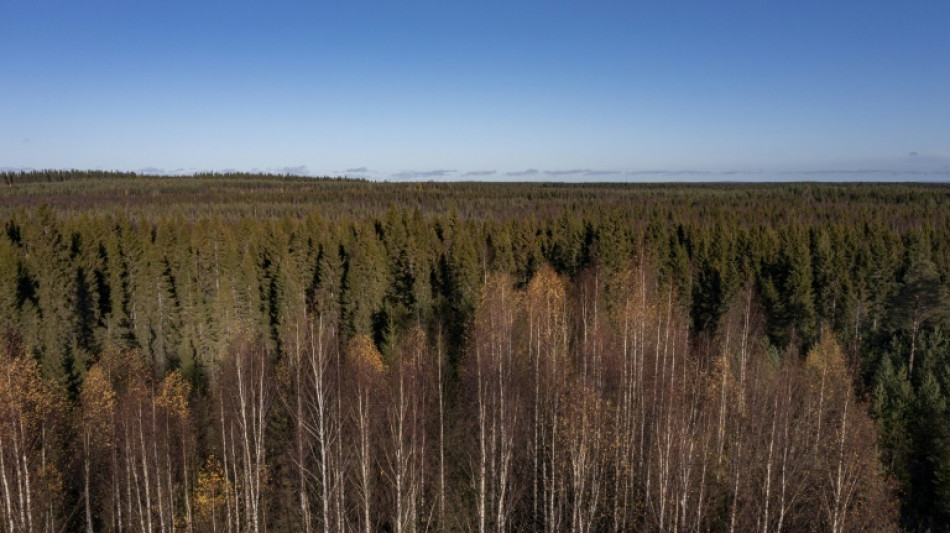
COP15's key aim: protect 30% of the planet / Photo: © AFP/File

 Soldiers' mutiny rocks Niger capital, as junta claims to be back in control

 Seven Arrested After VCK Functionary Killed in Thiruneermalai Attack

 Kanye West Does Not Address Milo Yiannopoulos Detention During New Orleans Concert

 Taylor Swift Donation Supports Connecticut Mother Recovering From Serious Roadside Injuries

 Taylor Swift Gives $50,000 to Fundraiser for Mother Injured While Helping Crash Victims

 Los Angeles County Rapper Among Three Charged in $8.1 Million Stolen-Check Case

 Pittsburgh Speed Painter Surprises Jalen Brunson With 10-Minute Portrait
 California Dairy Hydrogen Project Sets Carbon-Intensity Record and Renews Biogas Debate

 Munoz saves Iraola in Liverpool draw, Hull extend dream start
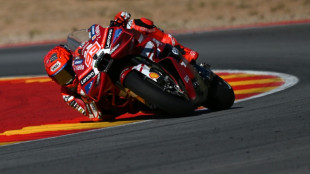 'Smooth' Marc Marquez wins Aragon MotoGP sprint, Bezzecchi on pole

 Tiny Elversberg stun Leverkusen on Bundesliga debut

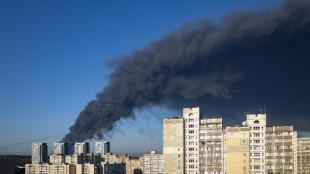 Russian strike blows up arms depot near Kyiv, killing 37
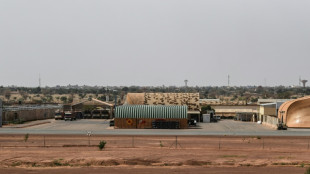
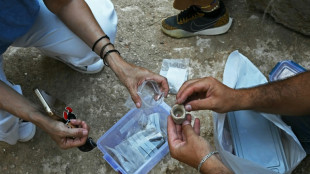 Lebanon archaeological finds showcase rich heritage despite war woes
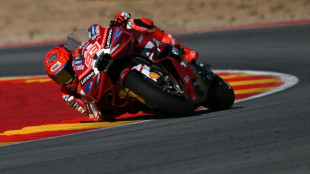
 Liverpool held by Forest on Iraola's Anfield debut
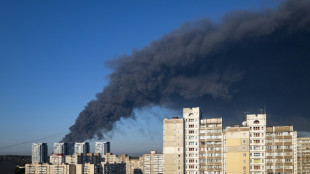
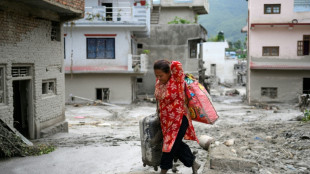 Rescuers claw through mud as missing toll from Nepal, China flood nears 3,000
 Mourinho says Mbappe worthy of Ballon d'Or
 Clashes rock Niger capital, junta says back in control

 India's Neeraj Chopra out for season with ankle injury

 College Values Debate Puts Harvard and Columbia Under Parental Scrutiny

 Michelle Obama Says She Welcomes Life After Active Parenting Years
 Police Report Details Famous Dex Domestic Battery Allegations

 Freedom 250 Winner Kirkwood Jokes Against IndyCar Return to Washington

 Judge Grants Brittany Cartwright Temporary Restraining Order Against Jax Taylor

 Omitted Social Justice Figures Trigger Dispute Over Tamil Nadu Policy Note
 Celebrities Share Late-Summer Photos in August Gallery
Headlining the COP15 biodiversity talks is a drive to secure 30 percent of Earth's land and oceans as protected zones by 2030 -- the most disputed item on the agenda.
Some campaigners say the so-called "30x30" target is nature's equivalent of the landmark 1.5C global warming target set at climate talks under the Paris Agreement.
But delegates negotiating a broad accord for protecting nature are divided over how to pay for "30x30" and how the measure would be applied.
Here are some facts about the initiative, one of numerous targets under discussion at the talks taking place in Montreal until December 19.
- Too much? -
Fearful that COP15 will end with a less ambitious agreement, scientists and environmentalists insist 30 percent must be a minimum target for protecting nature, not a ceiling.
Currently, 17 percent of land and eight percent of the seas have protected status.
South Africa, Russia, and Saudi Arabia have argued for a target of 20 percent. Other countries, such as China, Japan and South Korea support 30 percent for land but want a less arduous target of 20 percent for the seas.
The target would be applied worldwide, so countries with big populations or small shorelines would not be obliged to contribute a disproportionate share.
Some countries would shoulder higher percentages, particularly ones that are home to areas of rich biodiversity, or places of strategic importance for arresting climate change -- such as the Amazon and the Congo Basin.
- Not enough? -
Some say the 30 percent target is not ambitious enough.
"Thirty percent would be a laudatory goal if the year were 1952. But it's 2022 and we don't have the luxury of waiting," said Eric Dinerstein, a biologist who authored "Global Safety Net," a study on areas in need of protection.
"The simplest way to say it, as we biologists would like to put it, is that 50 percent is our 1.5 degrees."
Oscar Soria of the civil campaign group Avaaz called too for a 50-percent target, in line with other NGOs such as Wild Foundation and One Earth.
He argued that if governments recognized indigenous peoples' and other communities' rights over their territory, the 30 percent protection target would have already been achieved.
Accounting for six percent of the world's population and occupying 25 percent of its land, indigenous people are key players in the Montreal talks.
"We are here to send the message that we cannot achieve ambitious conservation aims unless our rights are fully taken into account," said Jennifer Corpuz, a lawyer and member of the International Indigenous Forum on Biodiversity.
- Subject to conditions -
Many NGOs say they will accept a 30 percent target if certain criteria are met, such as only including ecologically significant land in the protected areas and ensuring effective protection measures.
Some are demanding that a fixed percentage of the land be classed as strongly or totally protected -- with barely any human activity.
Most of these elements have yet to be approved in the draft agreements under discussion.
Campaigners are therefore pressing for action from one of the negotiating blocs at COP15: the High Ambition Coalition for Nature and People. The bloc is jointly led by Costa Rica, France and Britain and backed by 130 countries that support the 30 percent target.
Some are limiting the scope of these demands, however.
"If the criteria are too restrictive, countries will go and protect areas that are not of great interest for biodiversity," said one Western negotiator who asked not to be named.
"But the richest areas are also the ones with the best resources: they have to be managed sustainably but not prohibited," the negotiator added.
"There is a lot of talk about 30 percent, but what is key is also what is done to nature in the remaining 70 percent."
Other key aims at stake in the talks are defending biodiversity in land management, reducing the use of pesticides, and restoring damaged land.
M.Furrer--BTB