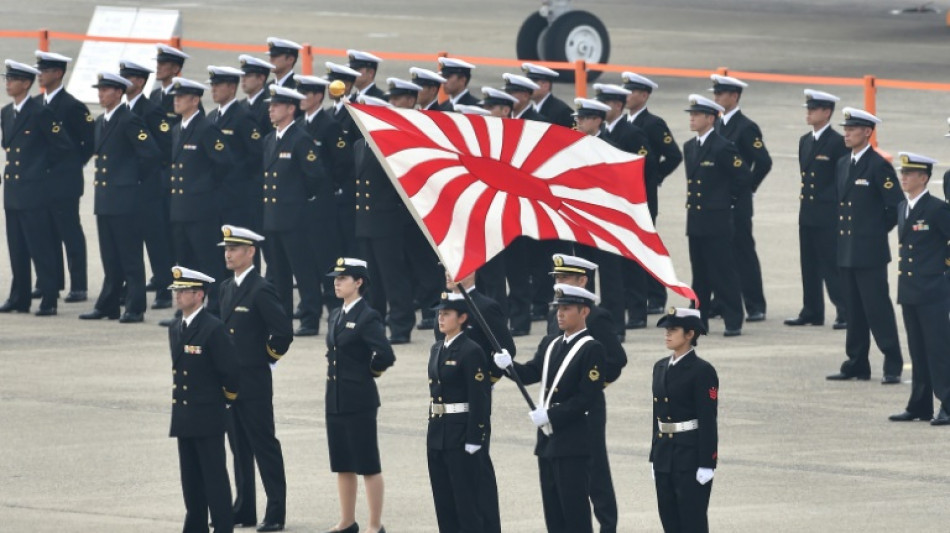
Counterstrikes and controversy: Japan's defence overhaul / Photo: © AFP/File

 Soldiers' mutiny rocks Niger capital, as junta claims to be back in control

 Seven Arrested After VCK Functionary Killed in Thiruneermalai Attack
 Kanye West Does Not Address Milo Yiannopoulos Detention During New Orleans Concert

 Taylor Swift Donation Supports Connecticut Mother Recovering From Serious Roadside Injuries

 Taylor Swift Gives $50,000 to Fundraiser for Mother Injured While Helping Crash Victims

 Los Angeles County Rapper Among Three Charged in $8.1 Million Stolen-Check Case

 Pittsburgh Speed Painter Surprises Jalen Brunson With 10-Minute Portrait

 California Dairy Hydrogen Project Sets Carbon-Intensity Record and Renews Biogas Debate

 Munoz saves Iraola in Liverpool draw, Hull extend dream start
 'Smooth' Marc Marquez wins Aragon MotoGP sprint, Bezzecchi on pole
 Tiny Elversberg stun Leverkusen on Bundesliga debut

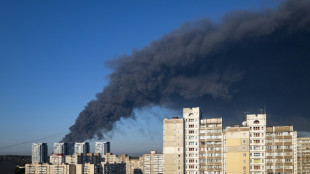
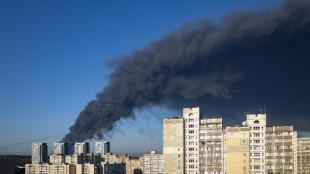 Russian strike blows up arms depot near Kyiv, killing 37

 Lebanon archaeological finds showcase rich heritage despite war woes

 Liverpool held by Forest on Iraola's Anfield debut
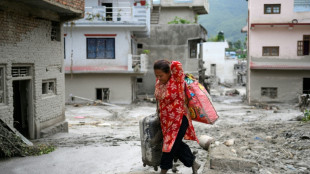 Rescuers claw through mud as missing toll from Nepal, China flood nears 3,000

 Mourinho says Mbappe worthy of Ballon d'Or
 Clashes rock Niger capital, junta says back in control
 India's Neeraj Chopra out for season with ankle injury

 College Values Debate Puts Harvard and Columbia Under Parental Scrutiny

 Michelle Obama Says She Welcomes Life After Active Parenting Years

 Police Report Details Famous Dex Domestic Battery Allegations

 Freedom 250 Winner Kirkwood Jokes Against IndyCar Return to Washington

 Judge Grants Brittany Cartwright Temporary Restraining Order Against Jax Taylor

 Omitted Social Justice Figures Trigger Dispute Over Tamil Nadu Policy Note

 Celebrities Share Late-Summer Photos in August Gallery

Japan has laid out plans to expand its defence capabilities drastically over five years.
The new security strategy marks a major shift, as Japan confronts China's growing military might.
- Why are the changes controversial? -
Japan's constitution, drafted by the United States after World War II, does not officially recognise the military, so moves to bolster its capacity are highly sensitive.
The constitution limits spending on the army, navy and air force to nominally defensive capabilities, and bans the "use of force as means of settling international disputes".
Although defence spending has risen every year for decades, the total has long hovered at around one percent of GDP, below the NATO standard of two percent.
That level "became symbolic of Japan's security policy that focuses exclusively on self-defence", Naoko Aoki of the Atlantic Council think tank told AFP.
Now Prime Minister Fumio Kishida has pledged to ramp up spending to two percent by 2027, although how to finance the rise is proving a political headache.
"Breaching this self-imposed cap does not mean that Japan is abandoning its policy," said Aoki.
"But it reflects the alarm and concern that the Japanese feel about their security environment."
- What is 'counterstrike capacity'? -
A pillar of the new strategy is to acquire "counterstrike capacity": weapons to destroy enemy missile launch sites during an attack.
The move is delicate "because it would exceed what Japan has traditionally considered necessary to defend itself", Aoki said, although polls show most Japanese are in favour.
The government has insisted for decades that carrying out counterstrikes under certain conditions would not violate the pacifist limits of the constitution.
Even so, questions remain about the efficacy of counterstrike missiles given the sophisticated capacities of China and other neighbours, said James Brady, vice president of Teneo consultancy.
"North Korea alone has recently been demonstrating multiple types of mobile launch platforms, including road, railway, and submarine," he warned.
"Even with counterstrike capacities, Japan's defence planners would face a whack-a-mole scenario."
- Why is Japan doing this now? -
Unease has grown in Japan over China's rapidly modernising military and North Korea's wave of missile tests.
Russia's invasion of Ukraine has also "reinforced Japanese concerns", Aoki said.
Japanese officials have regularly protested Chinese maritime incursions, and raised concerns about joint aerial exercises by Chinese and Russian planes.
Under President Xi Jinping, China has also become more bellicose toward Taiwan, which it considers a part of its territory to be taken by force one day if necessary.
So "a key question going forward will be the extent to which Japanese and US forces can better integrate planning to respond jointly to something like a Taiwan contingency," Brady said.
- How will the changes be received? -
Plans to bolster Japan's missile arsenal have faced some hesitancy from the ruling party's coalition partner Komeito, which takes a traditionally pacifistic stance.
"Similarly, neighbouring capitals have traditionally opposed the idea of Tokyo re-arming, worried that it might prelude a return to the military expansionism of the pre-1945 era," Brady said.
Japan's ties with China have already deteriorated in recent years, and Beijing has said it is "firmly opposed" to the overhaul.
Russia too will likely see the moves as a further nail in the coffin for ties.
Tokyo's key ally Washington, however, is expected to welcome the shift and play a key role in bolstering Japan's defences.
Surveys also show Japan's public is broadly supportive of efforts to boost defences, including through the counterstrike capacity, though there is opposition to new taxes to finance spending.
Y.Bouchard--BTB