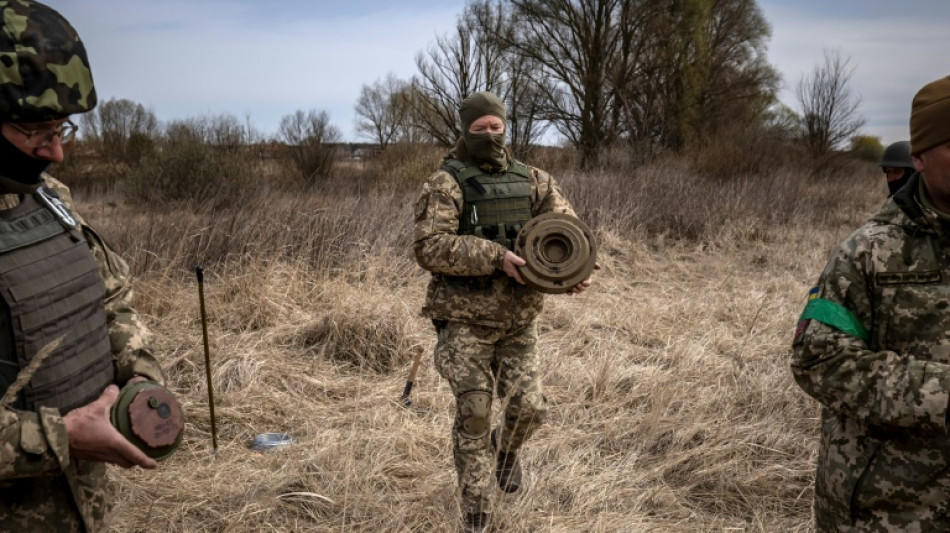
Ukrainian sappers defuse Russian minefield outside Kyiv / Photo: © AFP

 Stocks retreat as bond yield fears persist, oil rises

 ARKBRIDGE’s David Mali Highlights AI-Driven Risk Management at the Finance Magnates London Summit

 Zuckerberg buys Gothic castle in Ireland: spokesman

 Belgium's fire of the century now 'under control'

 Evergrande's Xu Jiayin: from real-estate tycoon to life in prison

 Spurs eyeing move for Man City's Savinho and Marmoush - reports

 Springboks captain Kolisi to miss first All Blacks Test

 Japan to launch probe for Mars moons in October: space agency

 From beach to Bulls: relaxed Tsunoda savours rare F1 drive

 Prince Harry: key dates in life of returning UK royal

 North Korea launches missiles, Seoul says, after Trump floats Kim meet

 Oil jumps on Iran war tensions, offsetting bond yield fears

 Germany identifies far-right suspect in deadly 1970 antisemitic attack
 PrimeXBT Expands Swap-Free Trading to PXTrader 2.0
 Record number of locations in France top 40C over summer: AFP analysis
 Trump pledges 'economic warfare' on Iran, prompting Tehran derision
 'Girl with a Pearl Earring' in Japan, perhaps for the last time

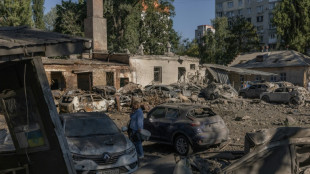 Russian strikes kill 13 in Kyiv, surrounding region

 'Simply lovely': Verstappen signs new Red Bull contract until 2030

 Australia coach Walters heading to St Helens after World Cup

 China jails founder, fines disgraced property giant Evergrande

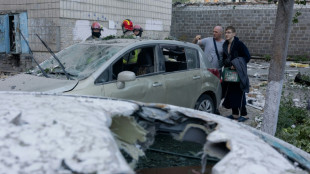 Russian strikes kill 12 in Kyiv, surrounding region

 US India ambassador's Kashmir remarks rile Pakistan; envoy summoned

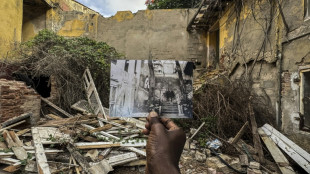 In Senegal's Saint-Louis, traces of slave-trading past fade away

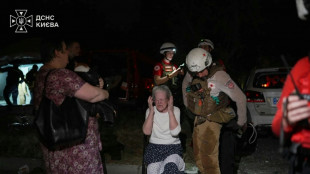 Russian strikes kill 9 in Kyiv, surrounding region

If you walk without watching your feet you might easily miss them, dinner plate sized anti-tank mines nestled in the muddy grassland of a riverbank north of Kyiv.
Five are visible: drab olive discs topped with ominous brown pressure plates. But there could be many more secreted in the uneven earth under the trampled scrub.
Each step is a gamble. But a team of men are wandering around with sure-footed ease, clearing this minefield outside the Kyiv suburb of Brovary from explosives planted by retreating Russian forces.
One anti-personnel mine in the field is primed for detonation. Army engineers light a two-minute fuse then retreat to a safe distance with distinct nonchalance as a wisp of grey smoke grows thicker and thicker.
Then comes the blast. A ball of violent light, a shockwave like a shove in the chest, then an ugly thud of sound follows in the aftermath.
Now there is one less mine in this sprawling field.
- Covering a retreat -
Russia called off its northern offensive to take Kyiv at the end of March, and since then Ukrainian citizens and soldiers have returned to the land they occupied.
In recent weeks AFP has seen countless unexploded munitions lying in the streets of towns and villages north-east and north-west of the capital, abandoned or mislaid in the hasty withdrawal.
In some places unspent missiles and mortar shells have been seen arrowed into the earth, relics of failed strikes.
However Ukraine also says Russian troops left booby traps to cover their retreat.
Outside Brovary -- at a location army officials asked AFP not to reveal -- the mines are peppered across grassland besides a modest bridge crossing a creek towards a cluster of handsome homes.
Ringed around the field are red skull and crossbones signs warning "Danger, mines" in both Ukrainian and Russian.
Retreating "was not a gesture of goodwill by the Russians," says brigadier general Valerii Yembakov, surveying the scene in his pixellated camouflage uniform.
"They retreated very quickly, but they still took the time to mine the bridge - which is 100 meters away - and also took the time to mine the roads around the bridge so that our tanks could not go around."
Yembakov says Russia did not manage to detonate the bridge, however the mines remain to be dealt with.
- The art of demining -
Ukrainian mine clearing is a low-tech affair, relying on rudimentary tools and nerves of steel.
Engineer Oleksandr, who declined to give his surname, explains that "reconnaissance" is the first step.
This can either be done with a mine detector machine or a long pointy pole.
A soldier's shovel is used to unearth it. Then a grappling hook on a rope is used to give the mine a hearty tug.
Anti-tank mines will generally not be detonated by a pedestrian. However they can be booby trapped with explosives triggered when the sappers do their work.
Once it is cleared the detonator can be removed, and the device can be added to Ukraine's own arsenal.
"This mine can be used again in the future," says Oleksandr, 50.
"This is important for us, we are trying to save the ammunition for our side, to fight the Russians."
At the edge of the field Oleksandr shows off his hefty shovel, the tool he uses to uncover the deadly traps.
"It's my lucky digger," he boasts. "It's my talisman."
Then he goes back to work.
F.Pavlenko--BTB