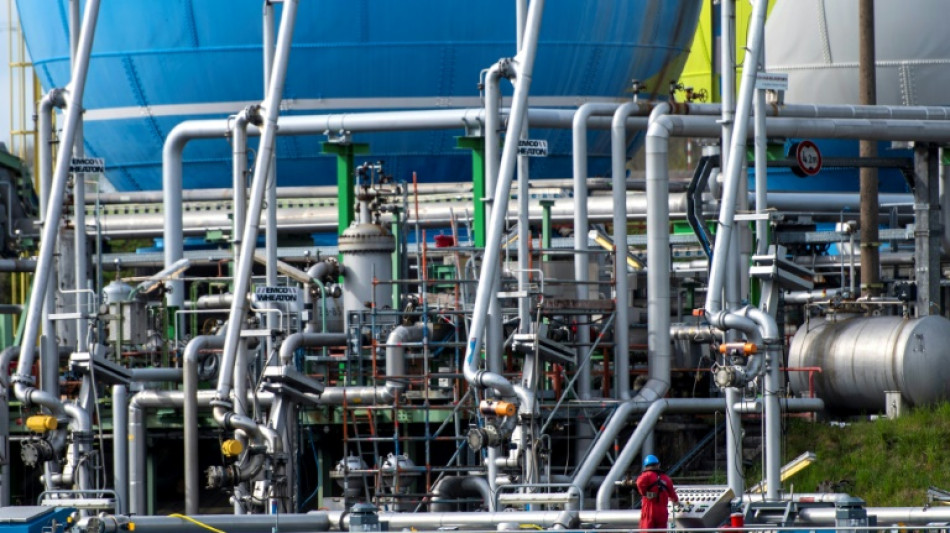
EU embargo on Russian oil, gas will take 'months' / Photo: © AFP/File

 Stocks retreat as bond yield fears persist, oil rises
 ARKBRIDGE’s David Mali Highlights AI-Driven Risk Management at the Finance Magnates London Summit

 Zuckerberg buys Gothic castle in Ireland: spokesman
 Belgium's fire of the century now 'under control'

 Evergrande's Xu Jiayin: from real-estate tycoon to life in prison
 Spurs eyeing move for Man City's Savinho and Marmoush - reports

 Springboks captain Kolisi to miss first All Blacks Test

 Japan to launch probe for Mars moons in October: space agency

 From beach to Bulls: relaxed Tsunoda savours rare F1 drive

 Prince Harry: key dates in life of returning UK royal

 North Korea launches missiles, Seoul says, after Trump floats Kim meet

 Oil jumps on Iran war tensions, offsetting bond yield fears

 Germany identifies far-right suspect in deadly 1970 antisemitic attack

 PrimeXBT Expands Swap-Free Trading to PXTrader 2.0
 Record number of locations in France top 40C over summer: AFP analysis
 Trump pledges 'economic warfare' on Iran, prompting Tehran derision
 'Girl with a Pearl Earring' in Japan, perhaps for the last time

 Russian strikes kill 13 in Kyiv, surrounding region

 'Simply lovely': Verstappen signs new Red Bull contract until 2030

 Australia coach Walters heading to St Helens after World Cup

 China jails founder, fines disgraced property giant Evergrande

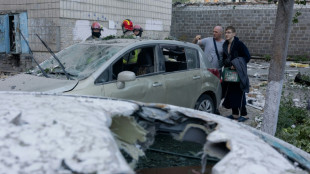 Russian strikes kill 12 in Kyiv, surrounding region

 US India ambassador's Kashmir remarks rile Pakistan; envoy summoned

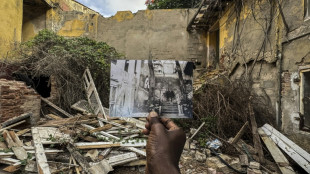 In Senegal's Saint-Louis, traces of slave-trading past fade away

 Russian strikes kill 9 in Kyiv, surrounding region
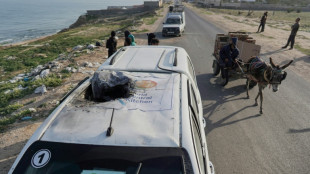
The EU is working on broadening sanctions on Russia to include oil and gas embargoes but such measures would take "several months", European officials told AFP on Friday.
The bloc last week announced a ban on Russian coal in a first step against Russian energy exports -- together, Moscow's main hard currency earner.
But the coal sanction only kicks in from mid-August, and would hit around eight billion euros ($8.7 billion) in Russia's sales abroad, annually.
Russian oil and gas sales to the EU account for a far higher amount of revenue: between a quarter of a billion to a billion euros per day, per different estimates.
Public and political opinion in the EU is swinging towards a total energy ban as Moscow's war in Ukraine grinds on and yields discoveries of atrocities.
An EU official involved in discussions on cutting Russian energy imports said the European Commission is "thinking about options". Commission chief Ursula von der Leyen has already come out publicly in favour of targeting Russian oil.
But, the official said, "adopting measures on oil means undoing existing contracts, finding alternatives and preventing circumvention".
"That can't be don't overnight. It requires at least several months."
- Outrage over war -
Building EU outrage over the war is sweeping aside hesitation by the member states reliant on Russian oil and gas, such as the bloc's biggest economy Germany, and Italy, Greece and Austria.
Some EU countries, such as Lithuania, have already announced national bans on Russian oil and gas.
One option to quickly stall revenues going to Russia's war could be to pay for energy imports through an escrow account, which Moscow wouldn't be able to touch until a postwar settlement.
But there is also thinking about how Russia might retaliate, by cutting supplies to Europe, or -- as President Vladimir Putin said this week -- selling more to Asia.
In any case, it's clear that European industry and consumers will have to consume less oil and gas -- something economists call "demand destruction".
"Cutting demand will have an impact with price hikes," another EU official said, echoing comments from several ministers in the bloc.
They noted that the EU's main ally in the sanctions, the US -- which a month ago imposed its own ban on Russia's energy imports -- is leery of petrol price rises for American drivers.
"What's more, if Russia sells oil snubbed by the Europeans to other buyers, the sanctions won't work," one EU official said.
The Europeans and Americans are looking to avoid the sanctions being weakened by China and India.
Brussels is telling Beijing and New Delhi the EU would find it "difficult to accept partners who undermine the sanctions," one EU diplomat said.
- EU unity -
At the same time, the EU is intent on preserving unity among its 27 member states as it navigates sensitive national interests on energy.
Yet determination to target Russian energy was evident at the last meeting of EU foreign ministers on Monday in Luxembourg.
"The European Union is spending hundreds of millions of euros on importing oil from Russia -- that is certainly contributing to financing this war," Irish Foreign Minister Simon Coveney said at that meeting.
"In our view, we need to cut off that financing of war, even though it creates huge challenges and problems for the EU to solve together."
EU foreign policy chief Josep Borrell said after the meeting that "nothing is off the table, including sanctions on oil and gas" but no decision was yet made.
Borrell said that, in 2021, the EU paid Russia $80 billion (74 billion euros) for oil and $20 billion for gas -- which would work out as an average of 250 million euros per day.
Other European sources, including MEPs, have spoken of Russian fossil fuel imports to the value of up to 700 million euros per day.
Figures vary depending on what period of time is being looked at, contract prices versus market spot prices, and currency valuations.
A spike in energy demand as Covid-19 restrictions were eased made energy prices jump even before the war in Ukraine.
The International Energy Agency said that, in 2021, the EU imported 155 billion cubic metres of gas from Russia, representing 45 percent of its gas imports.
The World Economic Forum says the EU gets over a quarter of its imported crude from Russia, but volumes have been dropping over the past decade.
Y.Bouchard--BTB