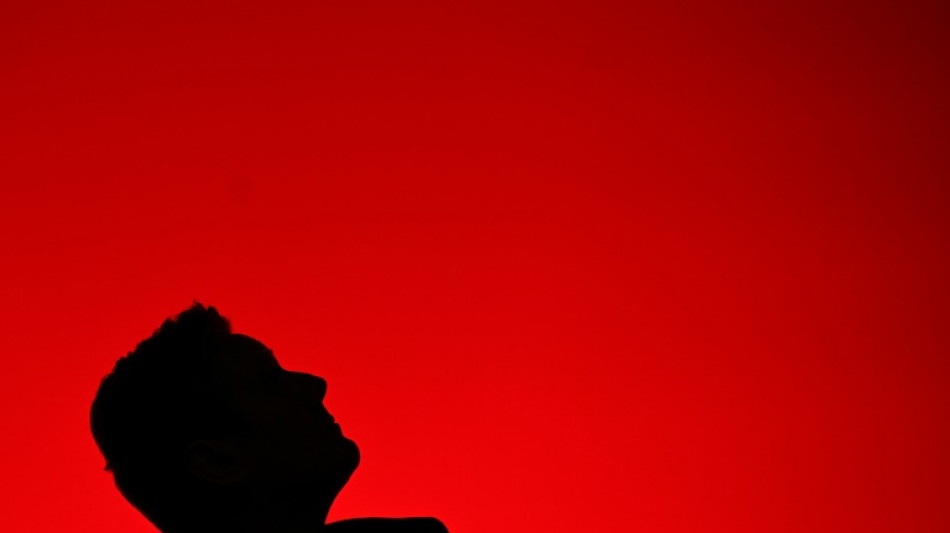
Keir Starmer: Britain's methodical new leader / Photo: © AFP

 Marchand 'stressed' about racing Japanese rivals at LA Olympics

 Mobile boat clinics bring healthcare to India's remote islands

 Former India paceman Zaheer Khan named Chennai coach in IPL
 Six-year-old Chinese girl sets world record with Rubik's Cube
 Swimming prodigy Yu, 13, says 'interviews way harder than racing'
 Star coaches make their bows as Nations League returns
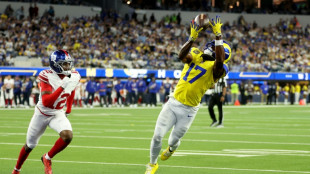 Rams bounce back as Giants reel from Dart injury

 In Bangladesh, Pakistan's Jinnah photo stirs anger

 Two New Zealand naval ships transit Taiwan Strait

 Zidane gets down to work as France start new era

 Inside the Venezuelan prison meant to 'drive you insane'

 UK king braces as memoir by Diana's brother goes on sale

 Akkodis and Hamburg Public Transport Association Showcase hvv mia at InnoTrans 2026, Demonstrating the Future of AI-Powered Mobility

 Macron says talks with Trump on Red Sea, Ukraine 'constructive'

 Green policies just good politics, says UK minister

 Bardot auction in Paris fetches nearly one million euros

 No timeline on Daniels injury return, says Commanders coach

 British Columbia sues OpenAI in US court over Canada school shooting

 French star Batum retires after 18-year NBA career
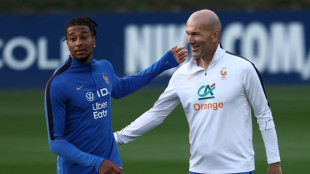 Zidane leads first France training session
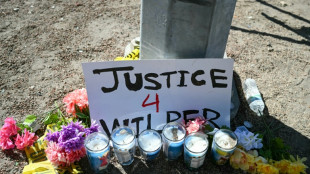 Man shot by ICE agent in Texas detained with bullet inside him: lawyer
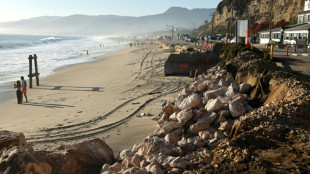 California declares state of emergency ahead of El Nino

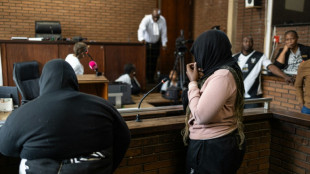 South Africa arrests three more suspects, after nine women murdered
 Carse needs time away from England, says captain Brook
 NOWPayments Releases Cross-Chain Payout Data Revealing Key Performance Benchmarks Across TRON, BNB Chain, and Solana
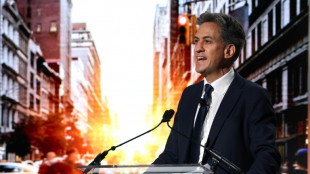
Britain's new prime minister Keir Starmer is an ex-human rights lawyer and public prosecutor who will have to focus his relentless work ethic and methodical mind on fixing the country.
At 61, Starmer is the oldest person to take the role in almost half a century, but was only elected to parliament nine years ago.
The married father-of-two is unlike most modern politicians: he had a long and distinguished career before becoming an MP and his views are rooted in pragmatism rather than ideology.
"We must return politics to service," Starmer said repeatedly during the campaign, promising to put "country first, party second" following 14 chaotic years of Conservative rule under five different prime ministers.
That mantra chimes with supporters' lauding of him as a safe pair of hands who will approach life in Downing Street the same way he did his legal career: seriously and forensically.
Detractors, though, label him an uninspiring opportunist who regularly shifts position. They say he has not spelled out a clear and defining vision for the country.
Football-mad Starmer, a devoted Arsenal fan, has struggled to shed his public image as buttoned-up and boring and only recently started to appear more at ease in the public spotlight.
Supporters admit that lacks the charisma of more flashy predecessors like Boris Johnson, but say that therein lies his appeal: a reassuring and strait-laced presence following the turbulent, self-serving years of Tory rule.
With his grey quiff and black-rimmed glasses -- Starmer, named after Labour's founding father Keir Hardie -- is also the centre-left party's most working-class leader in decades.
"My dad was a toolmaker, my mum was a nurse," often told voters, countering depictions by opponents that he is the epitome of a smug, liberal, London elite.
Starmer's purging of left-wingers from his party highlights a ruthless side that has propelled him to Britain's highest political office, but he is said to be funny in private and loyal to his friends.
He has pledged to maintain his habit of not trying not to work after 6:00 pm on Friday evenings to spend time with his wife Victoria, who works as an occupational therapist in the National Health Service, and their two teenage children, who he does not name in public.
"There's something extraordinary in him still being quite normal," Starmer's biographer Tom Baldwin wrote in the Guardian newspaper.
- Top lawyer -
Born on September 2, 1962, Keir Rodney Starmer was raised in a cramped, pebbledashed semi-detached house on the outskirts of London by a seriously ill mother and an emotionally distant father.
He had three siblings, one of whom had learning difficulties. His parents were animal lovers who rescued donkeys.
A talented musician, Starmer had violin lessons at school with Norman Cook, the former Housemartins bassist who became DJ Fatboy Slim.
After legal studies at the universities of Leeds and Oxford, Starmer turned his attention to leftist causes, defending trade unions, anti-McDonald's activists and death row inmates abroad.
He is friends with human rights lawyer Amal Clooney from their time together at the same legal practice and once recounted a boozy lunch he had with her and her Hollywood actor husband George.
In 2003, he began moving towards the establishment, shocking colleagues and friends, first with a job ensuring police in Northern Ireland complied with human rights legislation.
Five years later, he was appointed director of public prosecutions (DPP) for England and Wales when Labour's Gordon Brown was prime minister.
Between 2008 and 2013, he oversaw the prosecution of MPs for abusing their expenses, journalists for phone-hacking, and young rioters involved in unrest across England.
He was knighted by Queen Elizabeth II, but rarely uses the prefix "Sir", and in 2015 was elected as a member of parliament, representing a seat in left-leaning north London.
Just weeks before he was elected, his mother died of a rare disease of the joints that had left her unable to walk for many years.
- Rebellion -
Just a year after becoming an MP, Starmer joined a rebellion by Labour lawmakers over radical left-winger Jeremy Corbyn's perceived lack of leadership during the EU referendum campaign.
It failed, and later that year he rejoined the top team as Labour's Brexit spokesman, where he remained until succeeding Corbyn after the party suffered its worst defeat since 1935 in the last election five years ago.
Starmer moved the party back to the more electable centre ground, purging Corbyn and rooting out anti-Semitism.
Dominic Grieve, who as Conservative attorney-general worked closely with Starmer as DPP, said he "inspires loyalty because he comes across as being so transparently decent and rational".
"These are quite important features even if you disagree with a policy. And he comes across as a man of moderation," he told The Times.
Nevertheless, the left accuses him of betrayal for dropping a number of pledges he made during his successful leadership campaign, including the scrapping of university tuition fees.
But his successful strategic repositioning of Labour is indicative of a constant throughout his life: a drive to succeed.
"If you're born without privilege, you don't have time for messing around," Starmer once said.
"You don't walk around problems without fixing them, and you don't surrender to the instincts of organisations that won't face up to change."
C.Kovalenko--BTB