
-
 Stocks rise on AI buzz, oil prices cool
-
Magnificent Mandhana's 79 helps India to Asian Games cricket gold
-
 India narrowly survive huge scare against minnows Japan
-
Marchand 'stressed' about racing Japanese rivals at LA Olympics
-
 Missing F-35 fighter parts 'not sensitive', says Australia minister
-
Mobile boat clinics bring healthcare to India's remote islands
-
 Cambodia showcases scams crackdown with global conference
-
Former India paceman Zaheer Khan named Chennai coach in IPL
-
 Afghan cyclist who disguised herself as man wins Asian Games silver
-
Six-year-old Chinese girl sets world record with Rubik's Cube
-
 Typhoon Dujuan leaves four dead in Japan, 45,000 houses without power
-
Swimming prodigy Yu, 13, says 'interviews way harder than racing'
-
 G7 leaders condemn Houthi strikes on Saudi Arabia
-
Star coaches make their bows as Nations League returns
-
 Google data centre sparks protests in Austria
-
Rams bounce back as Giants reel from Dart injury
-
 Shin Ohashi: Junk food-loving teen and Japan's next big swimming hope
-
In Bangladesh, Pakistan's Jinnah photo stirs anger
-
 Stocks rise on AI buzz, drop in oil prices
-
Two New Zealand naval ships transit Taiwan Strait
-
 China's robot dancers limber up for America's Got Talent final
-
Zidane gets down to work as France start new era
-
 Despite military might, Saudi struggles to crush the Houthis
-
Inside the Venezuelan prison meant to 'drive you insane'

-
 Trump to tout deals, defend Iran war in UN speech
-
UK king braces as memoir by Diana's brother goes on sale

-
 Sri Lanka to issue verdict in landmark Easter attack trial
-
Akkodis and Hamburg Public Transport Association Showcase hvv mia at InnoTrans 2026, Demonstrating the Future of AI-Powered Mobility
-
 No green light to lift EU sanctions on Russian oligarchs, talks to resume
-
Macron says talks with Trump on Red Sea, Ukraine 'constructive'

-
 UK agrees support for Saudi in struggle with Houthis: reports
-
Green policies just good politics, says UK minister

-
 EU foreign policy chief calls for continued sanctions on Russia
-
Bardot auction in Paris fetches nearly one million euros

-
 Flights scrapped, evacuations urged as Typhoon Dujuan wallops Japan
-
No timeline on Daniels injury return, says Commanders coach

-
 Fonseca to take break from tennis
-
British Columbia sues OpenAI in US court over Canada school shooting

-
 A Cuban zoo, and its animals, in epic battle for survival
-
French star Batum retires after 18-year NBA career
-
 Infantino proposes consulting federations to reform FIFA
-
Zidane leads first France training session
-
 El Nino weather pattern enters record territory: scientist
-
Man shot by ICE agent in Texas detained with bullet inside him: lawyer
-
 OpenAI calls for US to lead global effort on AI standards
-
California declares state of emergency ahead of El Nino
-
 South African ostriches plucked alive for luxury fashion: report
-
South Africa arrests three more suspects, after nine women murdered
-
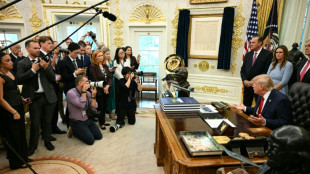 US networks halt Trump coverage in revolt over White House ban
-
Carse needs time away from England, says captain Brook
Iran vote winner could ease, but won't end, nuclear tensions: analysts
Masoud Pezeshkian's victory in Iran's presidential elections has given a rare boost to efforts for scaling down years of tensions over Tehran's nuclear programme, even with no indication of any upcoming breakthrough in the crisis.
Pezeshkian's defeat of ultra-conservative Saeed Jalili, a former chief nuclear negotiator whose intransigence and style made him notorious among Western diplomats, is a relief for European governments as they seek to maintain dialogue on the issue.
The incoming president was backed by former president Hassan Rouhani, who while in office led efforts to defuse the crisis.
Pezeshkian also boasted on his campaign team former foreign minister Mohammad Javad Zarif, who in the past had worked intensely with European officials over the nuclear dossier.
But even after taking office, Pezeshkian will in no way be Iran's number one figure on foreign policy or nuclear issues, with top authority resting with supreme leader Ayatollah Ali Khamenei who has led the Islamic republic since 1989.
During campaigning for the election, called after hardline president Ebrahim Raisi died in a helicopter crash, Pezeshkian, 69, had advocated for an Iran more open to the West.
He had also called for "constructive relations" with Washington and the Europeans, in order to "bring Iran out of its isolation".
He showed "that his project was very different from that of the ultra-conservative Saeed Jalili", who rejected the impact of international sanctions on the economy, said Thierry Coville, Iran specialist at the Institute of International and Strategic Relations (IRIS).
- 'No longer realistic option' -
The 2015 Iranian nuclear deal, known as the JCPOA, and concluded with the United States, China, Russia, France, Germany and the United Kingdom, was supposed to regulate Iran's atomic activities in exchange for the lifting of international sanctions.
But since the unilateral 2018 US departure from the agreement at the behest of Republican former president Donald Trump, the Islamic republic has gradually freed itself from its commitments.
Tehran vehemently denies that it wants to acquire nuclear weapons, but its programme continues to grow.
According to the International Atomic Energy Agency (IAEA), Iran is the only non-nuclear armed country to enrich uranium to 60 percent, close to the 90 percent needed to build a bomb, and to accumulate such large stocks.
Western diplomats who spoke to AFP said that a victory for Saeed Jalili would have further paralysed the issue, describing him as a "hardliner" "who served up ideological speeches" during negotiations and was the embodiment of an inflexible line.
"Restoring the 2015 nuclear deal is no longer a realistic option as the facts on the ground have fundamentally changed," said Ali Vaez, Iran project director at the International Crisis Group.
"Iran's nuclear programme is now too advanced, sanctions have proven too sticky, trust is at an all-time low, and the world powers are no longer on the same page."
But he added that Jalili's "inflexible and ideological approach" would have been bound "to put Iran and the West on a collision course".
With an experienced diplomatic team beneath Pezeshkian, "a series of transactional agreements that would help avert a crisis" could be possible, even if a "sustainable solution might still prove beyond reach", he said.
- 'Out of the game' -
Pezeshkian's election has come at a sensitive moment for Iran.
Tensions are at the highest they have been in years between Israel and Iran in the wake of the October 7 attack by Hamas on Israel and the ensuing war in Gaza. Several Western governments fear a new war could now start between Iran-backed Hezbollah and Israel in Lebanon.
Meanwhile Israel, which some observers believe has stepped up sabotage operations inside Iran in recent years, has never ruled out military action against Iranian nuclear facilities. It could feel further encouraged if Trump wins American presidential elections against the Democrats this year.
The Islamic republic is keenly aware that any easing of sanctions will first have to be negotiated with Washington. Whether or not the Democrats remain in power is therefore a key piece of the puzzle.
As for the Europeans, who are also all emerging from elections that have changed their political landscape, they retain limited room for manoeuvre.
"They have put themselves somewhat out of the game by accepting American sanctions" against Tehran, said Thierry Coville.
O.Bulka--BTB