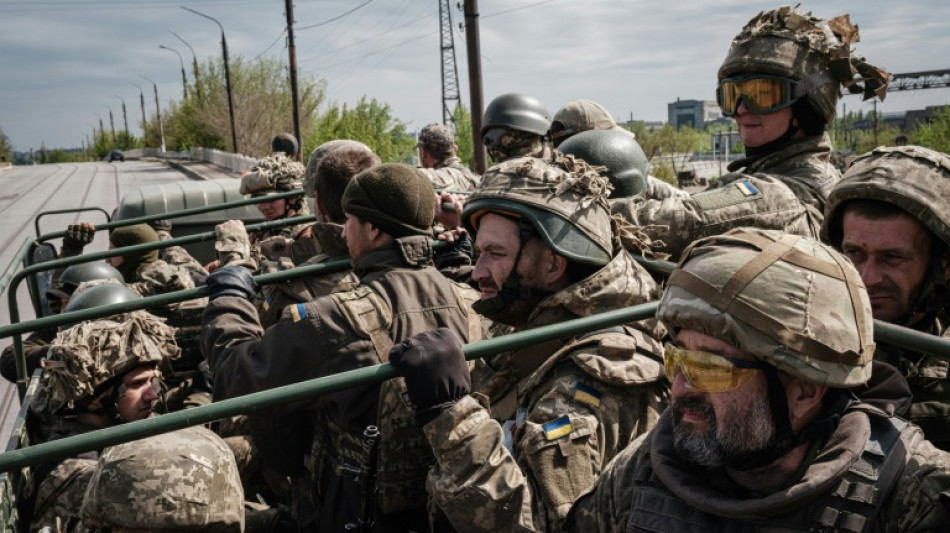
Exhausted Ukrainian soldiers return from eastern front / Photo: © AFP

 William and Harry: Britain's warring royal brothers
 UN holds second informal poll for next leader

 In US mining hub, black lung rates soar
 Champions Arsenal embrace being 'hunted' as Premier League returns
 World No.2 Rybakina retires from Cincinnati clash with Swiatek

 'I heard you missed me': Melania Trump jokes about month out of spotlight

 Amazon Prime Video to invest $2 bn in Latin America productions
 Panama Canal to reduce shipping over El Nino-fueled drought
 Maradona trial on hold over possible medical evidence mix-up

 'Green dilemma': China's solar boom hurt birds, says study

 Pegula hangs on to dispatch Anisimova, reach Cincinnati semi-finals

 US charges woman with IS-inspired plot to blow up New York State Capitol

 What a record-breaking El Nino could mean for the world

 Duplantis edges Karalis to win Lausanne Diamond League pole vault
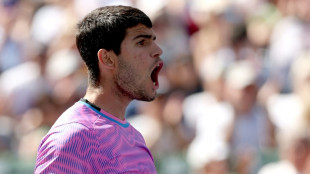 Alcaraz to return for US Open title defence

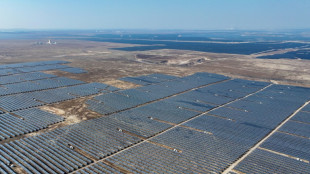 China's rapid solar expansion hurt bird diversity: study
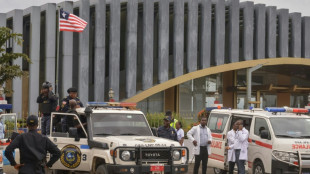
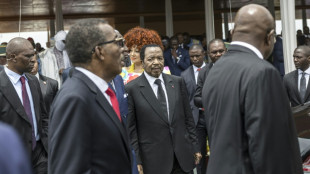 President Paul Biya back in Cameroon after 73 days away

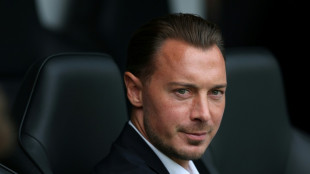 Newcastle boss Jaissle unfazed by lack of respect
 US Open purse to top $100 mn as Grand Slams form player council

 Hull aim to silence critics after unexpected promotion to Premier League

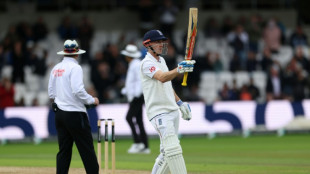
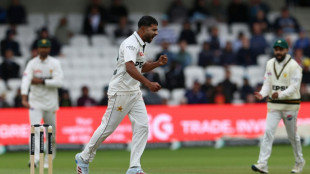 Pakistan hit back against England after Cox and Root fifties
 Walmart reports mixed results as gas prices drag on US sales growth

 Wang downs Sindhu to break Indian hearts at badminton worlds

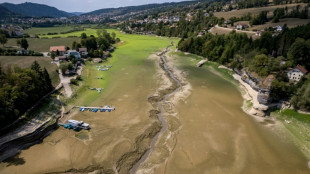
 As Europe's rivers recede, shippers scramble to limit damage
 Alonso won't confirm Fernandez will remain at Chelsea after Man City link
Packed with exhausted Ukrainian soldiers with clenched jaws, the truck drives away at full speed. The troops from the 81st brigade have just received an order to withdraw from the eastern front where Russian forces advance.
The brigade walked 12 kilometres (7.5 miles) Saturday, camouflaged in the woods and under crossfire, until their point of retreat at Sviatoguirsk.
For a month, the 81st -- whose motto is "always first" -- battled to push back the Russian advance in Ukraine's eastern Donbas region where Moscow's troops move forward slowly, taking villages one by one.
"Everyone understands that we must guard the line here, we cannot let the enemy move closer, we try to hold it with all our force," says lieutenant Yevgen Samoylov, anxious that the unit could be hit by Russian fire at any point.
"As you can hear, the enemy is very, very near," he says, pointing to the sky. The line of Russian tanks is on the other side of a hill, around seven kilometres (4.3 miles) away.
At 21 years old, Samoylov, an officer from the Odessa military academy, finds himself managing 130 conscripts, often twice his age.
"It's my first war. I was supposed to graduate in four months, but they sent me here," says the baby-faced officer with a short black beard.
Samoylov, who goes by the nom de guerre "Samson", never leaves his red notebook alone. He takes notes of every movement, but also each request and remark by the soldiers whom he always addresses with a soft voice.
- Deadly silence -
The unit swung into action on February 23, a day before Russia launched the invasion.
At the start of the war, they spent a month defending Izium, which fell on April 1, before joining the fighting around the village of Oleksandrivka.
"Some really difficult battles," says the quiet Samoylov.
In this brigade, like the others, they don't say how many people have been killed.
When the subject comes up, Samoylov's gaze becomes misty. The pain is raw.
A deadly silence takes over the military truck during the drive to the abandoned building where the soldiers will stay during their week of rest.
When the convoy passes a truck loaded with long-range missiles dashing to the front, the soldiers automatically make a "V" sign for victory with their fingers before fixing their gaze once more on their feet or the horizon in silence.
On arrival at the base, the soldiers unload their weapons, remove their kit and immediately go into one of the dilapidated rooms without electricity where they undergo a medical examination after returning from the front.
For the survivors, "there are small injuries on the forehead, those who were buried under the rubble during a bombing have fractures and (injuries) linked to shrapnel," says Vadym Kyrylov, the brigade's doctor.
"But we mainly see somatic problems, like hypertension or chronic illnesses that have worsened," the 25-year-old adds.
- 'Trench foot' -
The men also greatly suffer from "trench foot" syndrome caused by prolonged exposure to moisture, unsanitary conditions or the cold.
"For a month they are not able to dry their shoes... so there are many feet-related injuries, mainly fungi and infections," the doctor says.
After the medical visit, they all have the same reflex: to isolate and use their phone to call a female partner, a child or a parent.
Soldiers cannot use their phones on the front, and any application that requires geolocation is banned.
Four soldiers reassemble the rusty metal bed frames and sweep the floor coated with dust to make a semblance of a room.
"It's the moment for the guys to relax, to take care of their physical and psychological injuries, to regain their strength before returning to battle," Samoylov says.
"They'll sleep warm, eat normal food and try to more or less get back on their feet."
L.Dubois--BTB