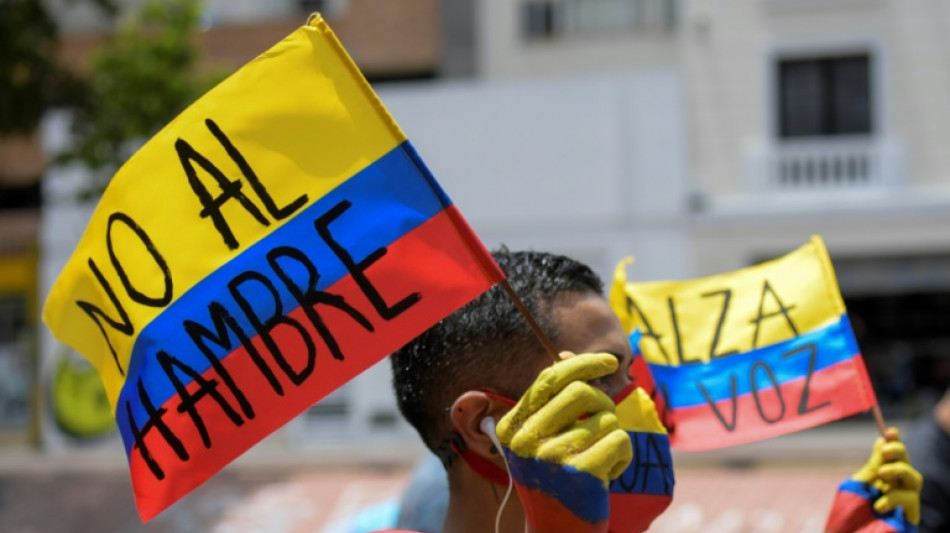
Colombia demands removal from 'hunger hotspots' list / Photo: ©

 Prague’s Concert for the Future Kicks Off on Wenceslas Square

 Prince William and Princess of Wales to Announce Earthshot Prize Winners in Mumbai

 Indonesia Forest Fires: Health Crisis, Diplomatic Strains and the Search for Solutions

 BYD Dolphin G Leasing Deal: Plug-in Hybrid Supermini Available from £174 a Month

 JUEL Group Expands from Real Estate to Hospitality with Hyatt Centric Malta Opening

 French Economy Shrinks 0.1% as Consumer Confidence Slumps

 Wall Street Ends Turbulent Week Higher Despite Inflation and AI Jitters
Colombia took umbrage Monday at being included in a report by UN agencies on 20 "hunger hotspots," demanding to be removed from the list of countries considered at risk of "acute food insecurity."
The report published last week by the UN's Food and Agriculture Organization and the World Food Programme said that "7.3 million Colombians are food insecure and in need of food assistance in 2022."
Other countries on the list included South Sudan, Ethiopia, Somalia, Madagascar and Yemen.
In a letter provided to the media, Colombia's foreign ministry informed the FAO in Rome of its "rejection of this publication" which it said "lacks factual support, methodological definition and clarity in the sources that give it validity and credibility."
The country asked to be removed from the list of "hotspots" and for statements made about Colombia to be "corrected," Foreign Minister Martha Lucia Ramirez told reporters.
The report had blamed the situation in Colombia on "a combination of political instability, economic challenges and the ongoing impact of the regional migratory crisis amplified by internal displacement."
It also highlighted a lack of food security for 1.1 million Venezuelan migrants who fled their country and now live in Colombia.
Alan Bojanic, the FAO representative in Colombia, lamented that the way the data was presented "was not the best".
The idea, he said, was to "draw attention to the acute food insecurity of some populations in the territory, mainly migrants".
I.Meyer--BTB