-
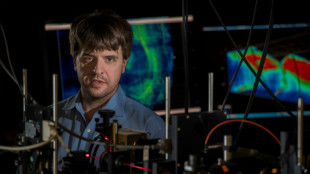 American Nobel laureate in medicine hopes to illuminate the brain
-
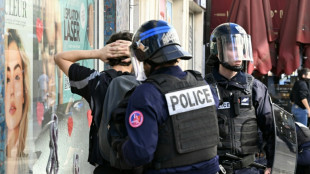
Tens of thousands expected in Paris for high school protests
-
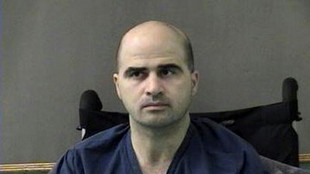 Trump approves firing squad for convicted US military base shooter
-
AI borrowing binge rattles US markets
-
 Grappling with 'homework scams,' US universities shun AI detectors
-
Young Canadians sue government over alleged climate failures
-
 Separatists win Quebec election in test for Canada PM
-
White Sox down Guardians to take 2-0 series lead
-
 Leaders visit Pacific atoll at frontline of climate change
-
NHL record-breaker Ovechkin says current season will be his last

-
 Yemen's Houthis claim striking Riyadh airport, other Saudi sites
-
France roar back in Nations League as Italy beat Turkey

-
 Best-selling British author Jeffrey Archer dies aged 86
-
Messi readies for final farewell in Argentina send-off

-
 Military plane crash kills 32 in Nigeria
-
Esposito seals Italy win over Turkey in Nations League

-
 Olise powers France to win over Belgium in Nations League
-
Russia downplays plague reports as Trump offers US help
-
 High-flying Blazy turns to birdlife at Chanel
-
Trump says US moved bombers from UK base after 'threats'
-
 Riyadh's allies pledge troops as Yemen, Saudi Arabia attack Houthis
-
Brazilian stocks surge to record after Bolsonaro election lead

-
 Clashes erupt outside Kosovo parliament over war crimes court
-
Leaders to visit Pacific atoll at frontline of climate change
-
 Milan's Saelemaekers suffers ankle setback, faces lengthy spell out
-
ICC gives more details about arrest warrants for Taliban ministers
-
 Rubio arrives in Iceland to push for greater US presence in Arctic
-
Nigeria's Tinubu confirms 32 dead after military plane crash
-
 Putin allows Italy's UniCredit to sell part of Russian business
-
'Reckless' AI firms can't control models, says whistleblower
-
 Djokovic into China Open final as Medvedev out for hitting fan with ball
-
Switching on brain cells: the Nobel-winning science of optogenetics

-
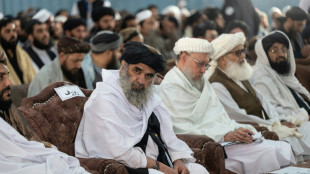 ICC unseals arrest warrants for Taliban education ministers
-
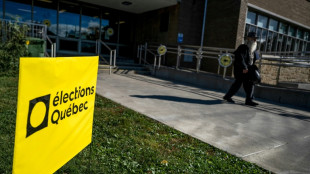
Quebec votes as separatist surge poses test for Canada PM
-
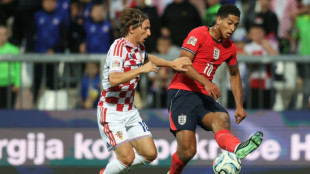 Modric hopes fans back Croatia against Spain after England shame
-
Euro slides as concerns about French debt mount
-
 Bolsonaro rides right-wing surge into Brazil's election runoff
-
Former Trump press secretary Leavitt joins Fox News
-
 Turkey blocks X account of British reporter
-
Djokovic advances to China Open final as Medvedev out for hitting fan with ball
-
 Ukraine says using AI robot guns to shoot down new Russian drones
-
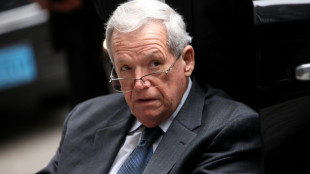
Disgraced former US House speaker dies at 84
-
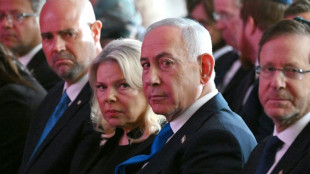 At Oct 7 memorial, Netanyahu says will be no Hamas rule in Gaza
-
Euro slides as worries about French debt grow
-
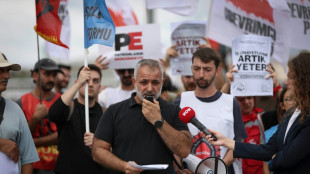 Ukraine blames Russia for deadly sinking of Turkish ship in Black Sea
-
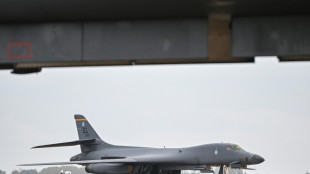
US withdraws all bomber aircraft from UK airbase
-
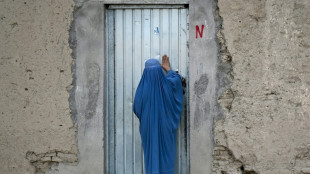 UN rights council slams Taliban's 'oppression' of women
-
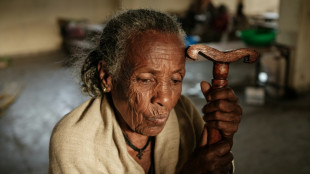
Drone hits Ethiopia IDP camp as fears grow of regional war
-
 Norway eyes partial ban of smart glasses
-
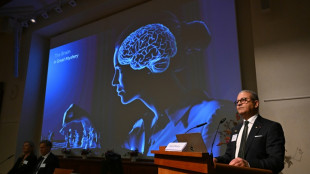
US-German trio wins medicine Nobel for illuminating the brain
Israel-Iran conflict: what we know
Israel struck Iranian nuclear and military facilities with a barrage of missiles on Friday, killing several top officials and prompting a counter-attack by Iran.
Prime Minister Benjamin Netanyahu said Israel's attack on its arch-rival would last "as many days" as needed, and cited Israeli intelligence that Tehran was approaching the "point of no return" on its nuclear programme.
Iran called the Israeli air assault "a declaration of war" and fired dozens of missiles at Israel later Friday and Saturday.
International calls for restraint are multiplying, as fears grow the Middle East could be on the threshold of a broader conflict.
Here is what we know:
- Nuclear sites hit -
Israel's attacks started in the early hours of Friday, a day of rest and prayer in Iran, and continued through the day, on various sites.
A key target was a vast underground nuclear site in Natanz, which Israel hit several times, according to Iranian state television.
Radiation levels outside the facility "remained unchanged", the head of the United Nations' International Atomic Energy Agency (IAEA), Rafael Grossi, said.
Iran said there was limited damage to its Fordo and Isfahan nuclear sites.
- Commanders killed -
Top brass killed included the head of Iran's Revolutionary Guards, Hossein Salami, and armed forces chief of staff Mohammad Bagheri, with replacements swiftly named by supreme leader Ali Khamenei.
The Revolutionary Guards said its aerospace commander Amirali Hajizadeh was also killed. He was in charge of Iran's ballistic missile forces.
Iranian media said several nuclear scientists were killed.
Iran's ambassador to the UN said 78 people had been killed and 320 wounded in the first wave of strikes by Israel.
- Ongoing strikes -
Additional strikes hit sites in Iran's northwestern East Azerbaijan province, with 18 people killed there, state news agency IRNA said.
An Israeli military spokesman said "more than 200 targets" were hit, including nuclear facilities and air bases.
Netanyahu's national security adviser Tzachi Hanegbi said "there is currently no plan to kill" Khamenei and other political leaders.
Internet restrictions were imposed across Iran, the country's communications ministry said, adding they would be lifted "once normalcy returns".
- Iran's response -
Iran launched dozens of missiles at Israel, the Revolutionary Guards and Israel said, hours after the Israeli military said "most" of the 100 drones fired by Iran were intercepted outside Israeli territory.
Early Saturday, Iran launched a fresh wave of attacks, according to state media, with the Israeli military sounding air raid sirens and reporting more inbound missiles from Iran.
Israel said its air force was "operating to intercept and strike where necessary to eliminate the threat".
Israeli rescuers said Saturday that they were treating 21 people wounded in a rocket strike that hit the country's coast.
Rescuers said earlier that 34 people had been wounded in the Gush Dan area, including a woman who later died of her injuries, according to Israeli media reports.
- US involvement? -
Iran's Foreign Minister Abbas Araghchi called the Israeli attacks "a declaration of war" and urged action from the UN Security Council, which held an emergency meeting on Friday.
Tehran had previously warned it would hit US military bases in the Middle East if conflict occurred. The United States pulled out non-essential personnel from several sites days ahead of the Israeli attack.
US President Donald Trump said Israel fully informed him of its raids ahead of time, but insisted Washington was not involved.
He warned Iran that the "next planned attacks" will be "even more brutal" and said Tehran should cut a deal to roll back its nuclear programme "before there is nothing left".
Trump has repeatedly said he will not allow Iran to develop nuclear weapons.
His secretary of state Marco Rubio warned Iran not to target US interests or personnel in the Middle East.
- Nuclear programme -
Tehran has long denied seeking atomic bombs but had been enriching uranium to 60 percent -- far above the 3.67-percent limit set by a largely obsolete 2015 agreement with major powers.
However, Iran's 60-percent enrichment level is still short of the 90 percent threshold needed for a nuclear warhead.
The United States and Iran had been holding talks on Tehran's nuclear programme. The next round, scheduled for Sunday in Oman, now looks to be cancelled.
- Reactions -
The attack, and Iran's response, is fuelling international alarm.
Many capitals have urged restraint, fearing the consequences if the Israel-Iran conflict widened and drew in the United States, and if Middle East oil production and shipments were impacted.
The UN's atomic energy agency planned an emergency meeting for Monday.
UN chief Antonio Guterres called on Israel and Iran to halt their conflict, saying: "Peace and diplomacy must prevail."
Israel, Iran, Iraq, Jordan and Syria closed their airspaces, and several airlines cancelled flights servicing the region.
Oil prices surged on Friday, trading sharply up to around $75 a barrel before falling back a little.
Analysts underlined the risk to the 20 percent of the world's crude oil supplies that are shipped through the narrow Strait of Hormuz in the Gulf.
burs/rmb/gv/ami/sco/cms
M.Ouellet--BTB