Deal or no deal: What happens with Trump's July tariff deadline? / Photo: © AFP/File

 FIFA chief Infantino hit by Norwegian double complaint

 Exiled Catalan separatist leader Puigdemont cleared to return to Spain

 Stock markets climb as oil prices retreat

 'No future': Thousands mass in France for high school protests
 Nobel physics prize honours work on 'ghostly messengers' from outer space

 Bulgaria searches for missing crew after drones hit two more ships in Black Sea
 Le Pen vows drastic cost savings to prevent French 'default'

 'Eats through a straw': French teens wounded in high school protests

 Thousands mass in France for high school protests

 Moscow denies sanitary measures over plague reports
 Samoa look to recreate 2022 final run at Rugby League World Cup

 Asian stocks mostly up after tech-led Wall St record

 German factory orders plunge as recovery still fragile
 Coco Gauff calls out online racism following China open video review

 KVB Accelerates Middle East Footprint with Strategic MENA Regional Expansion
 Purple reign: Philippines seeks to keep grip on ube throne

 Seoul weighs steps to force North Korea landmine apology

 Yemen's Houthis say struck Riyadh airport, other Saudi sites

 Changer+ Launches Stablecoin-First Self-Custodial Wallet to Make Stablecoins Easier to Use

 White Sox down Guardians, Yankees on brink after Rays loss

 COP31 eyes modest steps as climate disasters multiply

 American Nobel laureate in medicine hopes to illuminate the brain

 Trump approves firing squad for convicted US military base shooter

 Grappling with 'homework scams,' US universities shun AI detectors

 Separatists win Quebec election in test for Canada PM
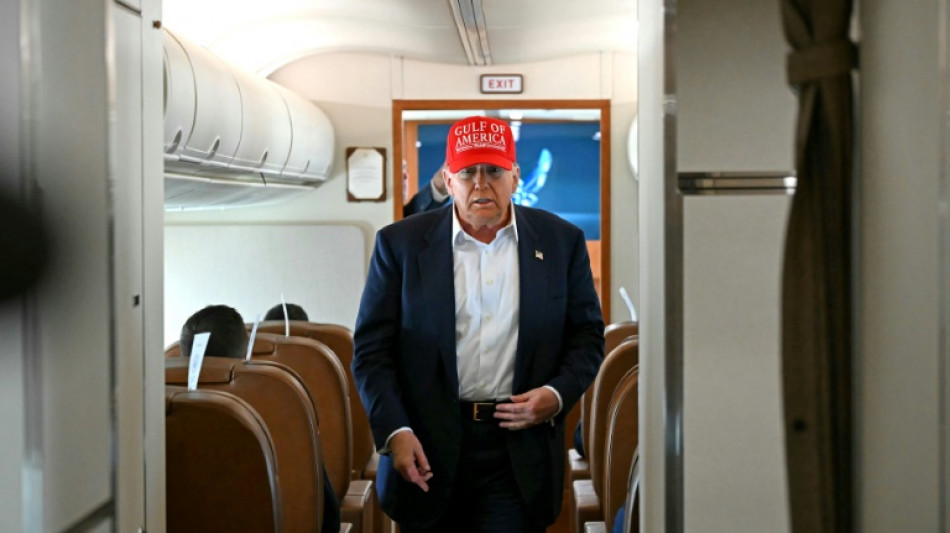
A week before US President Donald Trump reimposes steep tariffs on dozens of economies, including the EU and Japan, many are still scrambling to reach a deal that would protect them from the worst.
The tariffs taking effect July 9 are part of a package Trump imposed in April citing a lack of "reciprocity" in trading ties.
He slapped a 10 percent levy on most partners, with higher customized rates to kick in later in countries the United States has major trade deficits with.
But these were halted until July to allow room for negotiations.
Analysts expect countries will encounter one of three outcomes: They could reach a framework for an agreement; receive an extended pause on higher tariffs; or see levies surge.
- 'Framework' deals -
"There will be a group of deals that we will land before July 9," said Treasury Secretary Scott Bessent last Friday on CNBC.
Policymakers have not named countries in this group, although Bessent maintains that Washington has been focused on striking deals with about 18 key partners.
"Vietnam, India and Taiwan remain promising candidates for a deal," Asia Society Policy Institute (ASPI) vice president Wendy Cutler told AFP.
Without a deal, Vietnam's "reciprocal tariff" rises from the baseline of 10 percent to 46 percent, India's to 26 percent and Taiwan's to 32 percent.
Josh Lipsky, international economics chair at the Atlantic Council, cited Indian negotiators' extension of their US trip recently in noting that it "seems like a frontrunner."
"Japan was in that category, but things have set back a little," Lipsky said, referring to Trump's criticism Monday over what the president called Japan's reluctance to accept US rice exports.
The deals, however, will unlikely be full-fledged trade pacts, analysts said, citing complexities in negotiating such agreements.
Since April, Washington has only announced a pact with Britain and a deal to temporarily lower tit-for-tat duties with China.
- Extended pause -
Bessent has also said that countries "negotiating in good faith" can have their tariffs remain at the 10 percent baseline.
But extensions of the pause on higher rates would depend on Trump, he added.
"With a new government, (South) Korea looks well positioned to secure an extension," Cutler of ASPI said.
Lipsky expects many countries to fall into this bucket, receiving an extended halt on higher tariffs that could last until Labor Day, which falls on September 1.
Bessent earlier said that Washington could wrap up its agenda for trade deals by Labor Day, a signal that more agreements could be concluded but with talks likely to extend past July.
- Tariff reimposition -
For countries that the United States finds "recalcitrant," however, tariffs could spring back to the higher levels Trump previously announced, Bessent has warned.
These range from 11 percent to 50 percent.
Cutler warned that "Japan's refusal to open its rice market, coupled with the US resistance to lowering automotive tariffs, may lead to the reimposition of Japan's 24 percent reciprocal tariff."
Trump himself said Tuesday that a trade deal was unlikely with Japan and the country could pay a tariff of "30 percent, 35 percent, or whatever the number is that we determine."
Lipsky believes the European Union is at risk of having tariffs snap back to steeper levels too -- to the 20 percent unveiled in April or the 50 percent Trump more recently threatened.
An area of tension could be Europe's approach to digital regulation.
Trump recently said he would terminate trade talks with Canada -- which is not impacted by the July 9 deadline -- in retaliation for the country's digital services tax, which Ottawa eventually said it would rescind.
This week, EU trade chief Maros Sefcovic is in Washington in a push to seal a trade deal, with the EU commission having received early drafts of proposals that officials are working on.
A.Gasser--BTB