Nightlife falls silent as Ecuador's narco gangs take charge / Photo: © AFP Photo

 Arteta targets more Arsenal glory after signing new deal until 2030

 Russell hit with Singapore grid penalty for taking new power unit

 Spotify expands audiobooks to more than 180 markets

 French-Japanese duo wins chemistry Nobel for solving molecular 'mystery'

 England's Nations League surge helps heal World Cup wounds

 Mayor of opposition stronghold Izmir defects to Erdogan party

 Mertens beats Gauff to set up Swiatek clash at China Open
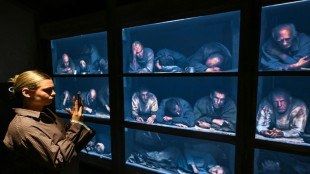
 Benin full of pride at role in Messi's last dance

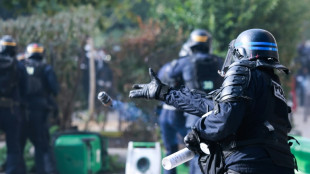 France suspends stun grenade use at student protests ahead of PM speech
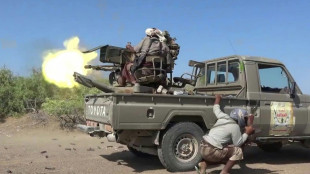
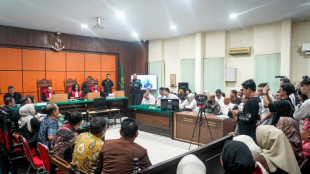 Indonesian court hears 'negligence' complaint against state over fires, haze

 Rubio in Greece to urge against Western civilisation 'decline'
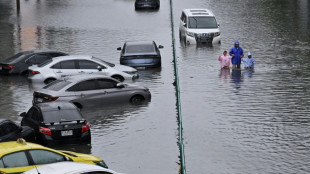
 Micron workers at Taiwan plant vote in favour of strike

 In 'The Social Reckoning,' Jeremy Allen White takes on Facebook's 'frightening' ambition

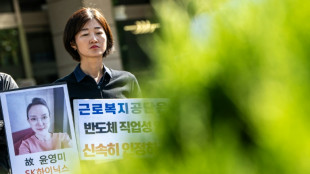 Chip industry activists call for South Korea to recognise cancer cases
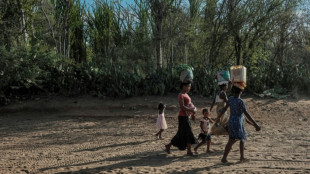 Famine-scarred southern Madagascar braces for El Nino
 How the EU regulates lobbyists
 I.Coast refuge offers lifelong care for youngsters scorned as 'sorcerers'

 Indian central bank hikes rates for first time in more than 3 years
 Hotel Blacklist Launches New Accommodation Industry Risk Assessment Tool

 Bangladesh nuclear plant draws hope -- and worry

 US beat Canada 1-0 to wrap up four-win international break

 Turkey, Australia's joint COP31 leadership raises doubts

 For Turkish NGOs, COP31 offers rare space for action
 Sleep, appetite, gene-editing experts contend for Nobel chemistry prize

 Nobel Peace Prize haunted by the 'spectre' of Trump

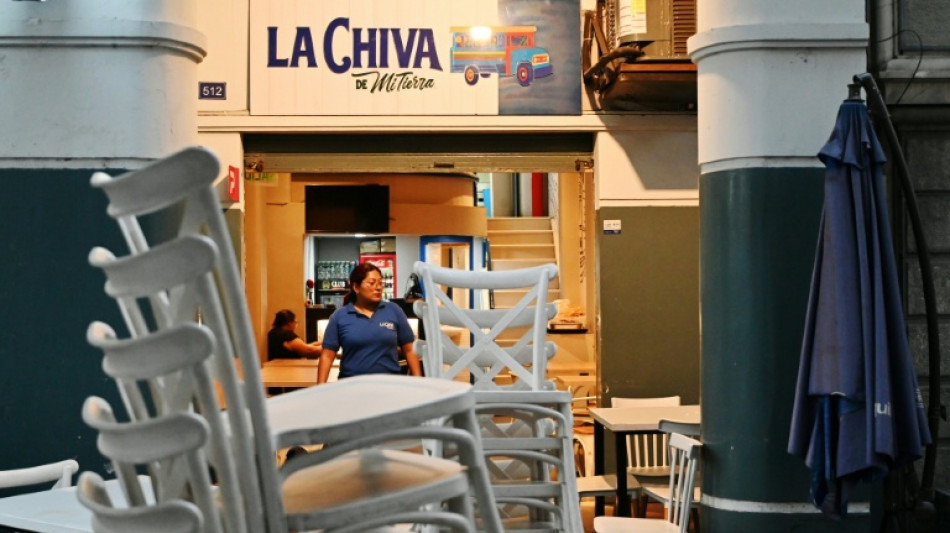
The sweat-and-salsa-infused nightlife that was once the beating heart of Ecuador's largest city, Guayaquil, has fallen silent, with bars, restaurants, and nightclubs pulling down the shutters to avoid cartel-linked violence.
As Ecuador has become an epicenter of the global cocaine trade -- and the port city of Guayaquil a major thoroughfare -- cartels and mafias have chewed through the city's lively 'Zonas Rosas' -- nightlife hotspots.
Valeria Buendia, a 36-year-old teacher, used to hit Panama Street about once a week with friends.
A once buzzing and steamy area not far from the river, it is now empty after dark.
She rattles off the names of old haunts -- Central, Exflogia, Nicanor -- but now, she said, "it's become dangerous."
"I'm afraid of stray bullets," she said.
With over 5,200 homicides recorded so far this year, according to the government's tally, Ecuador has become the most dangerous country in South America.
More than 1,550 of those deaths -- roughly a third -- happened in Guayaquil, home to about 2.8 million people and the nation's commercial hub.
The bloodshed has been keenly felt on Panama Street.
The neon lights, music, and uninhibited dancers have moved to luxurious neighborhoods on the outskirts, accessible only to the fortunate few.
A 20-minute drive away in the upscale peninsula enclave of Samborondon, rich Ecuadorans can still enjoy a night out.
There, rifle-wielding guards protect high-heeled women and well-tailored men as they pass by metal detectors.
One nightclub owner who moved to Samborondon from the center laments: "It would be suicide to invest in Guayaquil" today.
- 'I couldn't keep up' -
The bar owners who are left behind have to live with threats and extortion.
One former bar owner, who asked for anonymity for fear of reprisals, told AFP how extortion had destroyed his livelihood.
"At first, they asked for $50 a week, then $100, and it kept increasing until I couldn't keep up," he said.
Tired of paying protection money to keep his business running, the owner of a salsa nightclub in the center closed his venue in December 2024.
He estimates it cost him "about $10,000." He now drives a taxi.
Locals say most bars have to pay $300 a month, or up to $5,000 for large venues. Many payments go through the banking system, and are paid by bank transfer.
- When night falls -
In the first half of 2025, Ecuador registered 9,422 formal complaints of extortion. About a third of those were in Guayaquil.
That likely significantly underplays the real number, since it's unknown how many people are too fearful to go to the authorities.
A businessman with a quarter-century of experience in the hospitality sector remembered receiving an extortion message in 2021.
"I was stunned; I called my wife because they had mentioned my family," he said.
He never reported the case to authorities and chose to close his establishment.
Those who do not pay face consequences.
The businessman remembers a restaurant in the Urdesa area of Guayaquil that had a suitcase containing explosives thrown at it as a warning in July.
The police managed to defuse it before it exploded.
In May, ten people were gunned down in a nightclub, and three months later, an armed attack in a bar killed one and injured three.
Ernesto Vasquez, of the city's nightclub association, estimates that 50 percent of the hundreds of bars in the city's center and south have closed.
Drug gangs continue to grow more emboldened, despite President Daniel Noboa's strategy of confronting them militarily.
S.Keller--BTB