S.Africa calls US welcome for white Afrikaners 'apartheid 2.0' / Photo: © AFP/File

 Arteta targets more Arsenal glory after signing new deal until 2030

 Russell hit with Singapore grid penalty for taking new power unit

 Spotify expands audiobooks to more than 180 markets

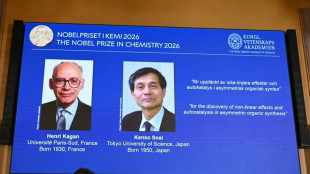 French-Japanese duo wins chemistry Nobel for solving molecular 'mystery'

 England's Nations League surge helps heal World Cup wounds

 Mayor of opposition stronghold Izmir defects to Erdogan party
 Mertens beats Gauff to set up Swiatek clash at China Open
 Benin full of pride at role in Messi's last dance

 France suspends stun grenade use at student protests ahead of PM speech

 Indonesian court hears 'negligence' complaint against state over fires, haze
 Rubio in Greece to urge against Western civilisation 'decline'
 Micron workers at Taiwan plant vote in favour of strike
 In 'The Social Reckoning,' Jeremy Allen White takes on Facebook's 'frightening' ambition
 Chip industry activists call for South Korea to recognise cancer cases

 Famine-scarred southern Madagascar braces for El Nino
 How the EU regulates lobbyists
 I.Coast refuge offers lifelong care for youngsters scorned as 'sorcerers'

 Indian central bank hikes rates for first time in more than 3 years
 Hotel Blacklist Launches New Accommodation Industry Risk Assessment Tool

 Bangladesh nuclear plant draws hope -- and worry

 US beat Canada 1-0 to wrap up four-win international break

 Turkey, Australia's joint COP31 leadership raises doubts

 For Turkish NGOs, COP31 offers rare space for action
 Sleep, appetite, gene-editing experts contend for Nobel chemistry prize
 Nobel Peace Prize haunted by the 'spectre' of Trump

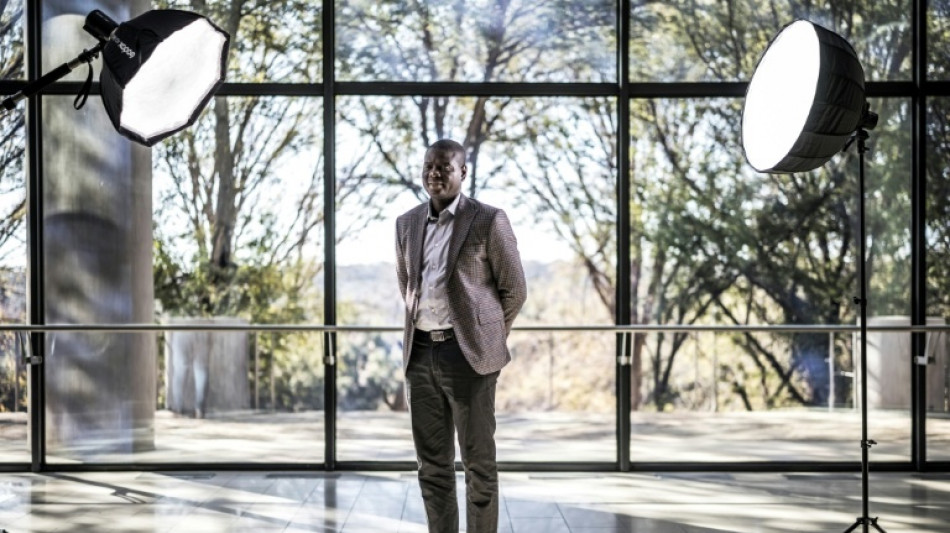
Washington's preferential treatment of white Afrikaners for resettlement into the United States is "apartheid 2.0", South Africa's foreign minister said Wednesday.
US President Donald Trump's administration in May offered refugee status to the minority white Afrikaner community, claiming they were victims of discrimination and even "genocide", which the Pretoria government strongly denies.
The "refugee programme is preferential treatment of Afrikaners in South Africa to enter the US", Foreign Minister Ronald Lamola said at a press briefing.
"And you know, with our history... preferential treatment of a particular privileged group, the Afrikaners, who are not running away from any genocide in this country, is definitely apartheid 2.0," he said.
A first group of around 50 Afrikaners -- descendants of the first European settlers of South Africa -- were flown to the United States on a chartered plane in May.
Others have reportedly followed in smaller numbers and on commercial flights.
Afrikaner-led governments legalised the race-based apartheid system that denied South Africa's black majority political and economic rights until it was voted out in the first all-race election in 1994.
Trump essentially halted refugee arrivals after taking office in January but made an exception for the Afrikaners despite Pretoria's insistence that they do not face persecution.
The United States is reportedly applying for visas for around 30 people from a Christian NGO based in Kenya to come to South Africa to fast-track the processing of Afrikaner applications for resettlement.
"There is no obligation, no duty for the South African government to assist the US government with this refugee programme," Lamola said.
- 'Not alone' -
Relations between South Africa and the United States plunged to a new low after Trump took office, expelling Pretoria's ambassador in March.
Trump later imposed 30-percent tariffs on exports from South Africa, which has been negotiating for a reduction to avoid potential job losses.
Talks were continuing and a team from the US Congress was due to visit this week, Lamola said, but South Africa should prepare to have to "live with" the tariff.
Several countries were affected by the "unpredictability of the current administration in the US", the minister said. "We are not alone."
Among the sticking points in bilateral ties is South African legislation intended to redress apartheid's race-based discrimination by promoting black business ownership and the redistribution of farmland still mostly in the hands of whites.
"We continue to reiterate that these are matters which are firmly within the grasp of the South African people and its sovereignty," the minister said.
He also reiterated the government's rejection of the latest US Human Rights Report, which said human rights in South Africa had significantly worsened.
To counter claims that white farmers were targeted for murder, Lamola cited police statistics that between January and March there were six murders in farming communities. Four of the victims were employees or farm dwellers, who are most often black.
"These statistics do not reveal a pattern of action driven by inflammatory racial rhetoric against a specific community or that it is racially motivated," he said.
L.Janezki--BTB