US strike marks shift to military action against drug cartels / Photo: © GETTY IMAGES NORTH AMERICA/AFP/File

 Trump wants to turn Florida golf course into presidential retreat

 Mayor of Turkish opposition stronghold defects to Erdogan party
 Children among heavy casualties in Ukraine after Russian strikes

 Court orders German ex-spy chief kept in jail after spying, treason arrest

 Guinea caps bottled water prices after sachets banned

 Spared, married, hanged: the last weeks of Iranian protester Alireza Sepahi

 Nobel physics winner's pride at pioneering AI role
 IMF preparing El Nino assistance, concerned about AI bubble burst: chief to AFP
 West must embrace 'national power' or face decline: Rubio

 Shell refining margins reach record highs as wars hit supply

 Former Spain, Barca winger Pedro retires from football
 Arteta signs new Arsenal deal until 2030

 Stocks decline as oil climbs on Mideast flareup

 Gauff says online abuse was 'draining' after China Open exit

 As sector struggles, Porsche puts luxury ahead of volume
 'It's personal': Fiji minister pushes better climate finance at pre-COP

 Russia glosses over dark Soviet past in reinvented museum

 UK tax body opened probe into Man City in 2018: FT
 Yemen's Houthis claim new attacks on Saudi airports as conflict deepens
 Germany factory production at highest level for 18 months
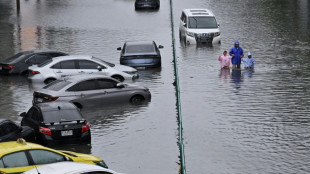 Thailand floods death toll rises to 60 since mid-September

 US pushes Russia for information on plague reports

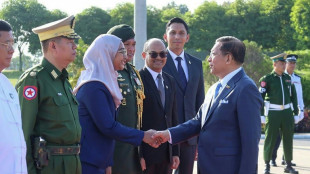 Myanmar leader lands in Malaysia for migrant return talks

 Indian central bank hikes rates for first time since 2023

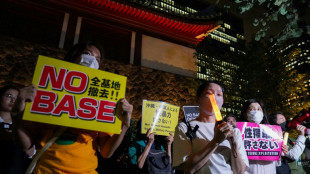 US military on Okinawa face curfew, alcohol ban after murder case

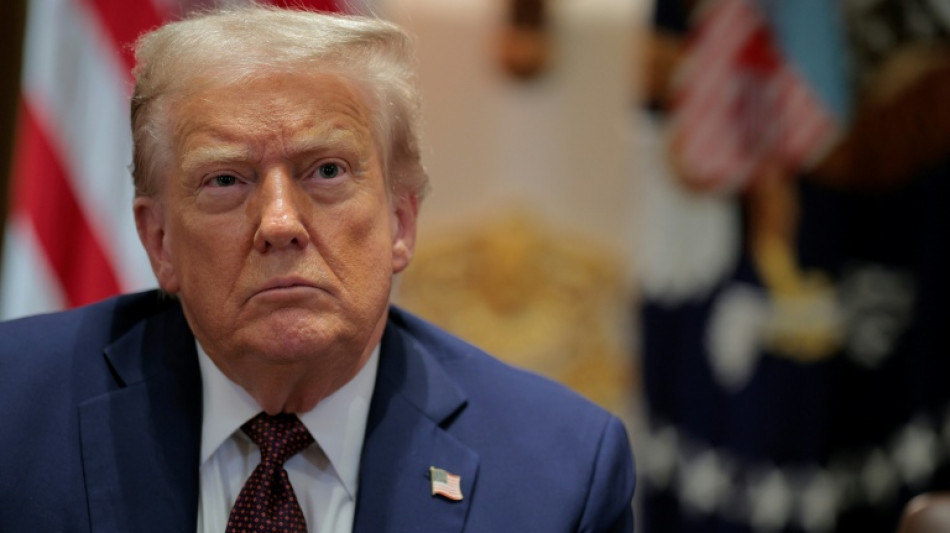
US President Donald Trump's deadly strike on an alleged drug-smuggling boat from Venezuela marks a significant escalation from law enforcement to military action against cartels that his administration has branded as terror groups.
Video footage posted by Trump on social media Tuesday showed a multi-engine speedboat with several people aboard bouncing across the waves -- but rather than being stopped and boarded, the vessel is suddenly engulfed in an inferno.
The US president said 11 members of the Tren de Aragua gang were killed in the strike, which should "serve as notice to anybody even thinking about bringing drugs into the United States of America."
Ryan Berg, director of the Americas Program at the Center for Strategic and International Studies, said the strike "demonstrates a change in the rules of engagement."
"There is no longer US Coast Guard boarding of vessels; there is an approach far more similar to how the United States deals with pirates in the Gulf region, or terrorists in the Sahel," he said.
The United States -- which has a long history of carrying out strikes against suspected militants without due process -- designated Venezuela's Tren de Aragua, Mexico's Sinaloa Cartel and several other drug trafficking organizations as terror groups earlier this year.
The strike on the boat comes at a time of soaring tensions between the United States and Venezuela over the deployment of American warships in the region that the Washington says are to combat trafficking but which Caracas views as a threat.
- 'Highly dissuasive effect' -
The United States alleges that leftist Venezuelan leader Nicolas Maduro heads a cocaine trafficking cartel and recently doubled its bounty to $50 million in exchange for his capture to face drug charges.
Maduro has meanwhile accused Trump of attempting to effect regime change and launched a drive to sign up thousands of militia members.
Asked about the potential for escalation with Venezuela as a result of the strike, Berg said that "Maduro is unlikely to say much, given that doing so would essentially confirm the administration's assertion that he is a narcotrafficker and the head of a cartel."
Gustavo Flores-Macias, dean of the University of Maryland School of Public Policy, noted that the United States has a history of military interventions in Latin America, but said this one was the first under Trump's policy of designating cartels as terror groups.
"With the turn toward military strikes instead of traditional law enforcement in addressing drug trafficking in the region, the White House is looking to send a strong message," Flores-Macias said.
That message is aimed "not only to deter drug traffickers but also as a show of force to put the government of Nicolas Maduro on notice that the US is considering military action in Venezuela," he said.
It remains to be seen how effective Trump's policy will be at curbing trafficking in the Caribbean, but Berg said the US Navy's multi-ship deployment "could disrupt Southern Caribbean trafficking routes for some time, with its generational scale and size."
"In the short term, (the strike) is likely to have a highly dissuasive effect," he said. "Few will risk being in a 'go fast' boat anytime soon."
M.Furrer--BTB