
OMG! German influencers face tax dodging crackdown / Photo: © AFP

 Bid by Italy's Intesa bank to take over MPS gets boost

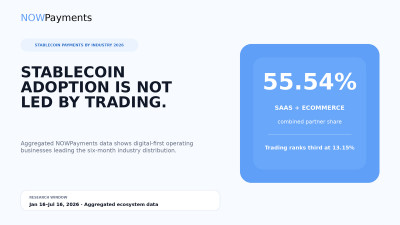 Stablecoins Are Quietly Becoming Business Infrastructure, NOWPayments Data Shows

 Oil surges, stocks sink as US reportedly eyes new Iran strikes

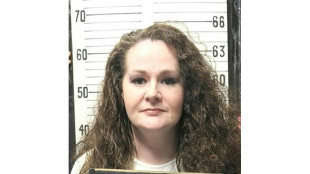 Woman in botched US execution walking, mentally 'foggy': lawyer

 Farhan hopes Pakistan's new combination takes off in Sri Lanka T20Is

 Teenager Andreeva seals China Open semi-final with Bartunkova
 Britain's Burnham says open to Germany joining warplane project

 Kovac's tough love has Dortmund dreaming of title charge

 China announces candidate for WHO chief

 South Korea test-fires its first homegrown hypersonic weapon: presidency

 ONAR Advances Nasdaq Listing Preparation Following Advertise Purple Acquisition and Financing

 Thailand opens extradition process for reporter sought by China

 France struggles to wean social housing off gas

 Germany lifts GDP forecast as economy withstands Iran war

 Sri Lanka appoints Kusal Mendis as Test captain

 Norris confident McLaren can shine in Singapore

 Alex Bodi pushes ahead with expansion: ALIX LASERS showroom planned for Bucharest

 Fossil fuels off COP31 agenda as global output keeps rising

 Haze not 'a threat' to Singapore F1 race: organisers

 COP31 organisers say to seek 'ambitious' action with their text

 Bartunkova thrashes Muchova to reach China Open semi-finals

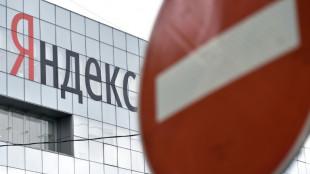 Drone hits Yandex data centre, in first such attack on Russia

 Oil prices surge and stocks sink on fresh inflation worries
 AI startup Manus raises $500m after Meta acquisition blocked by China

 From refuge to repatriations: Malaysia's Myanmar U-turn

They could soon be unboxing fines rather than freebies -- Germany's online influencers are facing a tax evasion crackdown that has left them screaming OMG!
The issue hit the headlines after the country's most populous state announced a specialised unit of investigators was probing influencer tax dodging on a massive scale.
They are assessing a stash of some 6,000 data records from social media platforms that point to unpaid taxes on everything from earnings from views to advertising products.
"We know that there is a lot of money circulating right now," Stephanie Thien, head of the state office for combating financial crime in North-Rhine Westphalia, told AFP.
"And we also know that not all of it is being taxed properly."
Like elsewhere, the number of influencers on platforms like TikTok and Instagram has exploded in Europe's top economy in recent years.
According to the German Association for the Digital Economy, the amount of money that companies spend on influencer marketing rose from 223 million euros ($262 million) in 2019 to 477 million euros in 2022.
For some teens who become overnight sensations by cracking jokes or pulling pranks online, failing to pay taxes is a simple error.
"There have been cases where people come to us and say, I've been doing this for two or three years, but I've never thought about taxes," Christian Gebert, head of the tax advisory firm Steuerberaten.de, told AFP.
"Many influencers achieve success quickly, and at the start, they often lack proper tax arrangements", added Gebert, whose firm counts many creators among its clients.
- 'Serious crime' -
But there are others who seek to evade paying tax by under-declaring their earnings, or not making a declaration at all.
A common trick is pretending to relocate overseas -- Dubai is a popular choice -- to avoid high tax rates at home, and then in reality spending most of the time in Germany.
It is these cases of intentional evasion that North Rhine-Westphalia is targeting.
Thien said her office was "truly targeting serious financial crime, the big cases".
Even before the launch of the recent campaign, the state was already conducting criminal proceedings against about 200 influencers based there -- with some accused of underpaying their taxes by millions of euros.
Other German tax authorities are getting in on the act, with the city-state of Hamburg and the state of Thuringia among those conducting probes.
Such investigations are tricky because of the numerous ways to earn money online.
These range from getting paid by for clicks and views, to payments from brands for product placement, and earning commissions when followers buy promoted items.
It is also common for influencers to receive gifts, from hotel rooms to flights, in exchange for promoting businesses.
- 'Pure disaster' -
But all theses earnings could be subject to tax -- including income, business or sales tax -- and it is up to creators to navigate bureaucracy-loving Germany's complex web of rules.
Alex Schoenen, who runs an agency that supports up-and-coming TikTok creators, said that authorities had not done enough to explain rules that were "far too complex".
They should run more information campaigns, including on social media, said Schoenen, who is himself a popular influencer on TikTok under the handle "Der_Typ_ist_anders" ('That guy is different').
"What I've witnessed in the past three years has been a pure disaster," he told AFP, saying he felt many young people were badly advised by tax consultants.
Even before North Rhine-Westphalia's probe hit the headlines, there was growing debate about influencers being targeted.
In an episode of the German podcast "Das A&O vom Kaffequatsch" earlier this year, hosted by influencers Anahita Rehbein and Olivia von Platen, the pair took a break from their usual topics of motherhood and lifestyle to talk taxes with two experts.
Von Platen said that a tax official had told her: "Influencers are the new top targets for the tax office because they're the easiest to 'take down'".
Authorities say their aim is simply to ensure people pay their taxes fairly.
"It is very important that our tax system is there to enable the state to fulfil its obligations for the common good," said Thien.
"We are interested in tax justice."
F.Pavlenko--BTB