North Korean refugees long for family behind impenetrable border / Photo: © AFP

 Verdict due in Mexico trial over murders of Australia, US surfers

 B2PRIME Welcomes Christina Barbash as Commercial Manager

 Russia forcing Kyiv into 'survival' mode before winter, mayor tells AFP

 Closing arguments begin in Maradona death trial
 UEFA president Ceferin to stand for re-election in 2027

 Nearly 300,000 Nepalis at flood risk: study
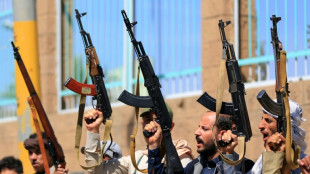 Riyadh kindergarten hit by interception debris as Houthis say targeted airport
 Alex Bodi mizează, alături de CRIF, pe investiții transparente și pe prevenirea riguroasă a spălării banilor
 Gulf Labs, Part of Thailand’s $27 Billion GULF Group, Goes Live as an Injective Validator

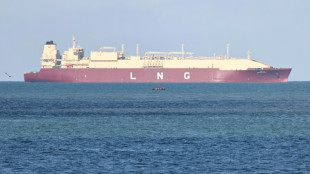 EU okay for winter despite 'historically low' gas stocks: operators

 Rwanda to host F1 Grand Prix: sources close to both sides

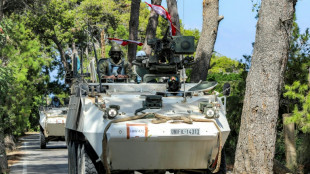 EU top diplomat says bloc in favour of UN Lebanon peacekeepers' extension

 Antonelli and Russell to run different Mercedes aero packages in Singapore
 WTO hikes 2026 trade growth forecast on AI boom

 'I love that challenge': Hamilton prays for rain in Singapore

 G.Bissau moves towards postponement of December general election

 Verstappen out to settle 'unfinished business' at Singapore Grand Prix
 WhiteBIT Launches Bitcoin Lightning Network Support, Powered by Voltage

 Oil surges, stocks sink as US reportedly eyes fresh Iran strikes
 Anne Carson: modern takes on Greek classics
 Canada's Anne Carson wins Nobel literature prize
 Ethiopia drones hit Eritrean troops in Tigray

 Russian strike on buses kills 30 in frontline Ukrainian city
 Thailand begins extradition process against Chinese journalist

 Quarantine, unease and rumours: Russian city grapples with plague scare

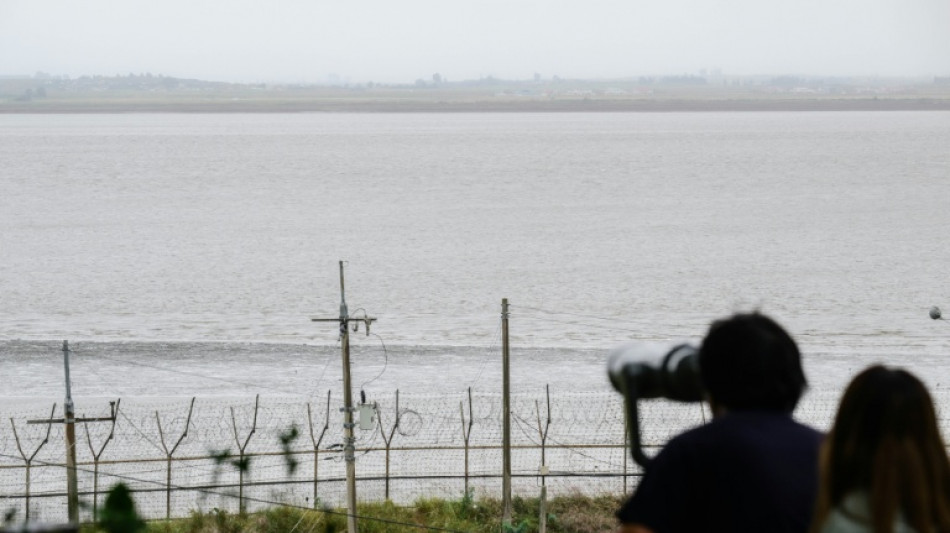
After taking a bow and making an offering of fruit and a dried fish, Ryh Jae-hong tosses a cup of alcohol towards the thick barbed-wire fence that protects South Korea's Gyodong Island from North Korea.
South Koreans perform this funeral ritual during the autumn harvest festival Chuseok at altars erected along the border to honour ancestors who remained in the North.
Just two kilometres (1.2 miles) from the Manghyangdae altar, on the northern tip of Gyodong, farmers work the land beneath red flags and a slogan in giant letters on a nearby hilltop reads: "Long live socialism!"
"They are there, I just hope they are doing well," said Ryh, whose father fled south at the end of the Korean War in the 1950s, but whose grandmother and other relatives stayed behind and have not been heard from since.
Gyodong Island, which sits at the mouth of the Han river, welcomed thousands of displaced people during the war.
Many crossed the water in small boats to Gyodong or swam across when Chinese forces -- allied with North Koreans -- advanced on the town of Yeonbaek.
Little did they know this would be their last crossing.
Those displaced have found some consolation in the island's swallows, which legend has it serve as messengers, capable of crossing the world's most impenetrable border.
Telescopes installed at the Manghyangdae altar have become their only means of seeing the place they once called home, now behind the border's barbed wire fence.
Most first-generation refugees have passed away, but a deep sorrow remains for the handful still alive.
- 'Hoping for reunification' -
"We are a people with broken hearts. Even though we live in abundance today, my parents, my brothers and sisters all remained in North Korea," said 94-year-old Chai Jae-ok.
"I came to the South and had to abandon them. What use is living in luxury if I cannot see them again? Day and night, I have never stopped crying out and hoping for reunification.
"Before my eyes close forever, I would like to see it happen."
His dream of reunification remains elusive for now.
While North Korea recently expressed an interest in resuming dialogue with the United States, it has made clear that speaking to the South is out of the question, labelling it a "hostile state" with which separation is irreversible.
Pyongyang has dismantled all institutions dedicated to potential reunification and demolished connecting roads and railways, built during periods of detente in the 2000s.
- 'Is there greater pain?' -
"My only wish is that even if reunification does not happen in my lifetime, an exchange between the North and South would allow me at least to mourn at my parents' grave," said Chai.
"It is only six kilometers from here. By car, it would take barely ten minutes. Is there greater pain?"
Min Ok-sun, 92, left her parents and four brothers in the North.
"I left my homeland at 17 and never saw them again," she said.
She married another refugee in Gyodong, Kim Ching-san, a former fighter who was tasked with missions to infiltrate the North and is now 96 years old.
"When I see birds returning to their nests at sunset, I tell myself that we humans also have this need to return home. It's our instinct," said Kim.
"My wife and I have different ways of coping with the longing for our homeland. She finds comfort in simple things, like curling up under a blanket. I cannot forget.
"Every day, I fight inside, as if I were still at war. That's why I look older than her."
Refugees and other elderly people gather in Gyodong on festive days to sing old Korean ballads from the Japanese occupation of 1910-1945, at the tops of their voices.
"These are songs that everyone, both in the South and the North, knew before the division," said Chang Gwang-hyuck, a volunteer who leads the sessions and whose grandfather came from the North.
"They reflect the aspirations and emotions of the people of that time. What these elderly people desire most is to soothe their nostalgia.
"When I see these people who left their homes at 20 and have never been able to return, I feel a deep sadness."
P.Anderson--BTB