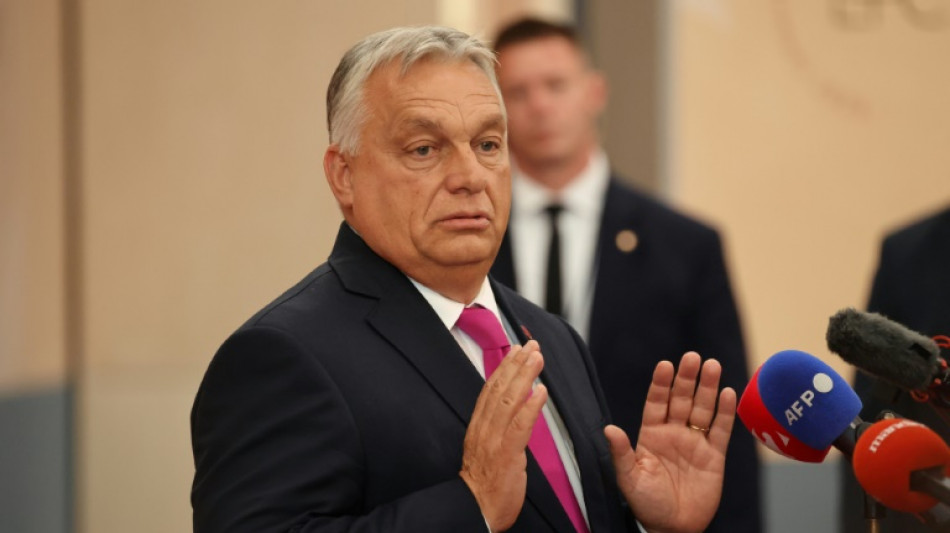
AI content proliferates in Hungary ahead of next year's elections / Photo: © AFP

 Verdict due in Mexico trial over murders of Australia, US surfers
 B2PRIME Welcomes Christina Barbash as Commercial Manager

 Russia forcing Kyiv into 'survival' mode before winter, mayor tells AFP
 Closing arguments begin in Maradona death trial
 UEFA president Ceferin to stand for re-election in 2027

 Nearly 300,000 Nepalis at flood risk: study

 Riyadh kindergarten hit by interception debris as Houthis say targeted airport

 Alex Bodi mizează, alături de CRIF, pe investiții transparente și pe prevenirea riguroasă a spălării banilor

 Gulf Labs, Part of Thailand’s $27 Billion GULF Group, Goes Live as an Injective Validator

 EU okay for winter despite 'historically low' gas stocks: operators

 Rwanda to host F1 Grand Prix: sources close to both sides

 EU top diplomat says bloc in favour of UN Lebanon peacekeepers' extension

 Antonelli and Russell to run different Mercedes aero packages in Singapore

 WTO hikes 2026 trade growth forecast on AI boom

 'I love that challenge': Hamilton prays for rain in Singapore

 G.Bissau moves towards postponement of December general election

 Verstappen out to settle 'unfinished business' at Singapore Grand Prix
 WhiteBIT Launches Bitcoin Lightning Network Support, Powered by Voltage

 Oil surges, stocks sink as US reportedly eyes fresh Iran strikes

 Anne Carson: modern takes on Greek classics

 Canada's Anne Carson wins Nobel literature prize

 Ethiopia drones hit Eritrean troops in Tigray

 Russian strike on buses kills 30 in frontline Ukrainian city
 Thailand begins extradition process against Chinese journalist

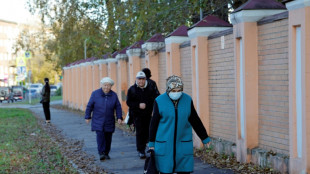 Quarantine, unease and rumours: Russian city grapples with plague scare

A video of Hungarian soldiers going off to fight in Ukraine and returning home in caskets is just one of many AI-generated posts that have appeared on Prime Minister Viktor Orban's social media accounts ahead of elections next year.
Orban, a nationalist who has been in power since 2010 in the central European country, is expected to face an unprecedented challenge from opposition leader Peter Magyar.
Ahead of the contest, politicians and their supporters across the political spectrum have used the technology, with Orban targeting the opposition, following in the footsteps of US President Donald Trump.
Trump has repeatedly posted fabricated videos, stirring online outrage.
Experts warn that because some AI content can generate very emotional reactions, the use of the technology could sway public opinion ahead of the poll.
- Clips targeting opposition -
Orban's backers have invested significant resources into AI ahead of the poll, expected in April.
One group, the National Resistance Movement (NEM) which backs Orban's Fidesz party, has in recent months targeted Magyar in mostly unlabelled AI-generated videos on social media.
Since June 15, the group spent over 1.5 million euros ($1.7 million) on Facebook and YouTube to promote its content, more than any political organisation in the EU, based on public data from platform owners Meta and Google.
The two US tech giants recently ended political advertising in the EU because of new rules that came into force last week that require such ads to be clearly labelled -- including who sponsored them -- and restricting the deployment of personally targeted ads.
Some of NEM's videos contain non-existent people manipulated to express outrage at Magyar's alleged policy plans, while a few others are deepfake videos of him.
Other pro-Orban AI clips support the nationalist leader's policy drives, such as his opposition to Ukraine's EU membership bid, which he has warned could drag Hungary into the war in the neighbouring country.
The clip of AI-generated Hungarian soldiers in caskets was advertised on Facebook and broadcast on state TV in June, in the final days of a mail-in ballot on Kyiv's EU accession bid.
The government insists that using such content is acceptable as long as it is properly labelled as artificially generated.
But AFP found multiple instances of Orban and his allies posting realistically appearing videos and pictures that seem to have been created with AI without clearly labelling them as such.
Orban's opponent, Magyar, has also used AI on his social media channels in the past without labelling it, such as a fake photo of himself in combat uniform in a tongue-in-cheek post arguing why he does not ally with the rest of the opposition.
If the use of AI "is clearly visible and obvious to everyone, then it is not a problem," Magyar told AFP, adding that anything else could be considered "election fraud".
He has condemned Orban's AI videos as "pathetic".
The government's AI commissioner Laszlo Palkovics said "it would be advisable to avoid trying to influence voters with AI content".
"But it is up to everyone to decide" how they want to use AI, Palkovics told AFP. He insisted the government "fully supports" the landmark EU AI Act, which was passed last year.
Hungary has said that it wants to develop its own AI ethics code, with Orban striving to make the eastern European country a "key regional player" in the AI race.
His economy minister, Marton Nagy, at a two-day AI conference last month admitted that so far local companies are lagging behind most of their EU peers in AI adoption.
- 'Highly toxic' -
Experts are concerned about the proliferation of AI-generated content.
"A (deep) fake video can have a heightened impact," communication researcher Petra Aczel told AFP, adding that she expected "extremely strong sensory influences in the upcoming political campaigns around the world".
"Even if it is branded as AI-generated and contains visible glitches, some people will believe it, because they have an emotional reaction to it," she added.
The EU AI Act will not restrain political actors, Hungarian-American AI consultant George Tilesch told AFP.
"The algorithms governing social media are feeding us the same type of content, because that creates the highest level of engagement" said the Silicon Valley-based expert, who has advised the US, EU and major corporations on artificial intelligence.
Coupled with the rapid breakthroughs in generative AI, this "creates a potentially highly toxic concoction," he said.
E.Schubert--BTB